Looking to get a 5 pro 2x2 to make inlaid cutting boards for my knifemaking business. Which spindle should I get? Will the standard trim router work for now or would I be better served with the 60mm or 85mm spindles?
The SO5 is a very robust CNC. The router would work but a 66MM would be better. Unless you are going to cut metal the 80MM is likely overkill. Plus the 80MM requires 220VAC to operate. The 65MM would work on 120VAC. There have been discussions here on the forum about GFCI outlets clicking off when a VFD is attached. There have been solutions of getting a filter to replacing the outlet with a regular 120VAC one. The price of the SO5 a spindle would be worthwhile over time but not necessary to cut juice grooves in cutting boards and doing inlays. So my answer is maybe? It depends on what you are going to do in the future.
1 Like
Buy the 4x2 if you have the room.
1 Like
Two big things that the 65 mm spindle offers over the trim router:
- It’s a LOT quieter. The whole thing is never going to be ‘quiet’, but the spindle helps a lot.
- Variable speed control. Particularly when running multiple bits in one job, the spindle will automatically set the RPMs. Trim router isn’t hard per se, but it’s very easy to get into the habit of “18K for everything!!”
I’ve never has a problem with the power of the 65mm being inadequate. Unless you want to run tooling with 1/2" shaft, I don’t really see the 80mm as being a useful upgrade.
However, all that being said, the trim router does work, and is of course a lot cheaper. Personally, if you choose thr trim router route, I would spring for the ER11 collet version of the trim router that C3D sells - ER11 collets are going to be better than the standard Makita style ones.
3 Likes
Thanks for the feedback folks. I only intend to do cutting boards. I know bigger is usually better, but if shop space is a bit of a concern I’d imagine the 2x2 will let me make boards up to 24” long for now? And it seems like the 65mm spindle is the way, although if I can get away with the standard trim setup for inlays that will save me some money. I don’t have a planer so I want to use the cnc to flatten after glue up as well if that makes a difference?
Buy the spindle. Worth the investment.
1 Like
To say the 80mm only benefits from metal is a big stretch.
I’ve been running 80 mm spindles for nearly a decade on shapeokos including my s5 4x4. Would never go to a smaller spindle again.
Yes a significant advantage is 1/2” tooling. It’s not just about larger tooling. It’s bout the rigidity that comes from it and the vibration reduction. Especially when using large v bits for inlays. And with some of these bits you can only run 12krpm due to balance issues and b you need the low end power the larger spindle gives you.
The 65 mm also cannot match the material removal rates that I cut at every day with the 80mm.
1 Like
Would you say the 80mm is needed for my purposes or will the 65 be enough to carve inlays and surface cutting boards for now as I get started?
You can do what you want with a trim router.
The 65mm will be a reliable option that will get then job done.
The 80mm can just do it faster.
2 Likes
I also do a lot of inlay cutting boards on a S. Pro.
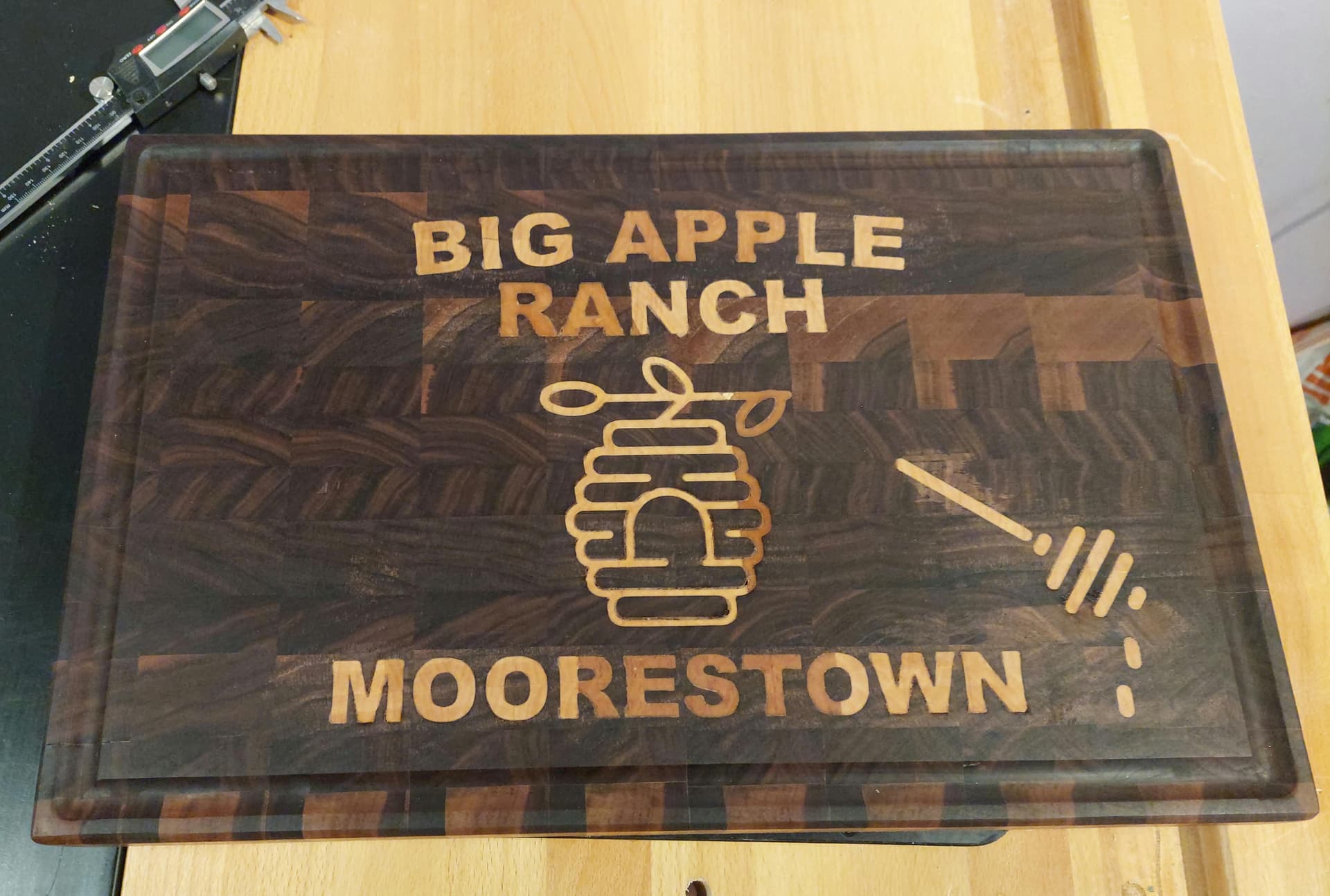
- I started with a trim router and it did what I needed.
- Moved to 65mm spindle. Does same job, but quieter and more conveniently (e.g. no need to power on/off, or change speeds).
- But not sure I would agree that 80mm can do an inlay board faster.
Issue is that even though 80mm can accommodate a 1/2 inch endmill, there aren’t that many pocketing operations on a 12x20 cutting board that can fit an endmill that large. Especially not many if you are doing detailed inlays where you mostly need 1/4, 1/8 and V-bit… As it is, I barely get to use a 3/8 endmill to pocket.
If you have a large machine and are pocketing trays or making large signs, then large spindle works magic. Was a fun day when I was making a large sign on our makerspace ShopBot and got to run a 1/2" endmill at 400ipm. 
4 Likes
Thanks for the reply! What about surfacing the boards, will the trim router or 65 suffice? I don’t have a planer, so was thinking maybe it’d be best if I surfaced using the CNC instead of buying another piece of equipment I don’t have much room for. Also, what are you able to charge for a board like that?
Yes, both will surface your stock.
Several have posted that the router will work, however a spindle has many advantages.
- Quieter
- Speed changes assigned from the programming
- Longevity
I have the S5 Pro 4x4 with the ER-11 65mm spindle. It’s will easily do what you are intending to use to for. I went thru the same decision making process as you are now.
If you have the ability to get the 65mm spindle you should get it.
@NYC_Woodworker_17 How deep do you set your inlays on end grain boards?
Costs three hugs! JK. I make lots of gifts for friends and family. Maybe down the road I might do it for clients, but not yet. I think a company like The Boardsmith would charge $400 for a custom inlay walnut cutting board (at least, that’s what they quoted me 3-years ago). Might be more today.
I came to CNC from a carpentry background, so I’m used to workflow with planer and jointer, but you can do same surfacing tasks with router, or 65mm spindle. Use an endmill like the C3D McFly.
Go the full Monty and get the Spindle such a better tool. Also check into the PWN Cnc Spindle system, saves a few bucks and go for the air cooled.
I make the inlay plugs ~.45" inches on a 2" thick cutting board. Probably thicker than I need to, but it offers flexibility for surfacing the board to final thickness (1.75").
I appreciate the reply. I’ve been wanting to try an inlay cutting board for a while now but wasn’t sure how they would hold up. A thicker / deeper inlay makes a lot of sense.
I believe one important thing gone unmentioned here is that the 65mm spindle has much less runout than a trim router. Depending on the level of detail you are doing on inlays, this can become important. I use a trim router still and i can say some of my inlays have turned out great for what it is, but nowhere near perfection.
2 Likes