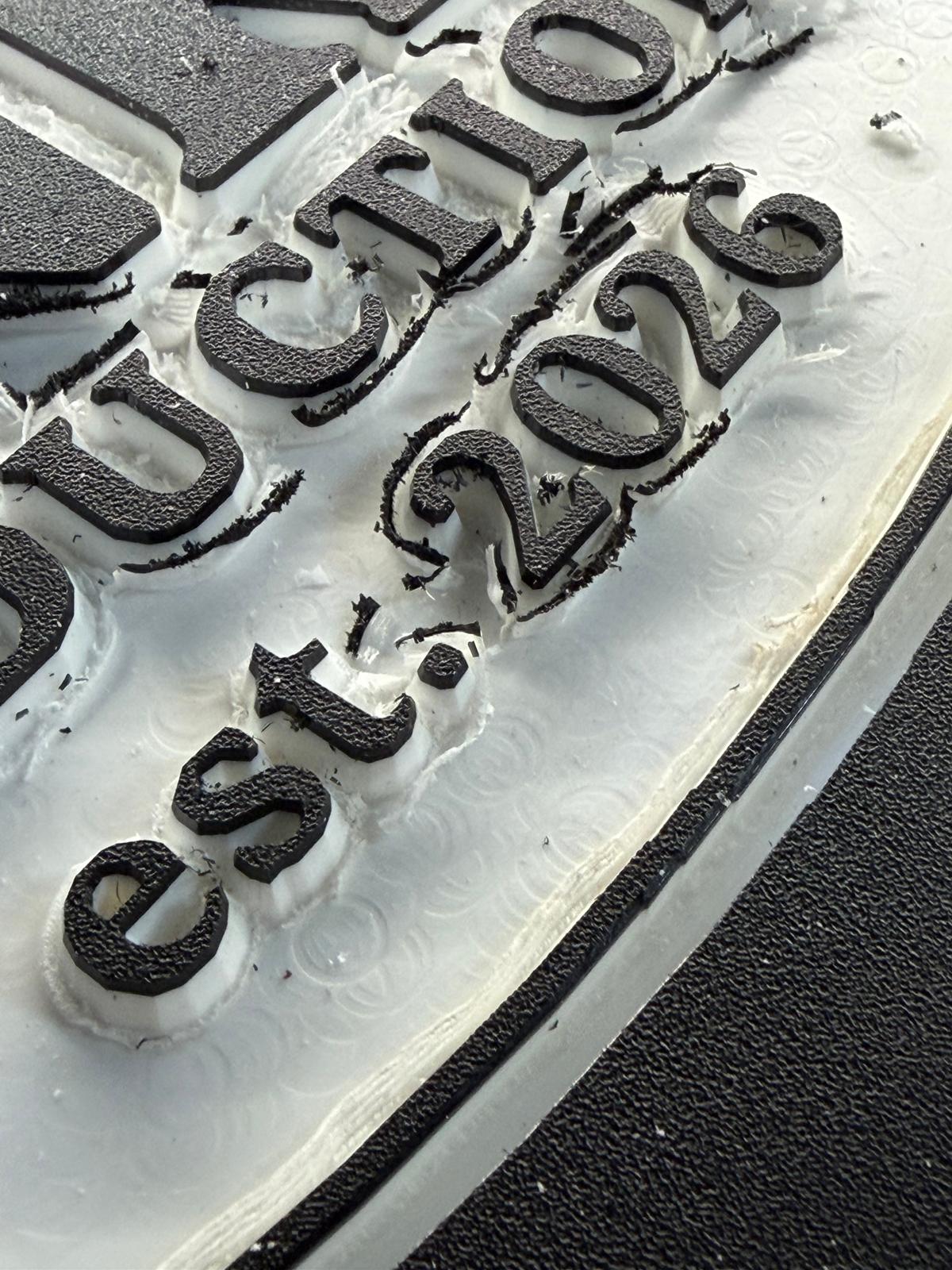
My first time trying a V-Carve on HDPE and would appreciate any advice on how to clean up these furry ‘caterpillars’ from this design, as well as tips to prevent them on the next project, if possible?
I used a 1/4 O-Flute first, then finished with a 30* V-Bit. I’m wondering if reversing this order would prevent the furries?
First time here in the forum. I appreciate any advice
Trevor
Others have more experience than I do cutting HDPE for this style of project, but:
- Use a very sharp cutter. I wouldn’t use that cutter on any other material to keep it pristine.
- I’d try to avoid V-cutters- there’s not enough room in the flutes for the correct geometry for plastic. (The rake angle?)
- I’ll defer to the plastic pros around here, but I might prefer something like HDU over HDPE if you need a V-carving.
2 Likes
Thanks! I appreciate the advice
I’ve only cut it a few times but had good success with O flutes. I understand from research as @robgrz stated that V bits can be problematic.
1 Like
Thanks! I used an O-flute and also a 30* V-bit to try a v-carve. And from what I’m gathering, I may have gone too deep for my first attempt… 0.2" (I’ve never been accused of that in the past…) 
1 Like
I do all my plastic V-carves V-bit first. Very slow RPM. for a 1/4" O-flute I use 8000-10000 RPM, and at least 60 ipm feed. And I usually bump that up at the machine 50-100%
Probably the same speed with the V-bit, but a slightly slower feed.
If the fuzzies are welded / melted together, you’re spinning too fast.
3 Likes
Thanks for the advice! I appreciate it!
It looks like you may need to offset your pocket tool path just a tad to clean up the V-bit operation. You can see the leftover fuzzies you mention and you can see the trace around the other letters (“est.”) where the square endmill did not remove this small offset or so it seems from the photo.
2 Likes
Thanks for that, I hadn’t considered it. I appreciate it.
1 Like