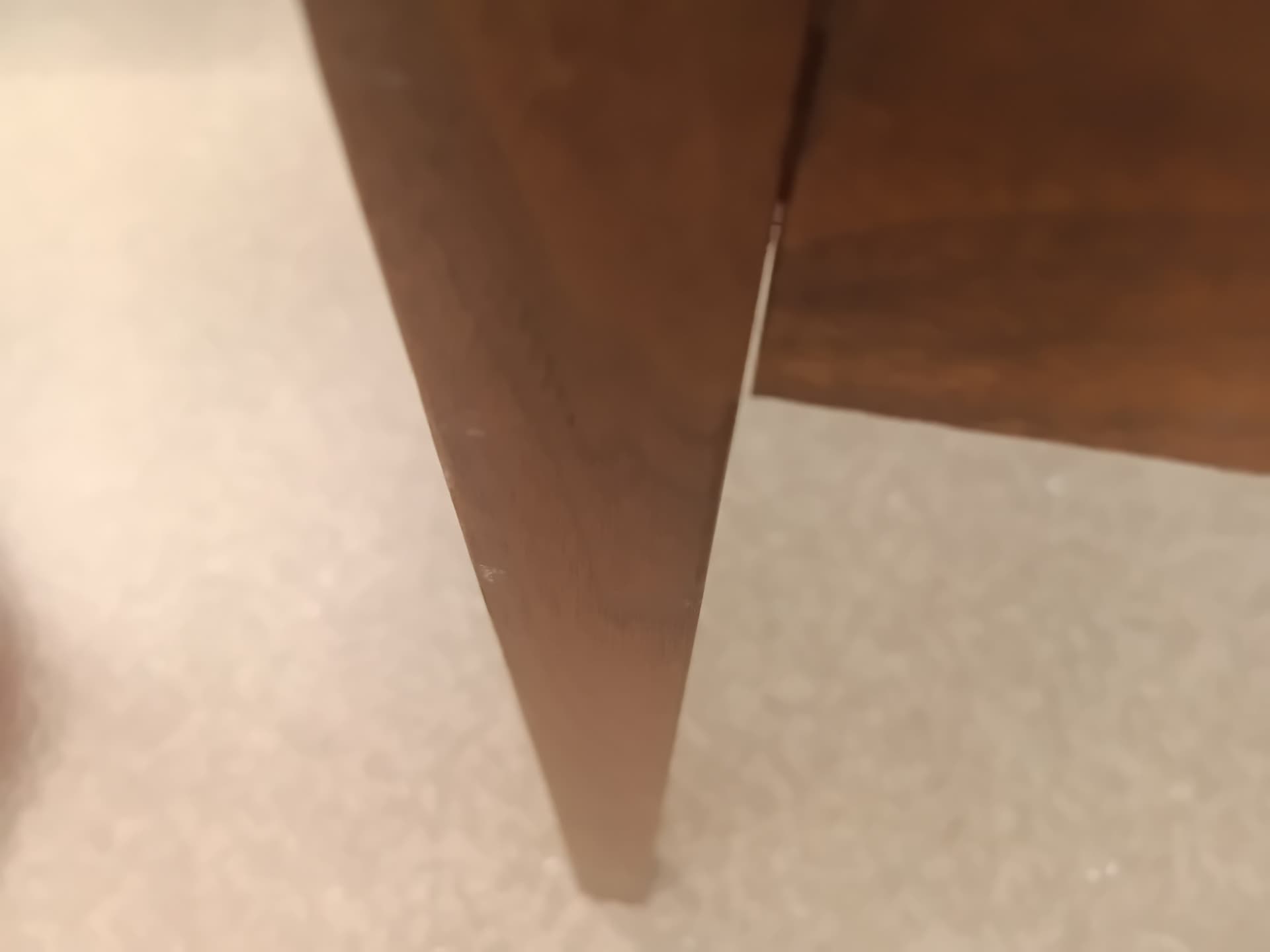
So Mortise and Tenon Joints obviously are not as strong as one would be happy with since they try to glue end grain, what as we know does not really hold. We also were told -I have not much experience- that dowels and even Dominos not -as one might think- increase the gluing surface but are just used to put both pieces precisely where they belong. Re-gluing of a failed jount is also suboptimal, since glue does not hold on glue.
To the carpenters out there:
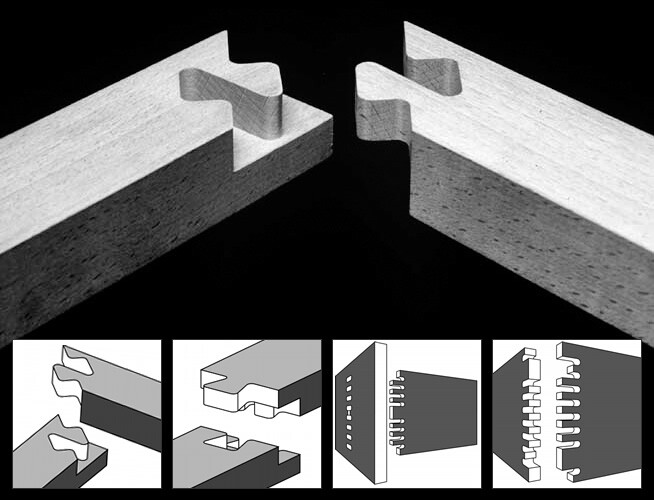
Wouldn’t it be useful to think of replacing these joints with more form-fitting joints like those:
Before I invest in a Domino-like tool or spending some time re-inventing the Jochen-Gros-joints to make the Luxurious Mid-Century Modern Chair by Kevin I would be happy to read opinions.
Actually, M&T joints are mostly face grain, but at 90 deg to each other. Most M&T joints fail because the joint was cut loose - most wood glues are not very good for gap-filling.
The simplest way to reinforce a M&T joint is with pegs, or a drawbore. They draw everything together, and stop the joint from moving and then working loose.
Good idea! In our local library they have a lot of books about woodworking. Was there few times to learn about finishing. Good reason to spend some time there, I LOVE libraries!
I have successfully used 1/8” to 1/2” hardwood dowels on the inside face of the M&T’s to effectively “pin” them together. This has been successful for numerous repairs. Just ensure you use some type of drill bit stop so you don’t accidentally add an additional “decorative feature” on the face of the furniture….
As Michael points out above with a drawbore. Best to use on the initial fabrication.
Depending on the furniture application of indoor or outdoor i will use an epoxy on the outdoor dowels. Yes, this is additional steps in the workflow but the joints have had less failure rates.
The joint you picture is not going to be as strong as a M&T because of the open face allowing movement if twisting force is applied to the joint. There’s plenty of face glue surface in a well fitted M&T, but glue isn’t the source of high strength in a joint. A pinned M&T joint is extremely strong and robust even without glue. It’s really hard to beat an M&T joint for strength; I am not aware of a superior method. Some of the traditional Japanese joints rival it, but take a lot more skill to execute well.