How do people tram the threaded table on the Nomad, and how much deviation should I expect out of the box?
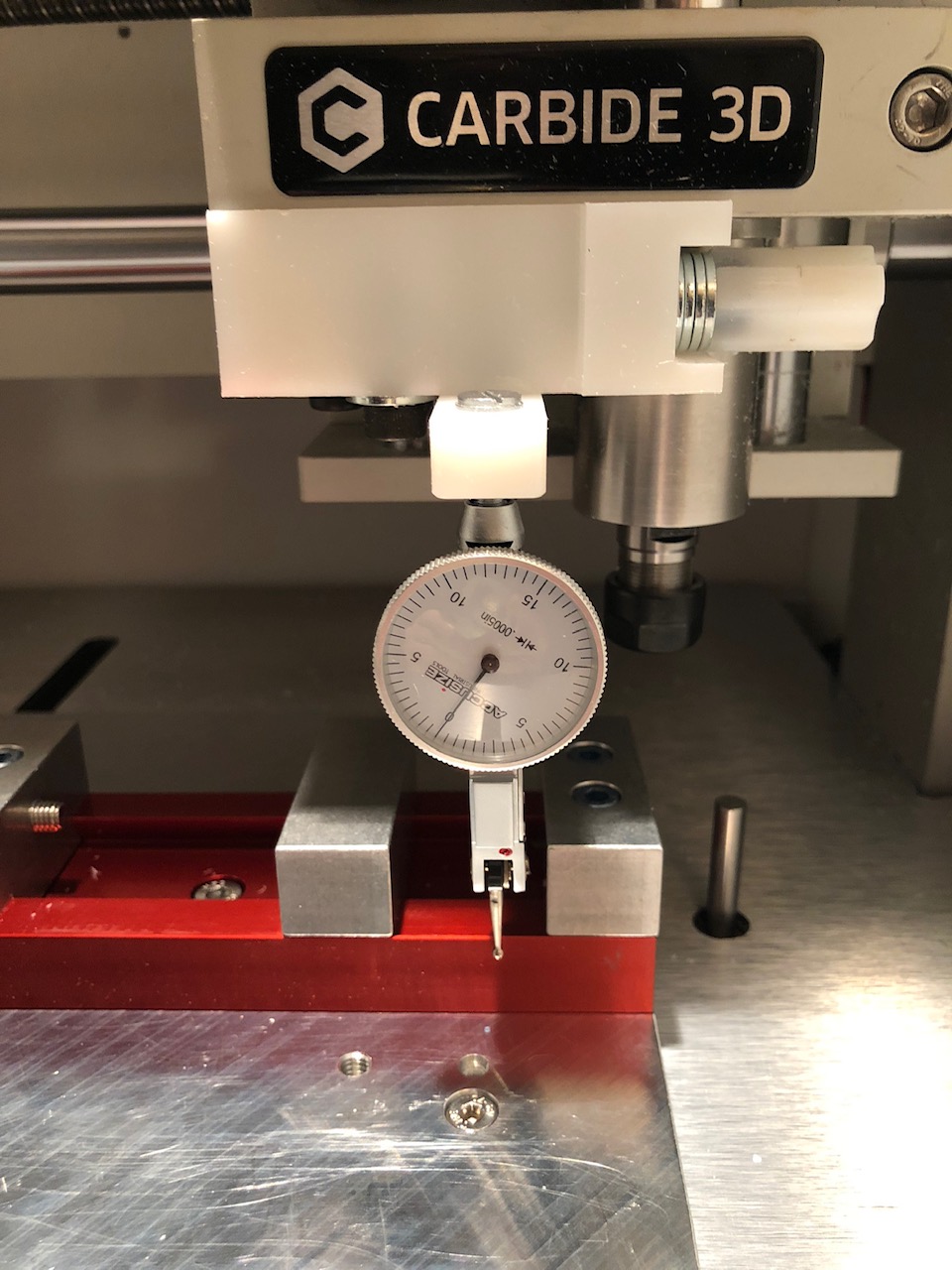
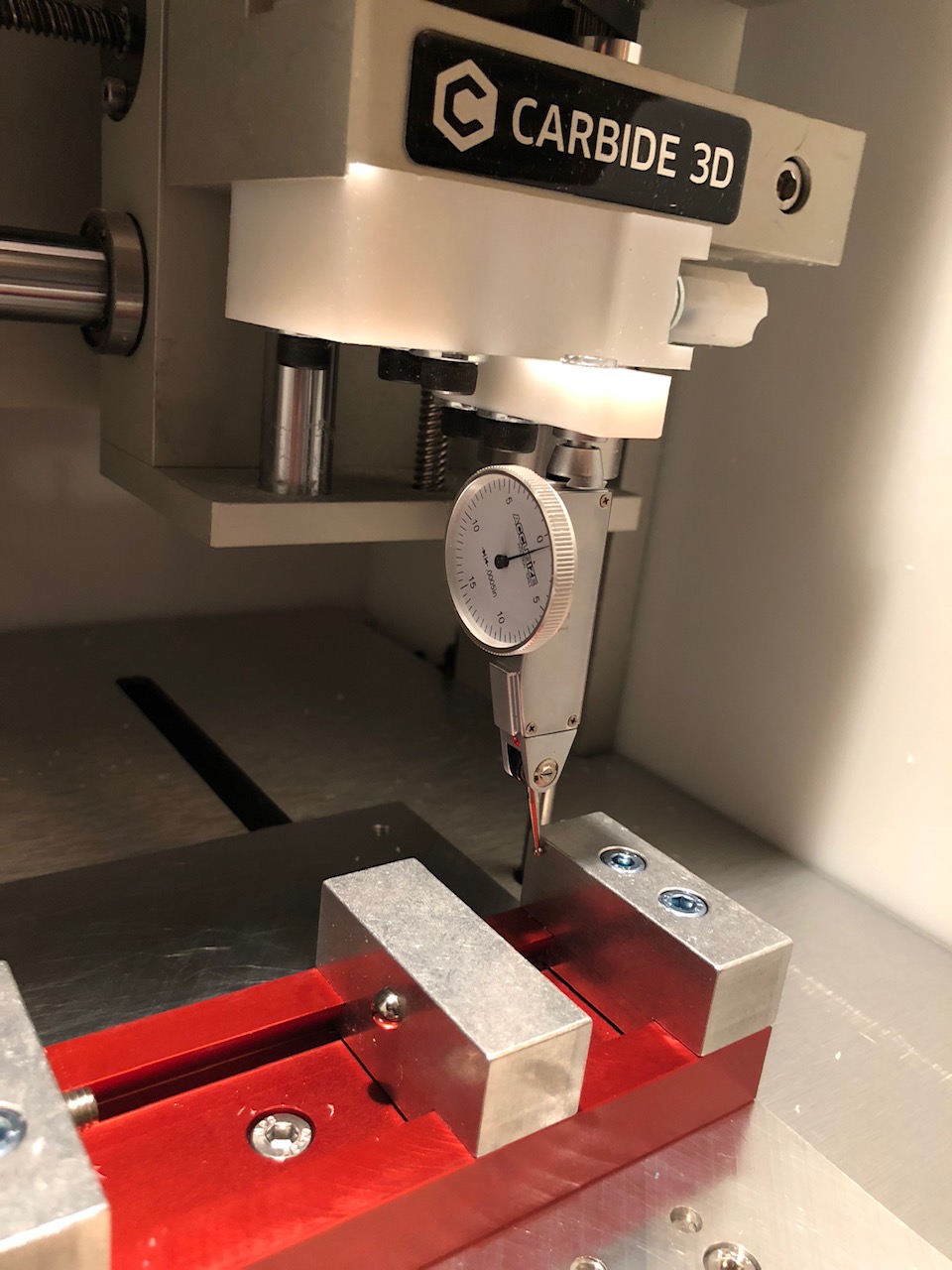
With the MDF wasteboard I can just mill it down. I am not sure if there is any adjustability for the threaded table. In the attached first video, I have an error side-to-side of more than my dial test indicator’s range (> 0.01" or 0.25mm I think):
Front-to-back it seems OK.
I shimmed it with strips of aluminum foil on the left side and got it to the state shown in the second video:
Is this the way to do it?
Even in the second video it’s not perfectly flat, is that an unevenness in the table itself?
@Jorge or someone wrote up instructions for surfacing the bed itself using the machine — before resorting to that, please contact us at support@carbide3d.com and we’ll do our best to work through this with you.
I use a sacrificial 6mm plastic on top of the threaded table (with oversized holes) so I don’t cut into it. I then just surfaced the sacrificial table.
I saw a picture on Instagram of someone who had just got a brand new Nomad (https://www.instagram.com/p/B8MXBy3JWRE). On the picture the bed had been surfaced with what looked like a 1/4" endmill. Are Carbide3D now surfacing the beds once installed on the machine before shipping?
My Nomad is probably around 18 months old and the bed on that was not faced.
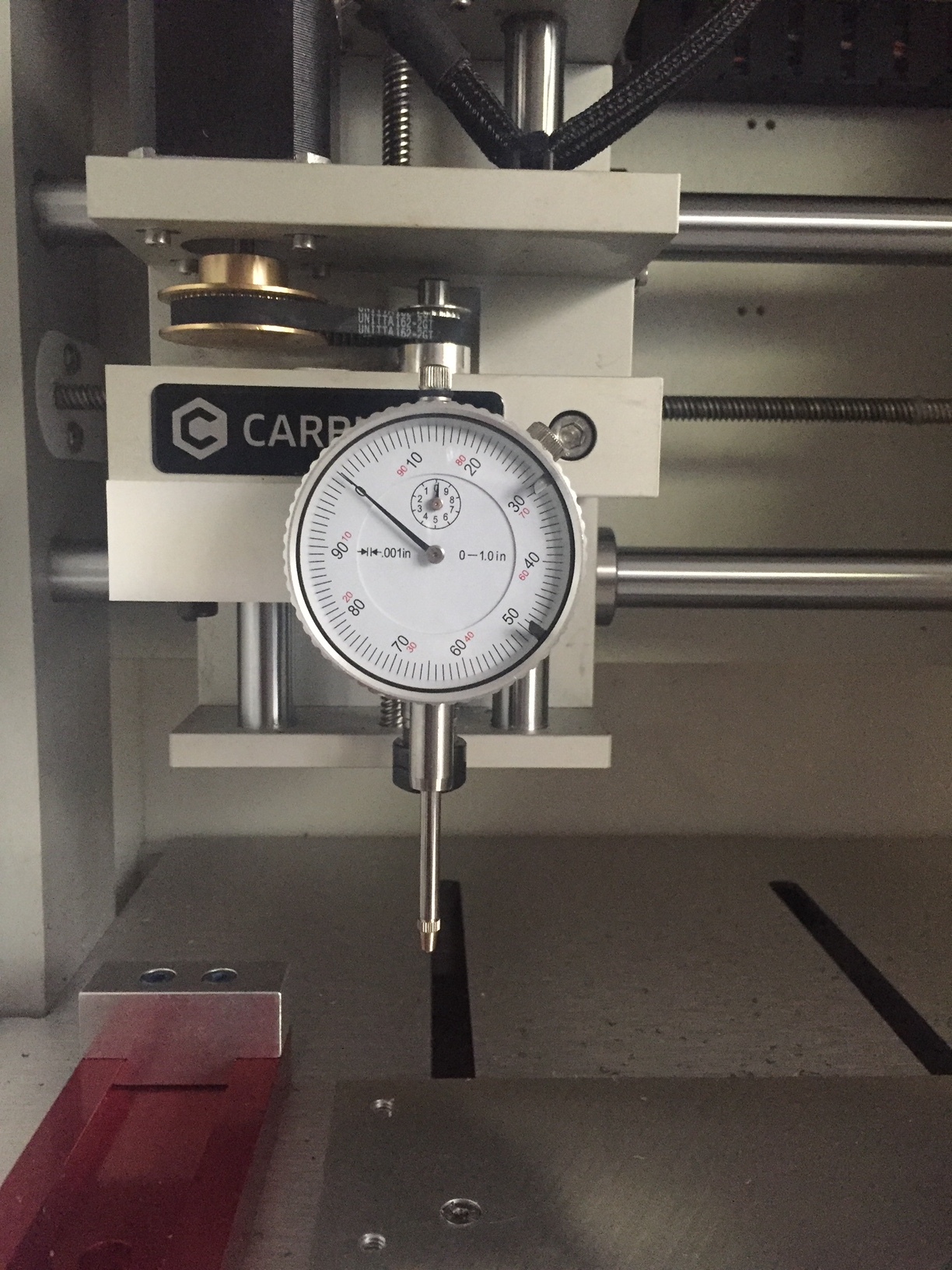
out of curiosity, how to install the test dial in R11 collet. My Nomad-Pro bought 13 months ago … I would also like to test there like you. I have the dial but too big and incompatible for this machine.
After test, i have same problem.
is it the Nomad Threaded Table or is it the machine table? I received it in January 2019.
Is there a production batch of the Nomam pro machine?
My threaded bed on a unit received in March, serial # 2344, has a threaded table flatness within 0.001 inch, and spindle runout within 0.01 mm. Link to video below.
Just a point of comparison, my aluminum threaded table is out by a whopping 0.15mm over about three inches of travel. I only realized something was off after facing down some stock and finding that it was thicker at one end. I haven’t checked whether it’s the table’s thickness that’s off or something else (I don’t have a surface place to check easily, and just measured with a dial test indicator held in the spindle collet).
My solution was to just shim it, but it would be nice to have a more permanent solution since I’ll have to do this all over again each time I swap the aluminum for an MDF wasteboard.