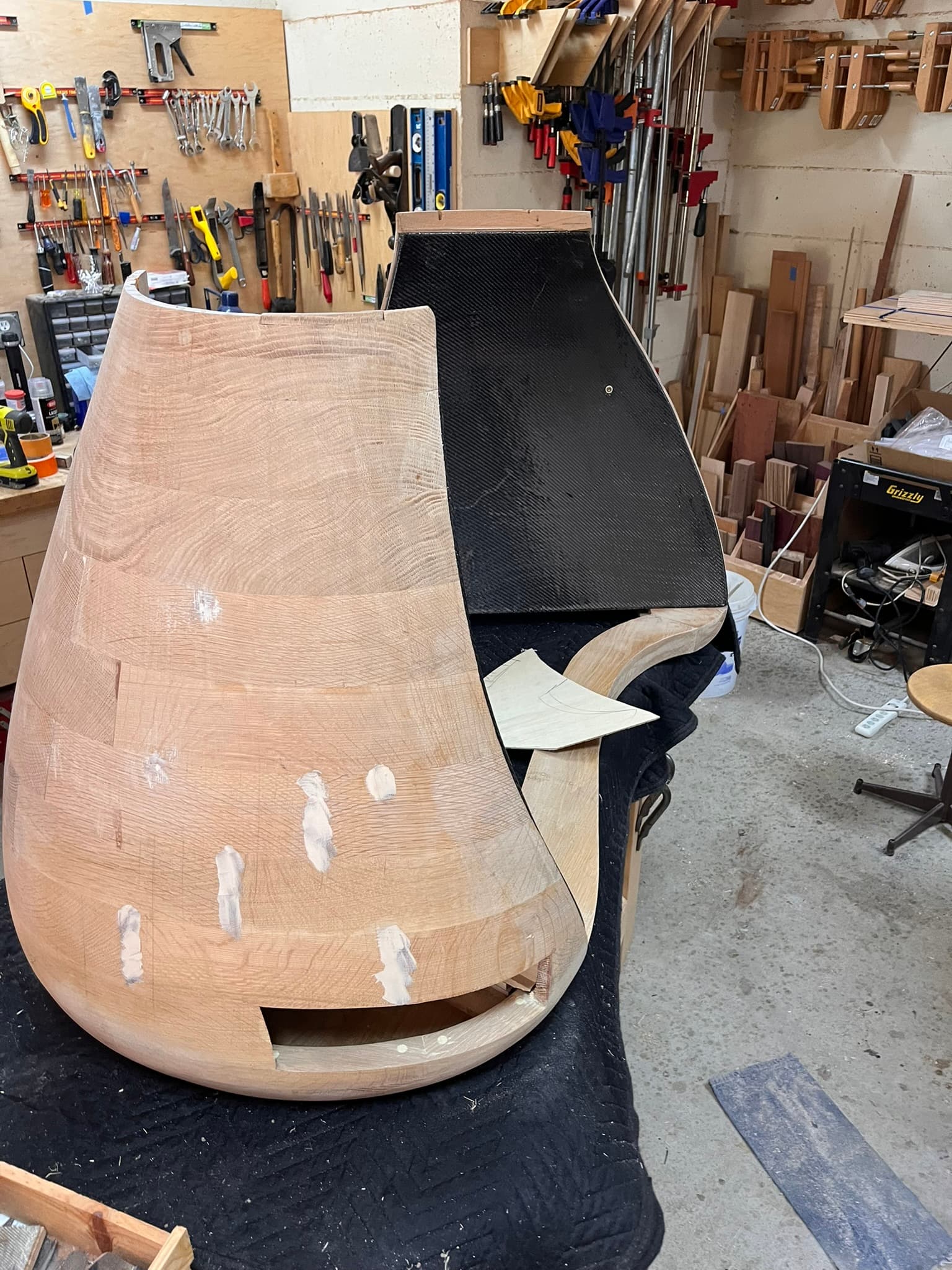
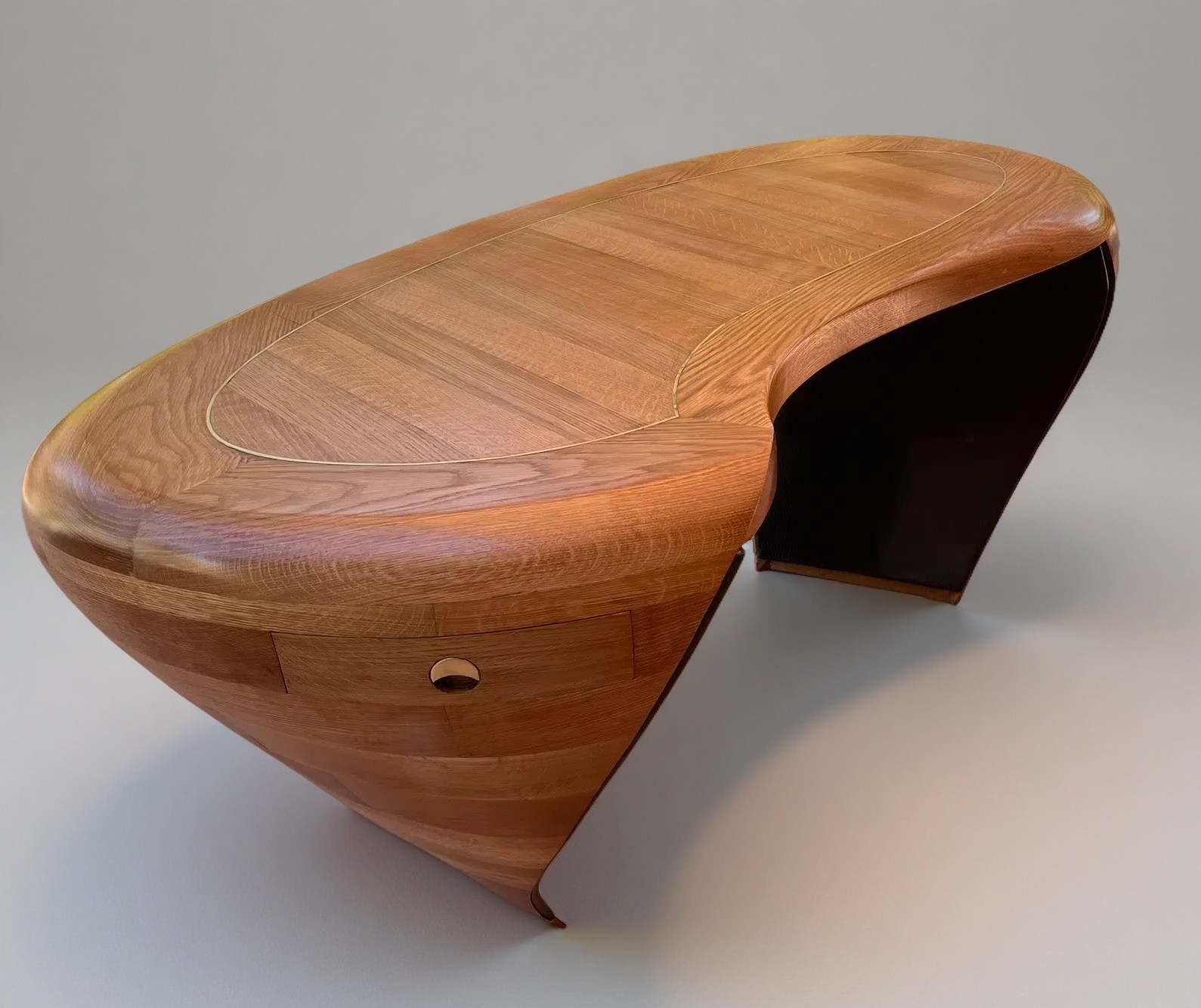
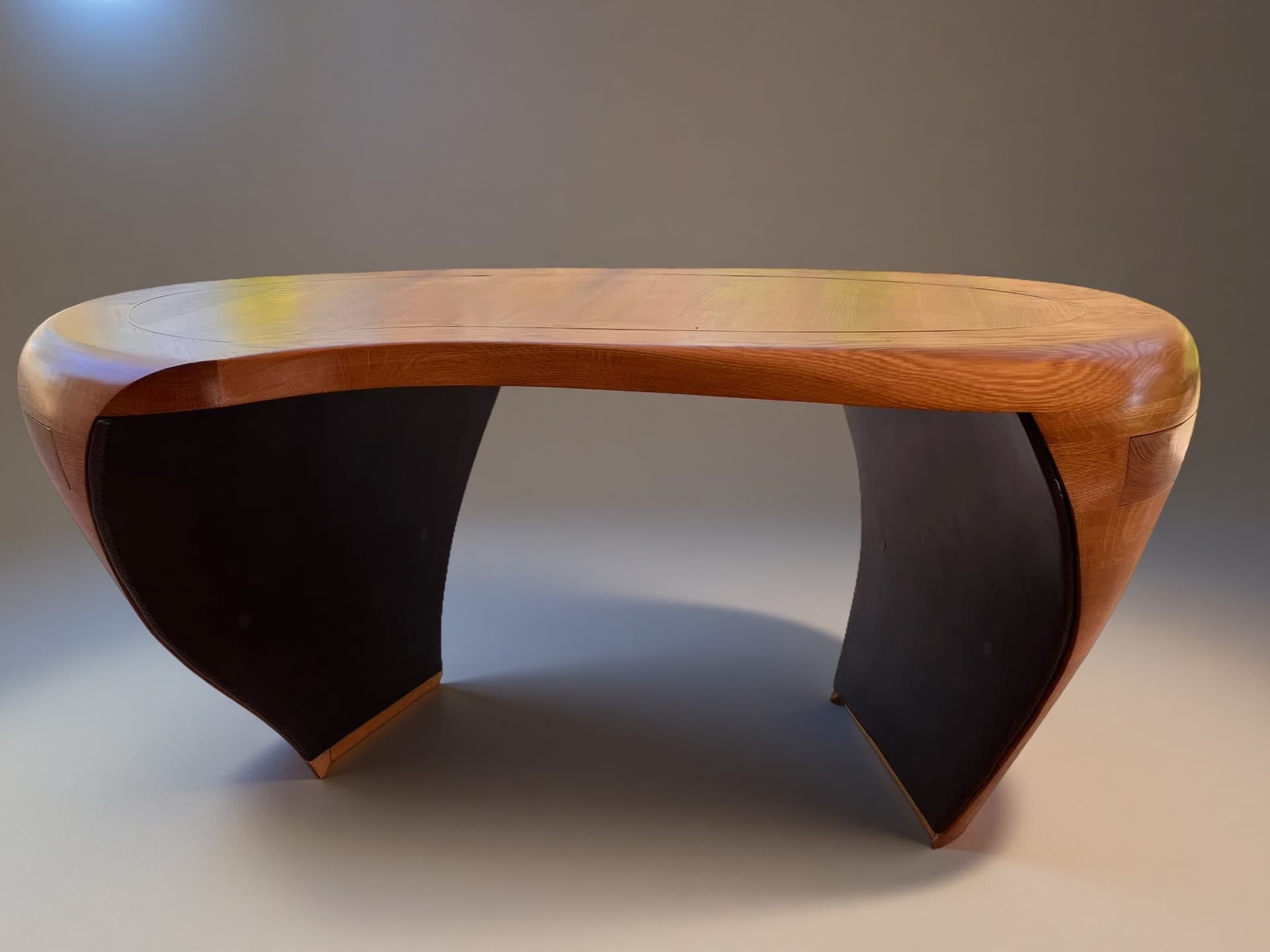
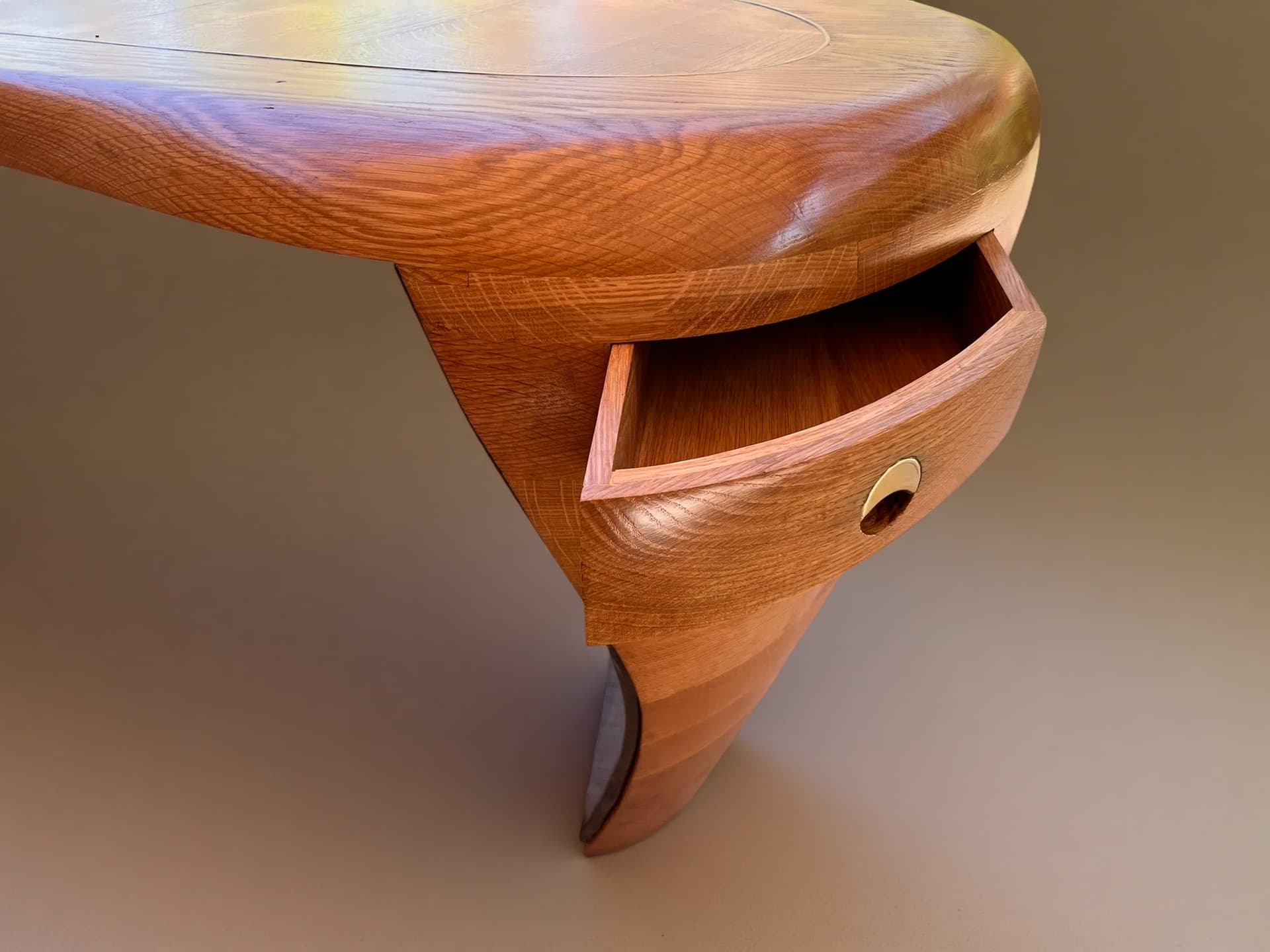
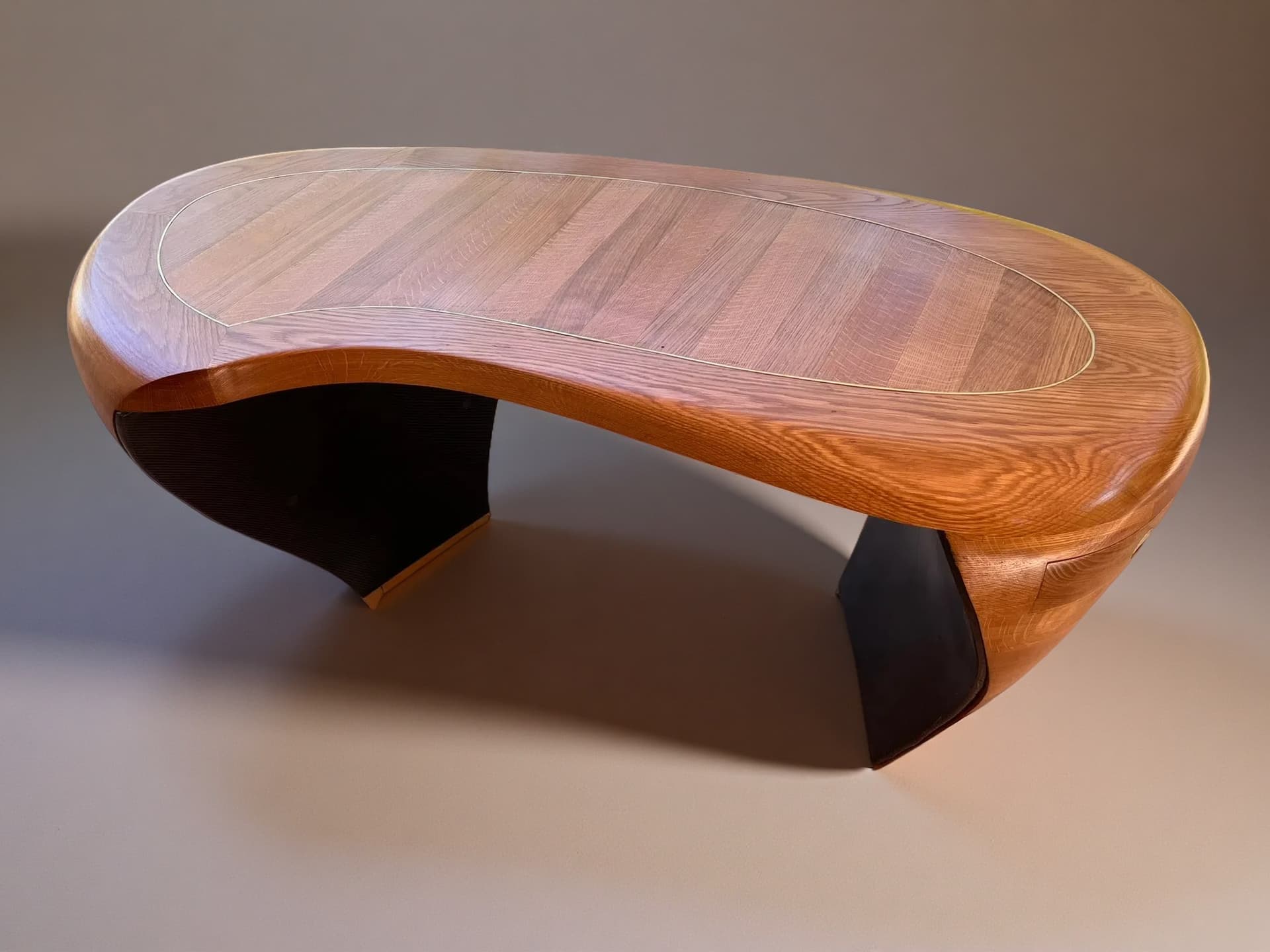
Here is another application of CNC in furniture design. This is a desk with a somewhat radical design, made of white oak and carbon fiber / epoxy composite. FYI, the photos are edited with an AI app to create backgrounds and shadows, etc,… Just because I did not have the courage to set up my photo studio. However the desk is NOT an AI generated object, as shown in the first photo taken in my shop.
My approach: Onshape to do a 3D model and Fusion to createe toolpaths, and then some kind of a bricklaying method to assemble the various pieces milled on my Shapeoko 5. Each part is usually milled as a two sided job. I do not mill the pieces entirely as it would take forever, i.e. there is significant griding and rasping after assembly. The carbon fiber inserts are make manually by laminating using the finished desk as mold.
The thought of how expensive that piece must be makes me shudder. That said, it’s worth every cent, whatever the cost might be. Excellent work.
You know what immediately jumped out to me about the design? Room for my dang knees
It looks like one could comfortably swivel back and forth in their office chair or just sit in generally unconventional positions without smashing against the side walls.
(I can’t be the only one who sits cross legged in their office chair…right )
I went back and checked out some of your earlier work as well. All incredible. One day I’ll be able to afford one of your pieces (or something of the same caliber if you don’t sell them)…maybe…ok probably not, but a man can dream
Appreciate you sharing the work, it’s been inspirational
I love the freeform design. I use the same program combination as you.
I used a 3/4 ball end mill with 0.050 step over ( .002 cusp ) to finish cut a brick built 50% scale Miata nose. The runtime is surprisingly quick. The finish is very good.
Unless you love the hands on removal, it would kill me.
As with many “freeform” designs, it looks like a serious tipping hazard. There’s a lot of solid (heavy) material up high and a small (narrow) footprint down low.
Yeah I thought the same thing, but based on their previous work/experience I’m giving some benefit of the doubt
That and the fact that physics can be tricked into doing some strange things with the right geometry. I mean, it’s certainly top heavy, no doubt about that. I’m just not certain that top heavy necessarily means tipping hazard
HeuristicBishop thanks for your humorous comments. And by the way my production is priceless since I do no sell anything but giving them away to friends and family! My only constraint is to find room in an alrady crowded house.
As for the “top heavy” profile, it is true that until the last moment, when I had assembled the last “bricks” at the bottom and put the whole thing upright, I thought it would tip over. I had already started making a foot in carbon fiber with a larger footprint. But to my pleasant surprise the desk was very stable. The weight of the thing must have helped a lot though…
Since you used Onshape to create the table, you can easy get the Center a Gravity and
the Moments of Inertia values (now you just have to figure out what they mean).

 )
)


