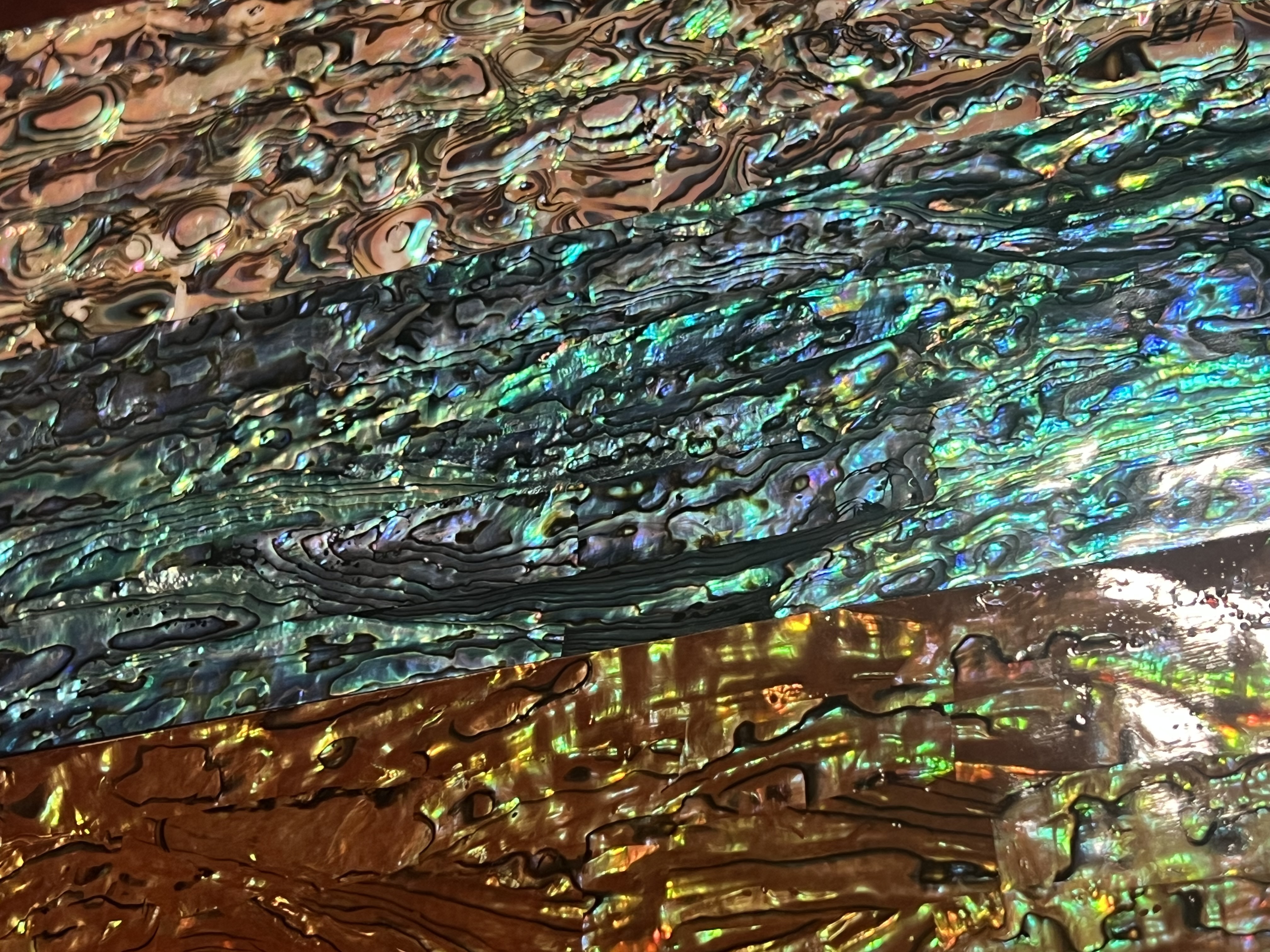
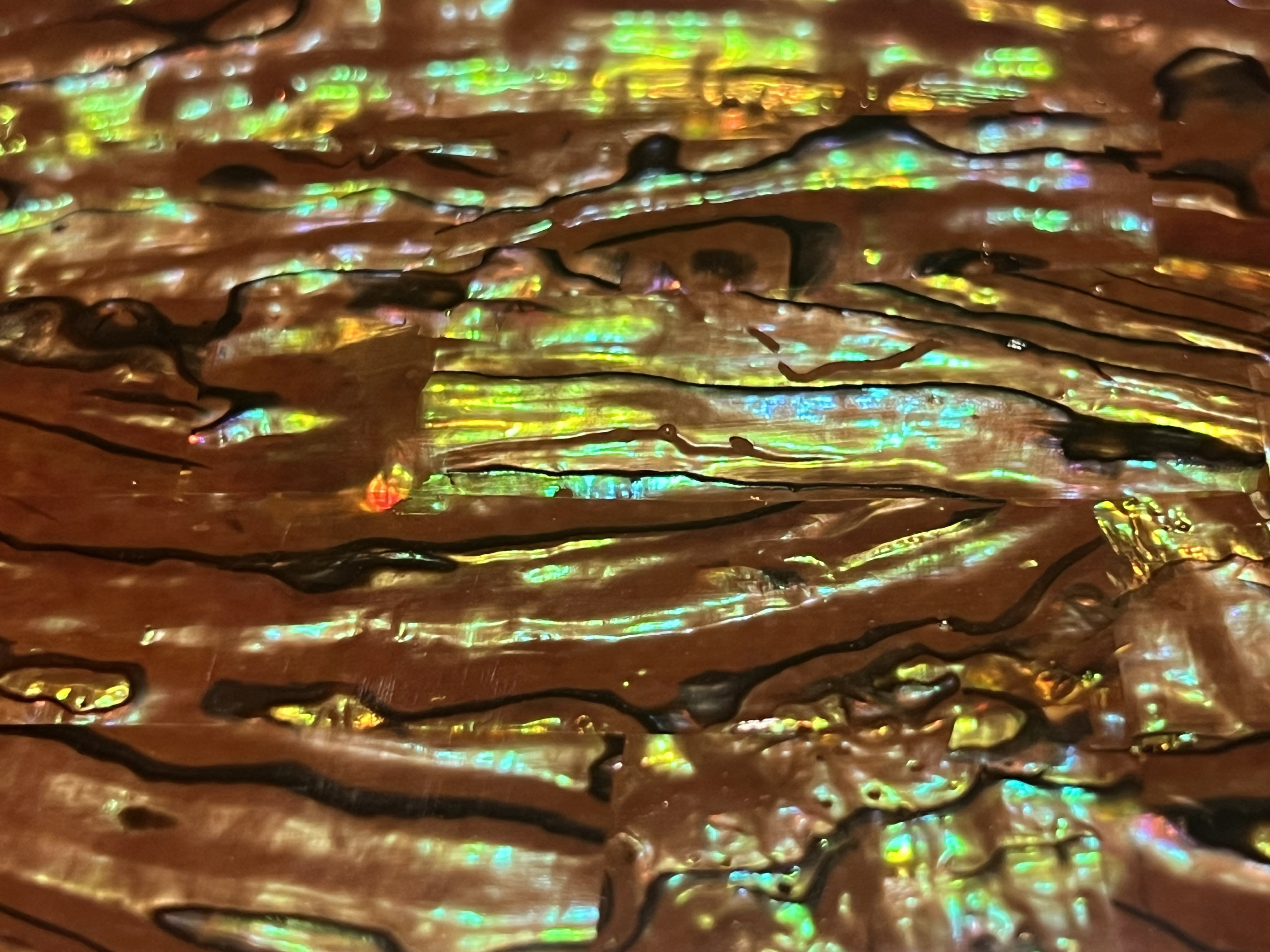
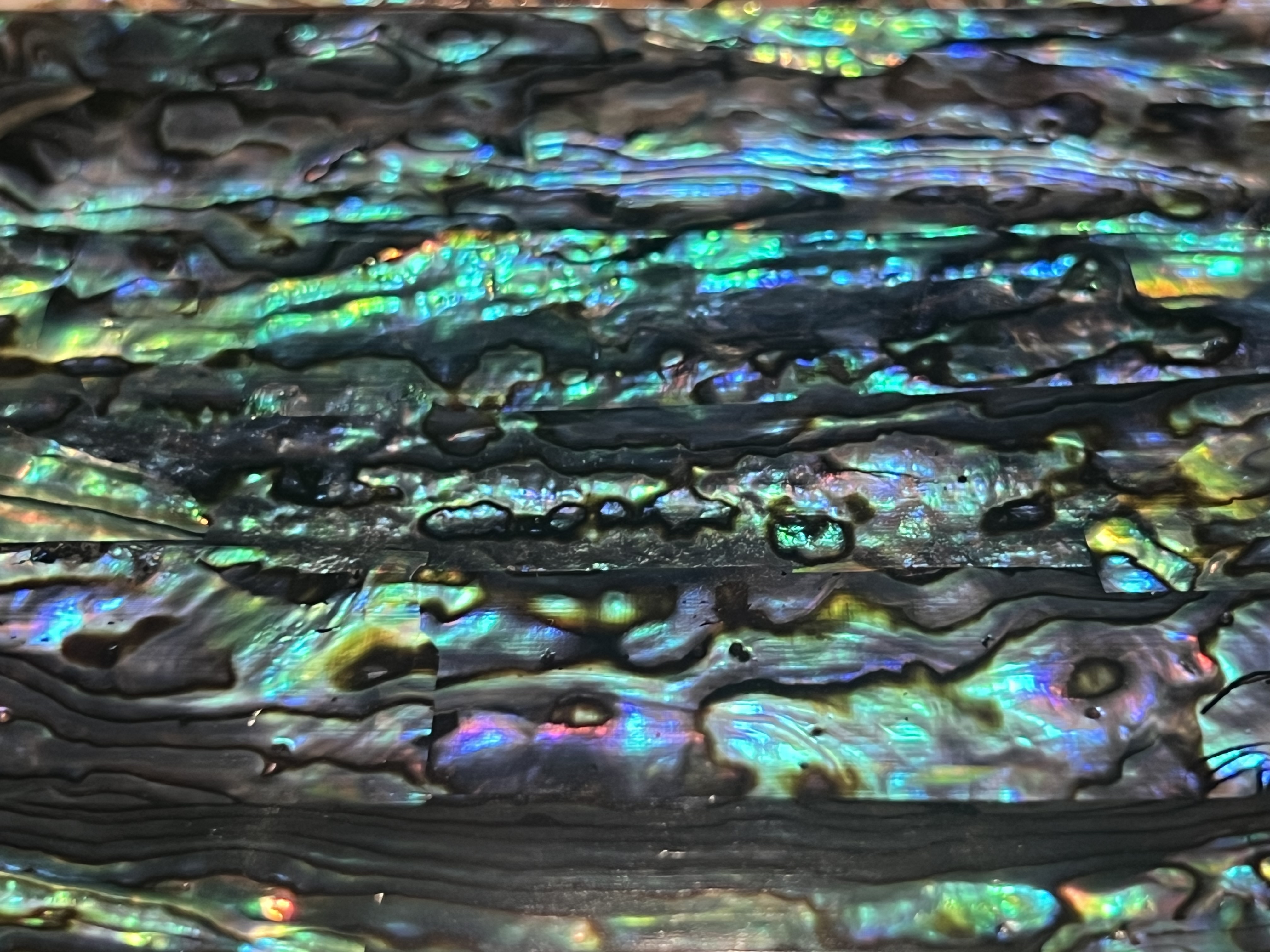
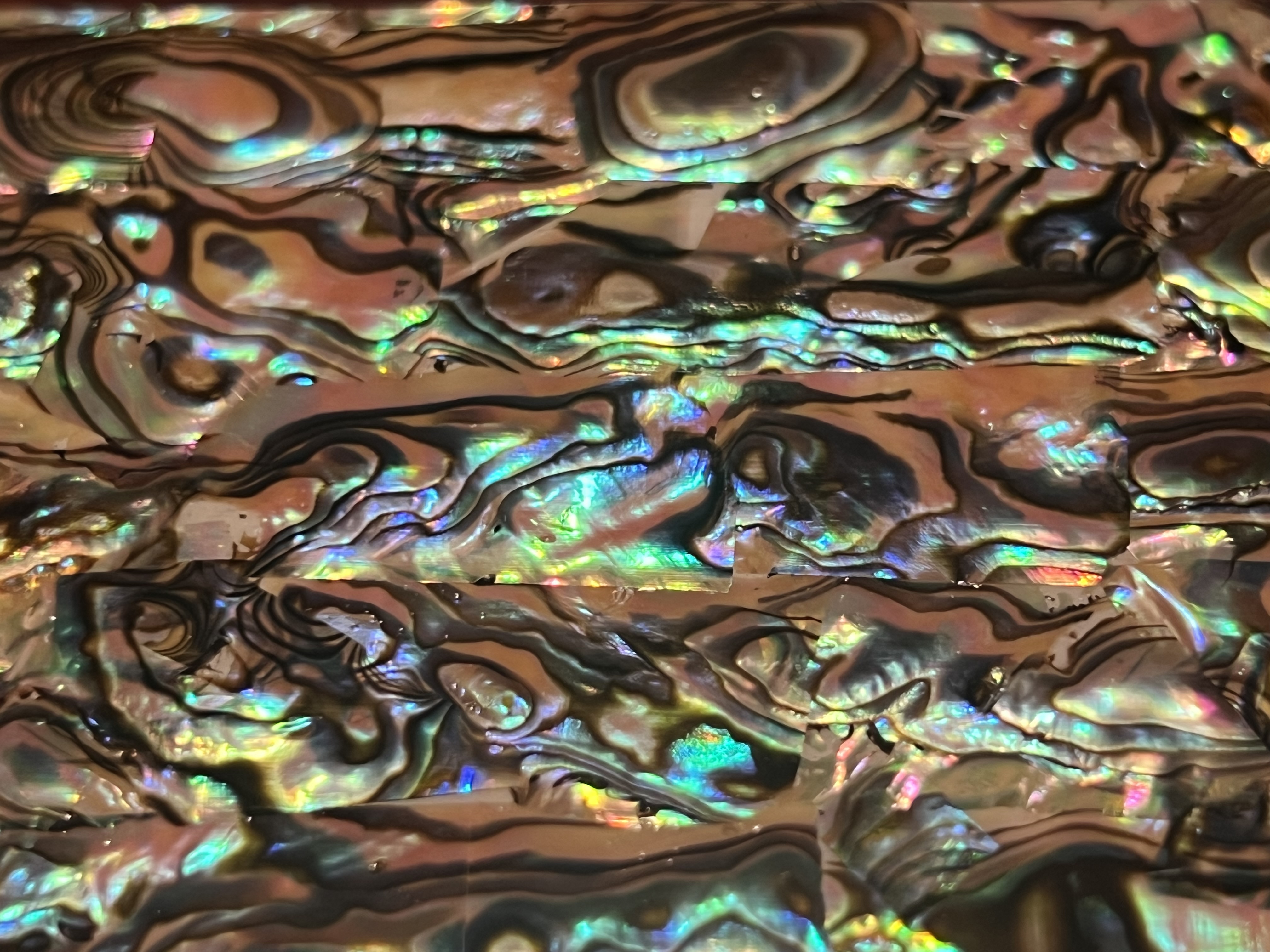
A few of the neutral colors came in.
While they are not quite as “fun”, they are still beautiful. The subdued colors should be easier to integrate into less ostentatious pieces
Need to finish up my submerged cutting table and get a few of those nice MOP (mother of pearl) cutters from precise bits.
@TDA do you folks have any specific advice for cutting abalone veneer? Any common pitfalls one should watch out for beyond the usual runout/small tools stuff
Thanks as always (even if you don’t have any specific info to share…though I don’t think that’s ever happened )
You totally missed the ball there, Tyler! A stunning, custom-designed, personalized keyfob? If that is not particularly valuable you are using the wrong metric… Seriously, beautiful design and execution.
Usual preface, I’m with PreciseBits so while I try to only post general information take everything I say with the understanding that I have a bias.
Sorry, Monday’s aren’t great for being able to over here.
Short version other than tool specific stuff.
Take light passes at it (depending on how thick the veneer is). The material is really inconsistent so better to have a decent amount of margin for when you hit a pocket of tougher material.
You have to have EXTREMELY rigid hold down for good results. Pretty much everyone that works with these in production is either hide or CA gluing them to MDF or phenolic blanks and then hard mounting or vacuum mounting those. It’s mostly due to the small chiploads and variability. Any ability for the material to move could have significant percentage effects to the settings you are cutting with.
Tool wise I won’t get into too much for obvious reasons. Have to be more selective with geometry though. Something with a big edge radius, lower rake, etc. like standard metal cutters will help on the strength side for the flute. However, it is also much more likely to chip or fray the material as that’s a bigger impact surface. Can have some luck with composite cutters depending on the type. Hard to say much more even in a general sense without knowing at least the depth you need to hit and the diameter of tooling you’re looking at.
Hope that’s useful. Let me know if there’s something I can help with.
Dealing with all the orders and questions that come in over the weekend? Been there, done that
No worries on the time taken. This is a public forum, not a venue for precise bits support. There’s certainly no SLA here and I appreciate any answer at all (while also maintaining no expectation for one )
The extremely rigid hold down is great to know up front, I wasn’t going to go to that extent and I’m sure I would have wasted some material learning that lesson.
I’ll have to pick up some phenolic resin backing paper as a fall back for my first plan of very thin fixturing wax. I’ve never used dewaxing agents before but they’re supposed to be rather gentle cleaners…we’ll see if they mess with the abalone
As far as depths go, these veneers are extremely thin. Only like 0.2mm. Thin enough that I might try some of my stubby multi flute v bits used for isolation routing copper clad.
I’ll be getting some thicker material in at some point since it seems to be much cheaper in the long run. I’ll pick up some shell specific tools for when that time comes. Probably in the 1mm diameter range.
Regarding the plan to cut fully submerged, is there any reason not too? It doesn’t seem porous or have any properties to say I shouldn’t submerge it. That along with the experience from others who have shown good results makes me want to cut fully submerged but if you’ve got any words to share on that subject I’m all ears.
(I’m just now rereading this and realizing that this material literally spends its entire life fully submerged…so it’s probably fine )
Should be okay with the wax as long as you have a decent bond on both sides. I’ve had hit an miss with them or they being too “soft” to prevent movement. Depends on they type and methods used. One of the reasons for CA/hide/fish glue is that they can either be popped by heat (CA) or just soaked in water to release the material.
That thin you should be okay with the size you are using. Going to be a bigger issue with flex depending on what it’s mounted too and how well.
You will typically burn through “V-bits” pretty fast if they are intended for soft media. The metal ones will last a bit longer. Most “V” tooling has either no or little helix (flute twist). So it makes the potential flexible issue less concerning. It does mean more lateral forces on the material though. Short version of that is that it might be harder on the tool and material.
You should be fine submerging pure natural material. Coated or dyed and that will be luck of the draw. Watch your mounting too, some mounting materials don’t like water or soften in it.


 )
)
 (while also maintaining no expectation for one
 )
)
