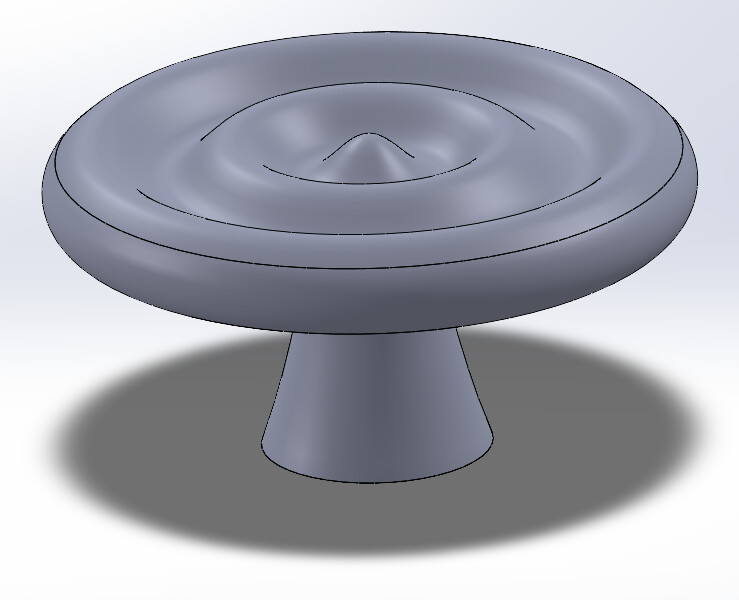
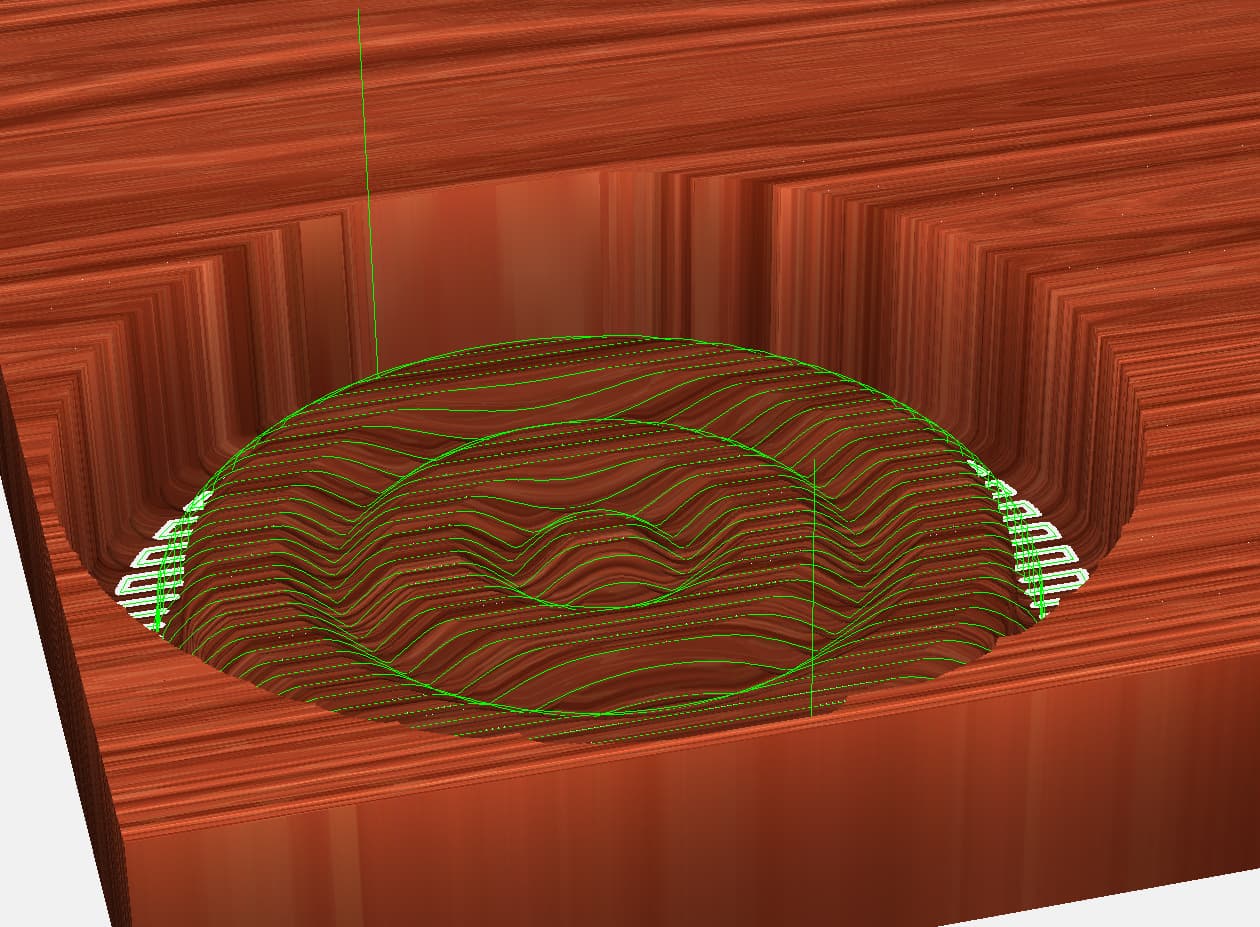
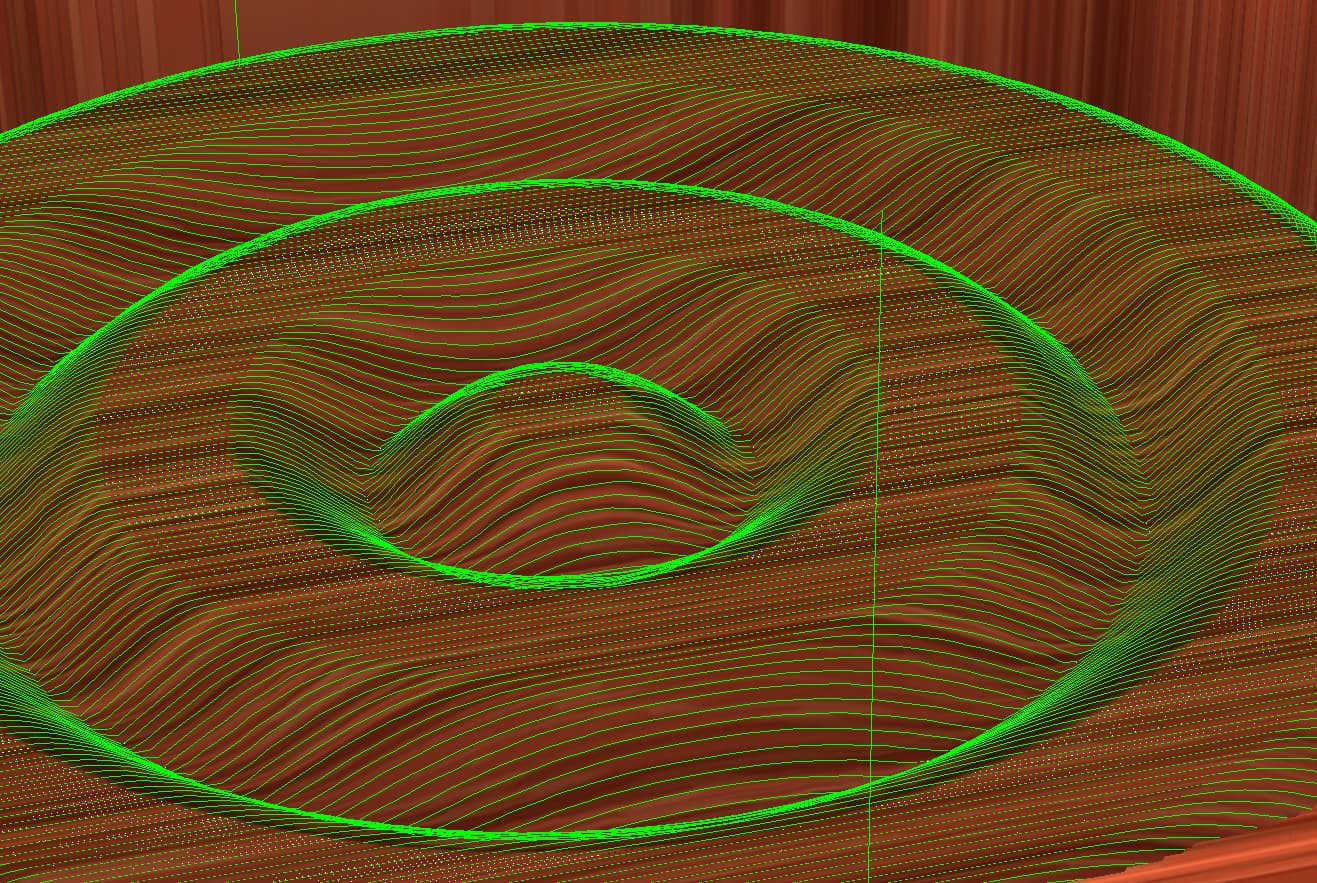
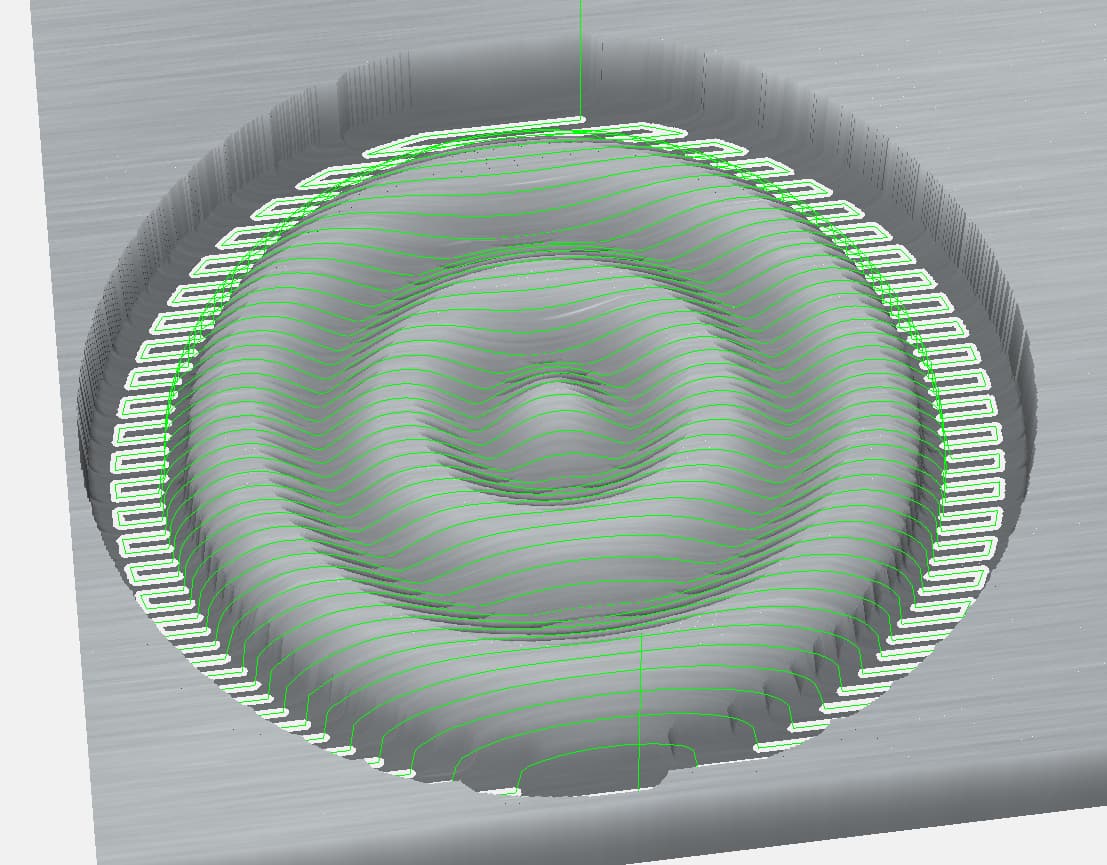
Hello- I am trying to create the geometry for the top face of some unique cabinet pulls, but the toolpaths being generated flatten out the tops of the cosine-shaped features. The geometry comes from an STL I made in SolidWorks, and I’m planning on finishing the “pedestal” part on my lathe, so I’m just carving the top geometry. The model looks right in the 3D viewer, but when I generate the fine toolpath, it effectively terraces the top of my ripples. Is this some sort of vertical resolution issue?
In regards to my project in particular, a potential fix is to just sit down and do geometry to manually dive my bit in circles using contours until I have the form I want, but I would rather understand why the paths are being generated this way.
Here are pictures of the solidworks mode, the 3D model view in Carbide Create Pro, and the 3D simulation of the toolpaths. I am running a Onefinity CNC based on the GRBL output, and I can confirm that the output matches the toolpath simulation.
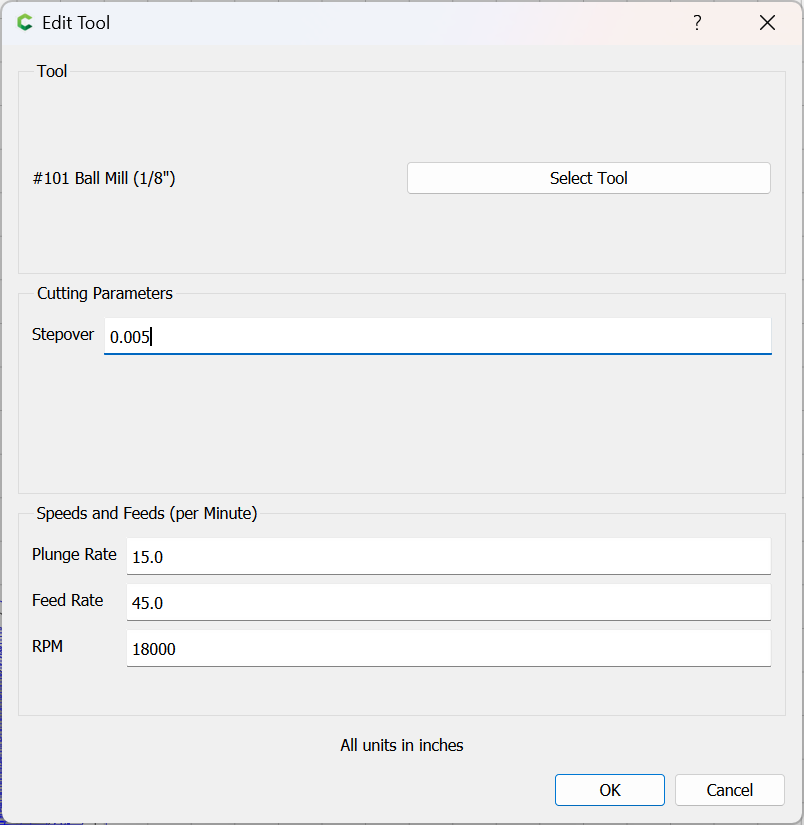
You know what- I might have just narrowed it down to an issue with my ball nose endmill settings. Thank you for prompting me to look into that.
If I select one of the factory Shapeoko ball nose end mills, it looks like it comes out perfect. I’ll play around with it a little bit and come back with an update if I figure out the exact issue with my tool setup. Stay tuned…
I finally had time to work on this again. 2 things:
Despite appearing like round features, I’m still getting flat tops on my cabinet pull.
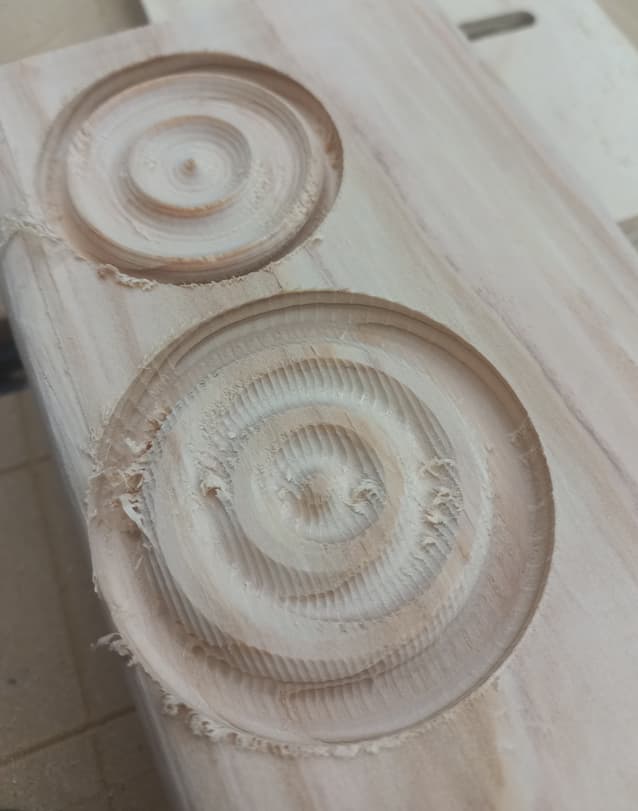
I coded up an algorithm to calculate my own radii and depths for a bunch of circles that should create the desired geometry, and it turned out…OK. I think my cheapo bit might just not be very… 1/8th.
Here’s a test run of my algorithm (top left) next to the Carbide Create PRO carving (bottom right), both of which used a 0.04" spacing between paths:
Another thing which will help is to reduce the stock size before doing the 3D model — the pixel dimensions are spread out across the stock and reducing the distance they have to cover will help.
Alternately, this design is straight-forward enough that you could just cut it using circular toolpaths w/ ball-nosed tools to appropriate depths.