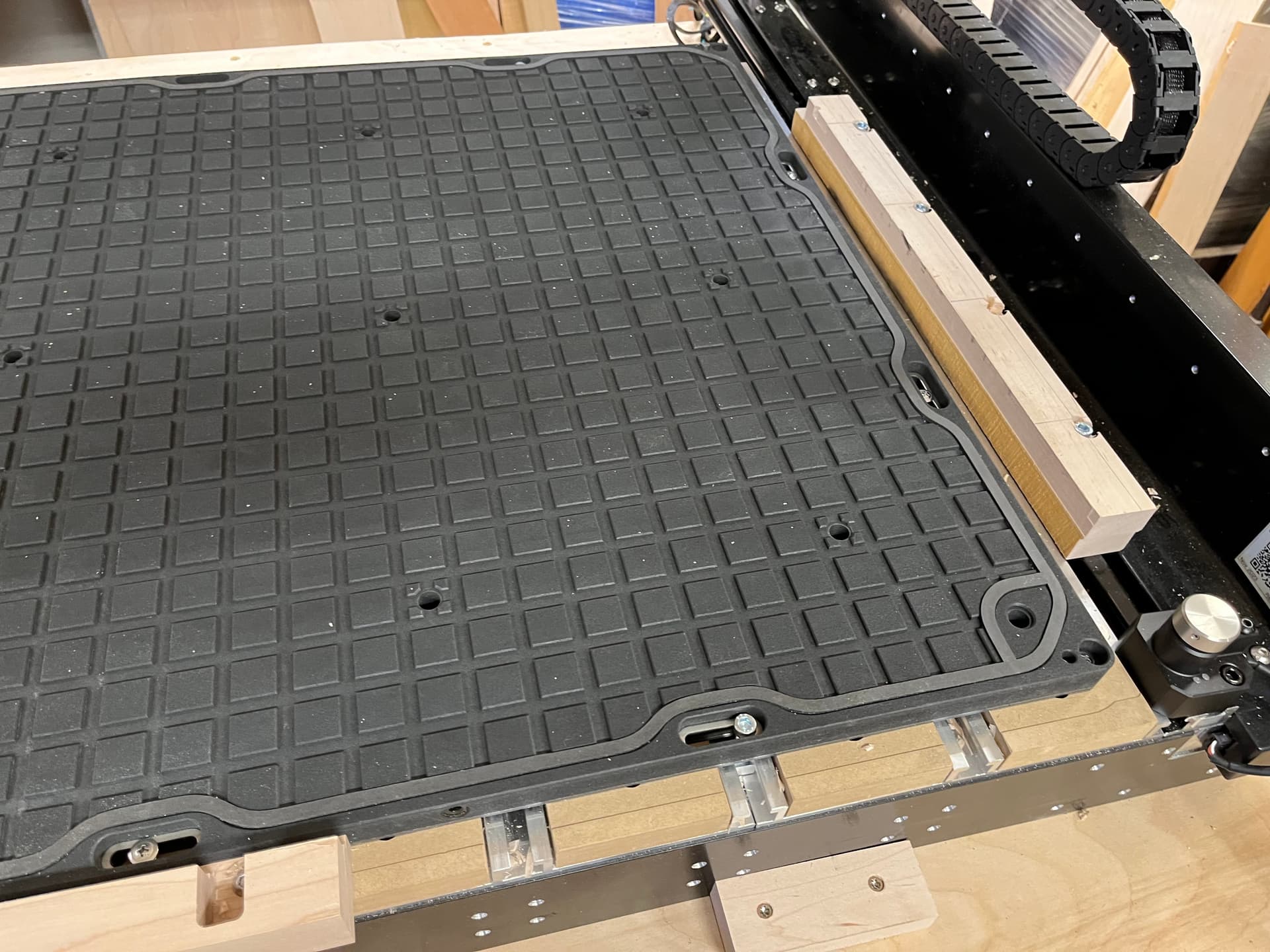
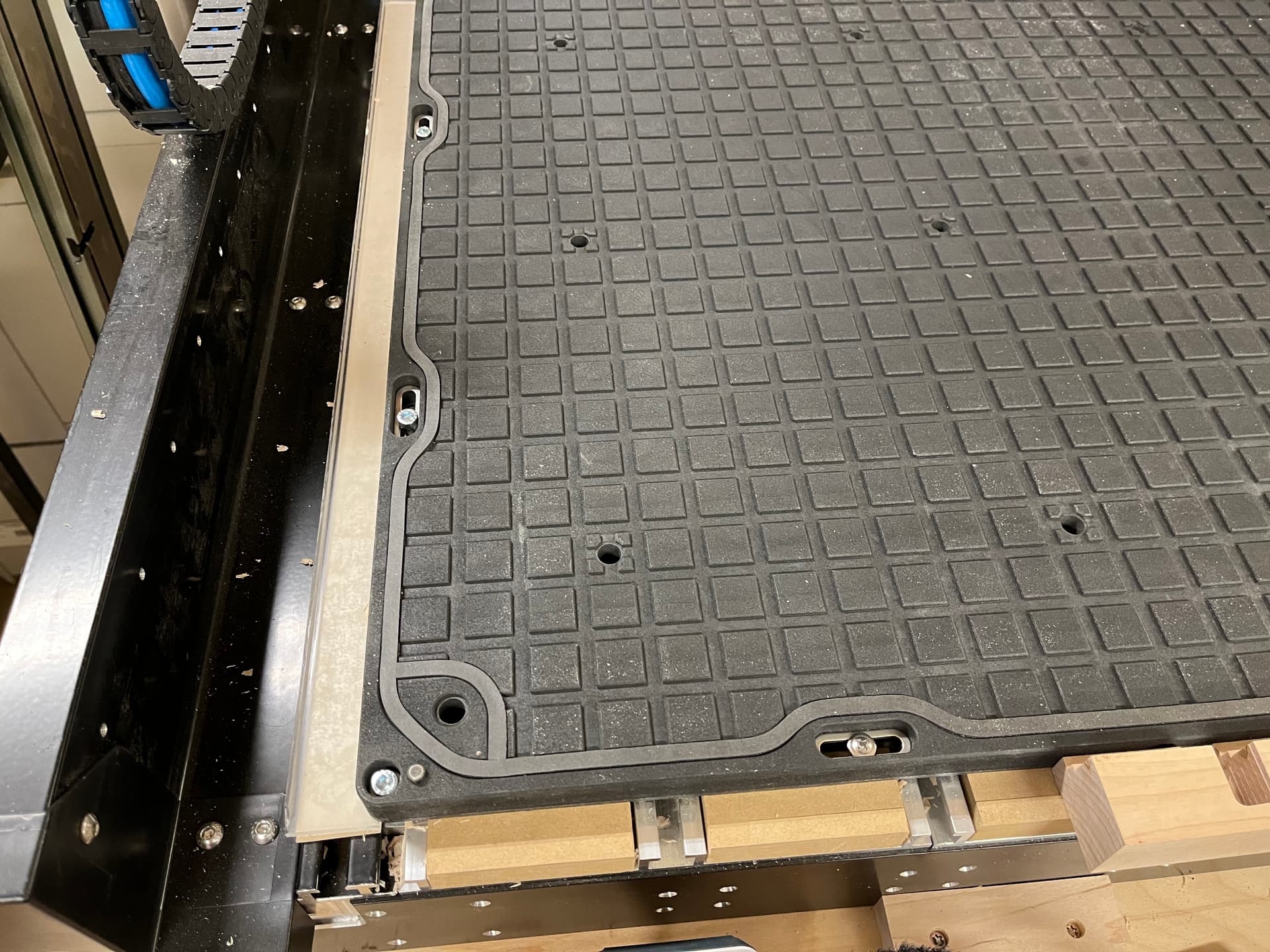
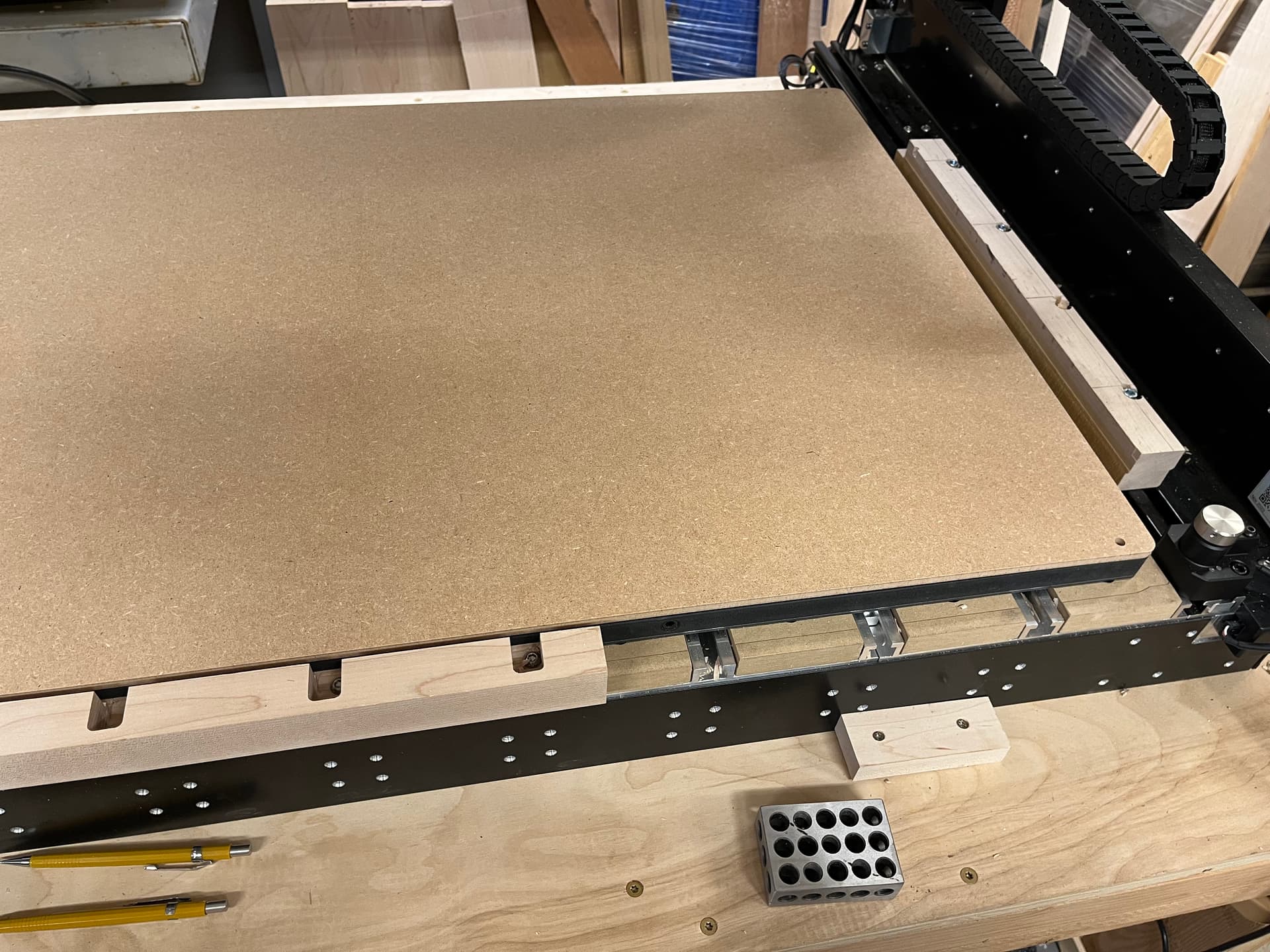
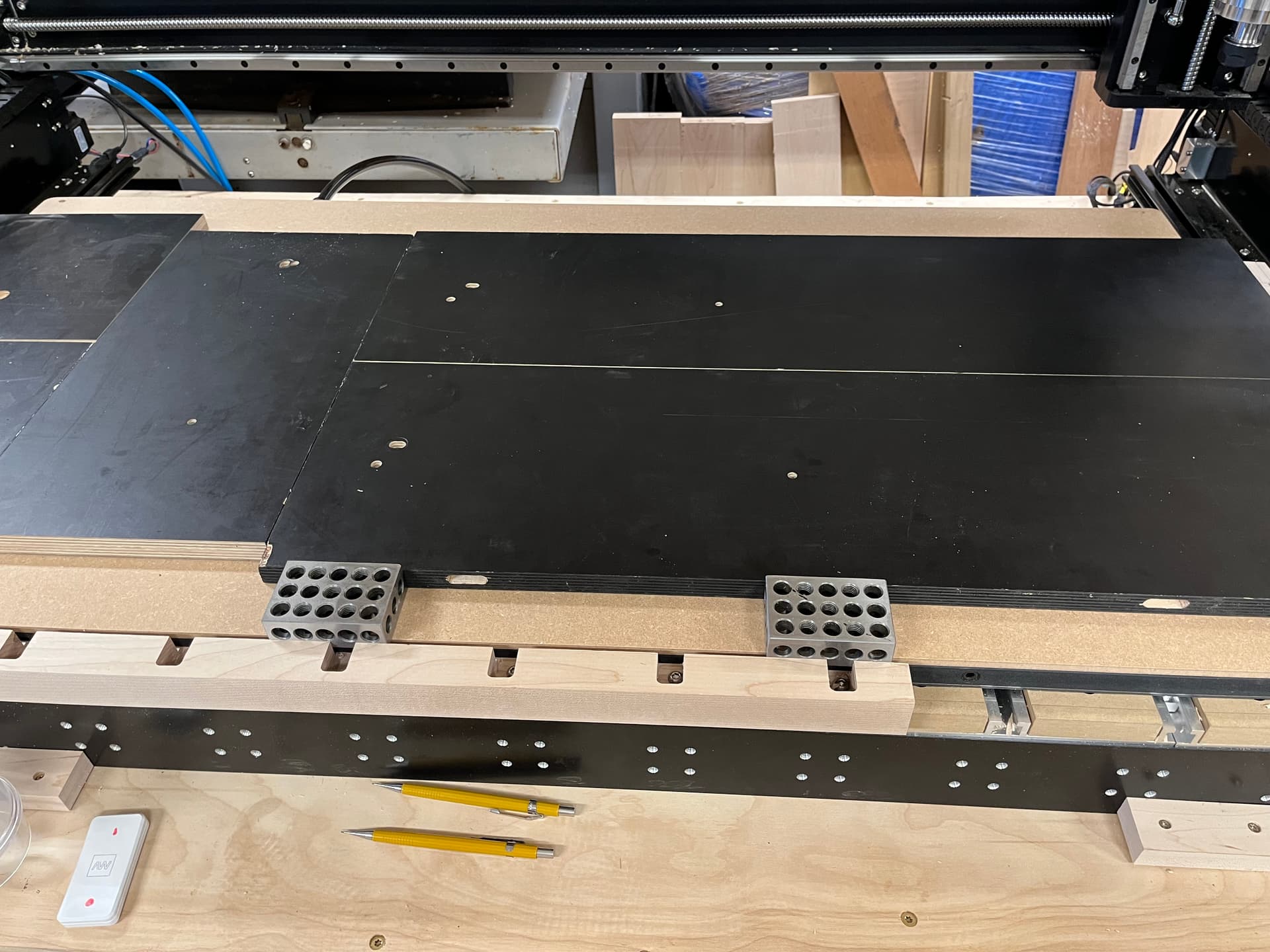
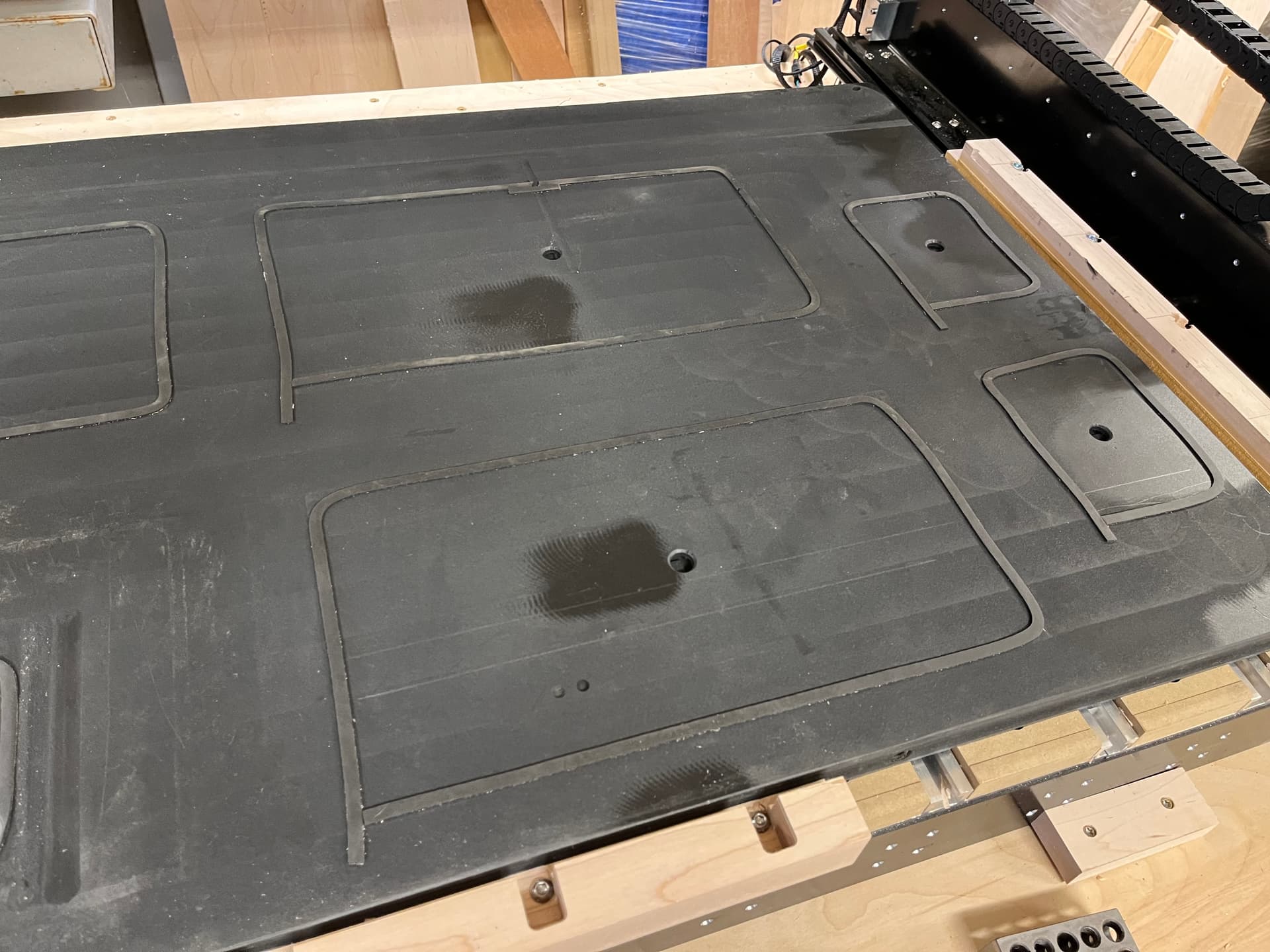
I wanted to be able to align pieces to the table using 1-2-3 blocks on both front and right edges, and also wanted to use the Pro table slots on one end for mounting. So I used a thick piece of acrylic on the left side and flattened it to the mdf on the Shapeoko table. I could also mount some of the connections to slots in the table, and the rest to the mdf slats.
Then added hardwood alignment pieces to the front/right edges.
I either use an mdf fixture panel (from airweights) that pulls the vacuum through the mdf, or a custom diy fixture plate. For some things I use double-sided tape on the mdf panel, but for larger flat pieces it works great by itself.
Very happy with the setup. The airweights table has alignment pins for fixture plates, so very fast to swap them out, and they align very precisely.
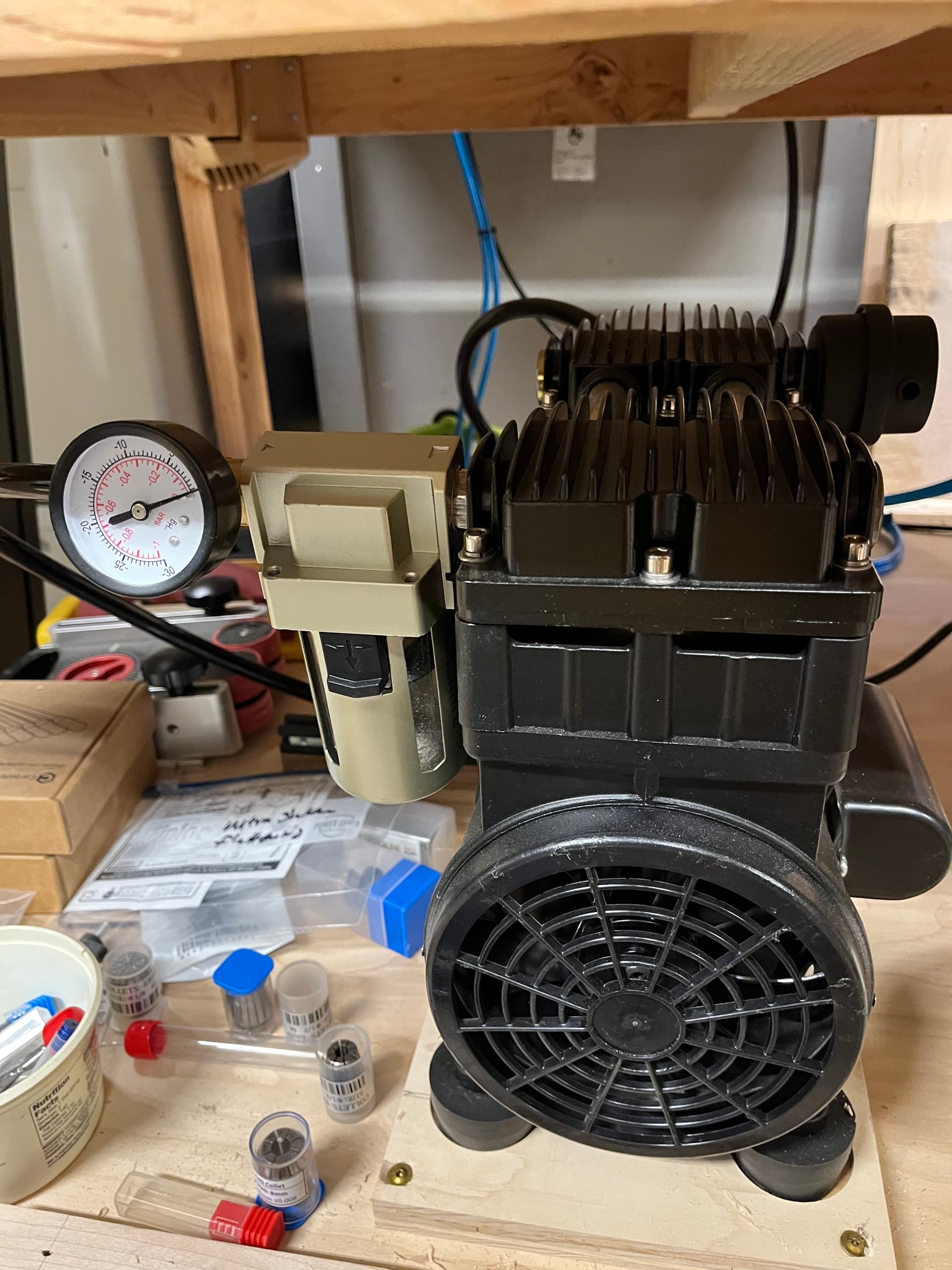
The pump is from AirWeights, 9cfm as recommended for 24x48 tables.
It does a good job holding things down. The melamine-coated plywood in the photo has the least-good hold because it’s low-friction, but still just fine as long as I don’t do agressive cuts with a 1/2" bit. For regular wood I haven’t seen any problems at all.
For noise, they say ≤65 dB(A), and that seems right to me. Most of it is lower-frequency so not painful without hearing protection, and if the vacuum is good, not a lot of leakage once established, it doesn’t have to work very hard to maintain -25 inHg for the fixture plate, or -20 inHg for the mdf spoilboard fixture.
Regardless of how loud the pump is, I always wear hearing protection while running the cnc/vacuum/dust extractor, and don’t notice any difference whether or not the vacuum is running.
I’m also noise sensitive, always wear an in-the-ear seal plus 3m peltor ear muffs, and don’t notice any difference with the vacuum on/off. The pump is lower-frequency so less of an issue than the stepper motors and dust extraction.
I wish I carbide had an option to get get servos for the cnc, that’s the main noise issue for me and the servos are much quieter.
Nice, well thought-out setup, Tim. I now realize I’d like to have installed my a little further to the front to allow me to square stock with those exact same 3-2-1 blocks from a reference fence. I’ve got a reasonable workaround for now, but someday I may bite the bullet an move the vacuum table towards the front a bit more.
Jim, 100% agree on the Stealthsonic – I have the same model and it’s hard to believe how quiet it is compared to my previous vac.
I just got the 17 cfm vacuum pump for a 4x4 Shapoko. It is a lo hum. I can’t even hear it over the 1250 Cfm dust collector, and the noise of the cut. You can have a conversation while it is running.
I wonder if my setup is a little louder because I’ve got the pump underneath a plywood table, on a plywood shelf, so I’m getting more echo/reverb… hmmm. I might move it back behind the table onto the floor, or get legs for this Pro 5.1.
I just received the 17 CFM vacuum pump from Airweights, and am building my own custom vacuum fixtures. I had a conversation with Jace, talking about what I needed, The 9cfm is plenty for a 24 x 48, but I have a 48x48.
Vacuum pump selection is based on what you are holding down, because, volume is different that vacuum. I have a 1 CFM vacuum pump. and some 4x4 Aluminum vacuum pucks I made a few years ago. If you were machining something like acrylic, that is not porous, a 1 CFM pump would work fine, but it would take 30-60 seconds to achieve vacuum. My application is PE foam, so I will have loss.
I am currently cutting 24" x 24" 3/4" MDF vacuum fixtures. using 4 4x4 pads, and the 1 CFM pump won’t do anything as the MDF is too porous. The 17 CFM runs continuously, and only pulls -15InHg. I put a 12" x 12" piece of masonite on it, and it holds it tight, through the 3/4" MDF. I am using shellac to seal the MDF vacuum fixtures.
There are some additional tricks you can use to secure material, when using vacuum fixturing. You can use metal or plastic dowels to keep it from sliding forces. You can also use adhesive sandpaper to provide extra grip. You can use painters tape on porous material to reduce leakage.
My advice is buy as much vacuum pump as you can afford, and size it for what you are machining.
I figured I needed to use my current clamping system for the initial passes of rough material
That brings me to what table configuration with the vacuum system would work and not create a of movement. I also have a 10x14 SMW fixture plate. It’s movable, but stays put until I need the space.
So on a 4x2 table, I am thinking a 4ft strip of vacuum along the back ( North ) edge
That leaves me the front for initial rough passes and the fixture plate.
I will have to get an education from the vendor to see if that works.