how to avoid saw chips from a sawstop table saw falling on the ground despite a dust vacuum attached?
What sort of vacuum? How quickly does it move air? How much air does it move? How is it connected? Pictures?
The discussion at:
is likely pertinent.
2 Likes
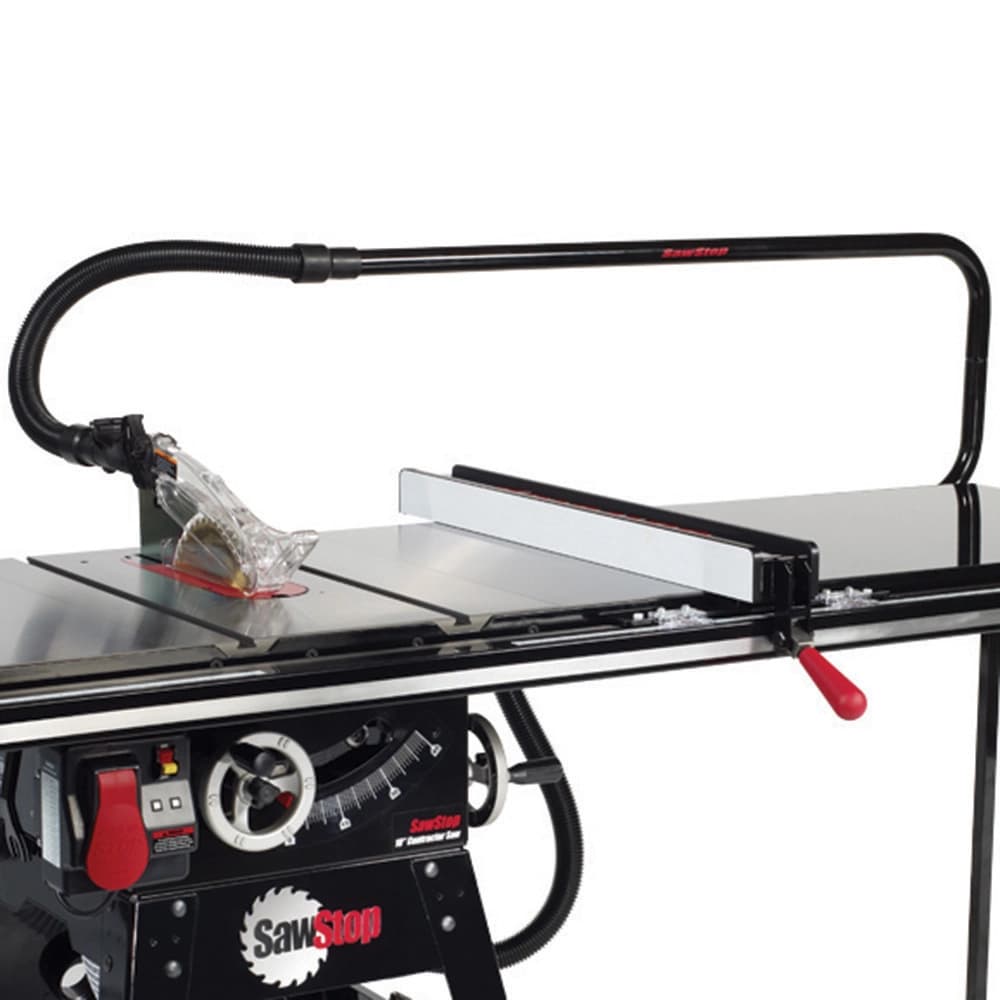
Do you have both the cabinet connected to the vacuum as well as the overarm collector? That overarm collector makes a huge difference for chips. Even with my industrial 3hp DC chips will leave the back of the blade and fly towards you…That’s where the overarm unit is effective
1 Like
Dust collection is about two things. The first is the CFM. If you are not moving enough air you wont vacuum the chips up. The blades of a tablesaw or router/spindle are trying to throw the chips all over your shop. The second thing is the placement of the collection point. The further away you get from the point the chips are being generated the worse the collection will be. Things like a chop saw are some of the worst offenders because you generally cannot get too close to the source of the chips being generated.
Dust collection is a misnomer in that you can collect the majority of your dust but never all of it. There are mitigation factors but in the end a certain amount of dust will escape and fly around in the shop until it lands on something.
Too much dust is a fire hazard. Yesterday I was burning some sawdust and took my shop vac to dump on the already burning sawdust from my collector. I forgot just how flammable the fine dust is and as I was pouring the sawdust on the fire it flared up and burned all the hair off the back of my hand. Hardly a serious injury but just reminded me how easily a flash fire can start from sawdust.
1 Like
the vacuum is this here:
in my shop it works well, it has a “auto-switch” power supply, what I love. And if the bag is empty it sucks nicely. I think. Can’t compare.
The vacuum is connected to the back dust port of my small Compact type table saw, of course with a reduction piece.
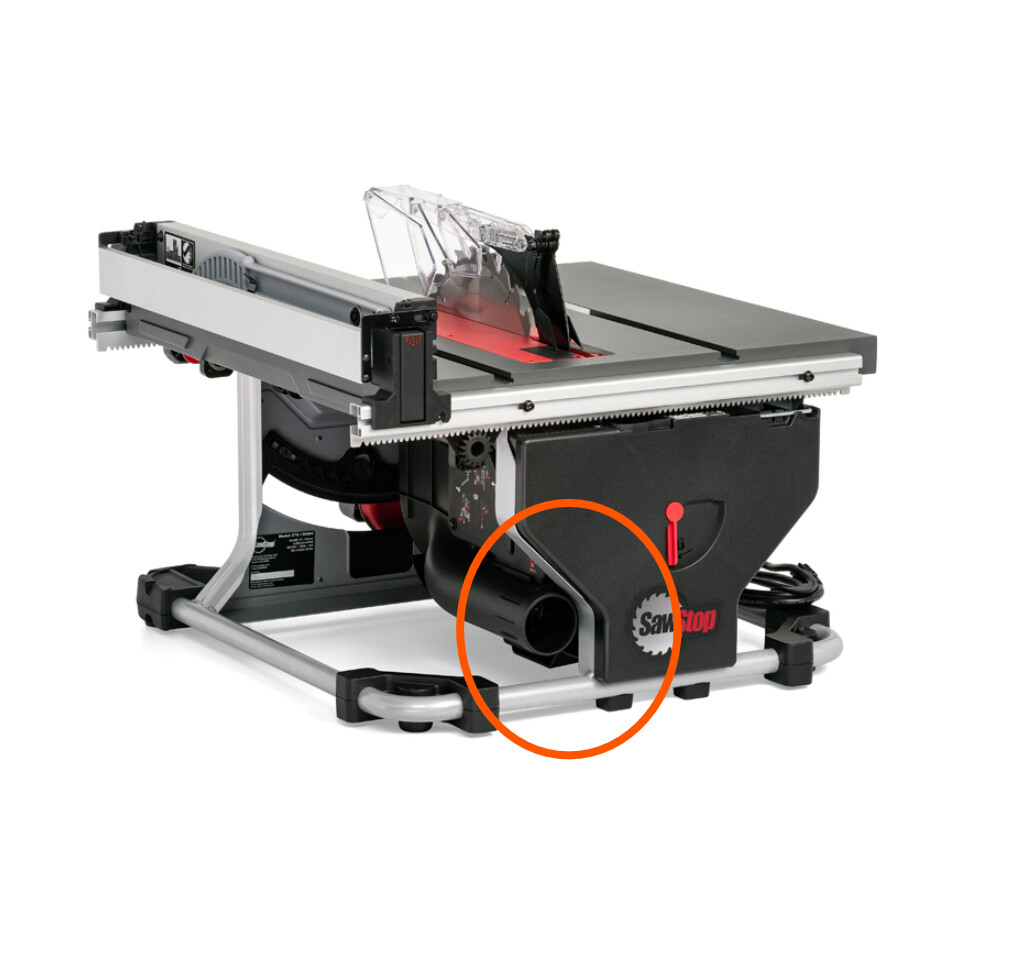
I do not have a overarm collector vacuum hose.
I had a home depot table saw before, and this item did not throw the chips on the floor that much, the under the table connector kept it rather clean.
It is not so much of an issue as just an annoying inconvenience, I do not use the table saw that often, rather briefly, and always have to sweep afterwards. For a lazy guy like me that lets me ask.
1 Like
OK…try lowering the blade to just a couple of teeth above the stock you’re cutting…that might reduce the chips
1 Like
I have a small Dewalt saw like yours, It’s a pain to get good dust collection on them. I even fabbed a small Luan piece for the underside to help. Remember, “dust” is what is harmful to our lungs. I suppose chips would be as well but not near as likely to get into our lungs. I have accepted chips not always being collected by the dust collector, I need the dust collected, not just while cutting but elev more for after the machine is off. If you don’t get the dust it will stay airborne in a particulate size that is hard to actually see but can still be easily ingested.
I agree with your advise. Some people have the blade cranked up way to high. On the other hand you just need a tooth or two above the top of the material.
Partly this is about exposure. The less the blade stick out above the material the less exposure you have to an injury. Some people advise to barely have the teeth above the material. That has several issues. The first is the blade is completely dragging across your material and will likely leave burn marks behind. Most table saw blades the teeth are wider than the disk they attach to. So having your teeth above the material you only have the teeth of the blade contacting the back and front of the material.
Having your saw lined up properly is very important. If you material is slightly diagonal to the blade is very dangerous. The front of the blade is pulling the material down but the back of the blade is pushing the material up and back into your face. If you have good alignment and a riving knife you can prevent most kick back. The blade should be parallel to the miter slots and the fence if used should be parallel to the miter slot. Cabinet saws you adjust the top. On contractor saws you adjust the trunion. For hybrid and small big box store table saws you have to read the manual.
I use this system to line up my saw and others.
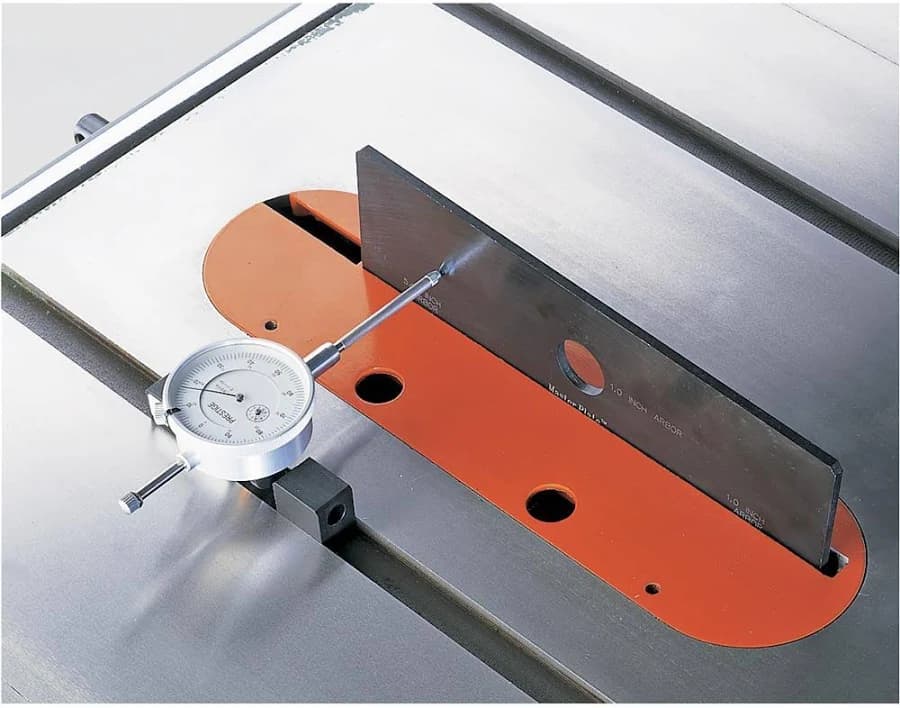
There is a very flat plate you put in place of your bade and a jig that holds an indicator to help align your blade to the miter slot. Then you just move your fence to the miter slot and adjust it to line up with the miter slot.
Tim, TY! Agreed. I always use “full gear” goggles, dust mask, sometimes ventilator for paint fumes, ear protection. some time ago I bought this device

that now always shows recent values and history on the phone.
Measures air quality index, CO2, PM2.5, PM1.0, PM10 (particles), TVOC (organic fumes), HCHO (formalin), Time, Temperature and Humidity in real time. I use some russian plywood, when I cut this on the saw or CNC the formalin values very often goe up sky high. Same with just some rugs with rubbing alcohol (not with my resin brand I used), increasing TVOC values, gives me a good warning when to use my ventilator / dust mask. Cannot recommend this more.
My floor has some vinyl, chips make the floor slippery, therefore I try to avoid chips on the floor.
1 Like
When does this happen?
Does it happen when the width of the material covers the insert?
Does this happen when you are cutting thins strips of the material such as trimming the round over edge on say a 2 x material or something similar.
What is the CFM of your shop vacuum?
here is what a Sawstop requires
Cabinet Dust Collection (Lower Port)
-
PCS / CNS Models: Minimum of 350 CFM directed to the 4-inch cabinet port.
-
ICS (Industrial Cabinet Saw) Model: Minimum of 400 CFM directed to the 4-inch cabinet port.
-
Equipment Note: SawStop specifies that standard wet/dry shop vacuums cannot supply the proper continuous volume of CFM needed for the main cabinet port, recommending a dedicated stationary dust collector instead. [1]
Above-Table Dust Collection (Overarm Guard)
-
Floating Overarm Guard (TSG-FDC): Requires a dedicated 4-inch extraction port adding a requirement of at least 400 CFM (or roughly 680 m³/h). [1, 2]
-
Combined Systems: If running both the lower cabinet port and an overarm dust collection accessory concurrently off a single main collector, SawStop recommends scaling up total capacity by at least an extra 100 CFM. [1, 2
If you are cutting thins slivers the saw dust/ chips are thrown out sometimes faster than some lower CFM dust collectors can keep up with.
If you are border line on the CFMs that are needed you can get the magnetic cover for the tilt slot opening. Placing this cover on the saw and cutting a slot tor the blade height adjustment shaft to follow will help with sealing when tilting the blade and keep the opening smaller to reduce the leakage.
If you meet or exceed the required cfm mkle sure the flex ducting you are using is not longer than needed.
Check the ducting inside the saw cabinet and the dust chute for the blade is not plugged.
Send a picture of your setup that will help figure things out.
Anthony
1 Like
Anthony, Guy,
Thank you for all the very informative lessons.
The right height of the sawblade is much more important than I thought! I used to keep it too low that the teeth just appeared on top of the stock, will adjust my settings!
And yes, my vacuum has max 100 CFM. So I am far from borderline.
I will certainly not change my setting. A next change would be to get a central dust collecting system with 4" pipes, what is way above my shop size requirements. I thought there could be a simple trick, what I learned right now is that the whole dust avoiding / removing task is much more complex than I thought if one gets to the edge with shop vacuums.
So I will bite the bullet and continue to sweep frequently and use personal protection gear.
And sorry that I do not dare shoing my little primitive shop to people THAT experienced. You would choke loughing.
1 Like
How well does it work in a shop, where sawdust is prevalent? Does it clog or need cleaning for the filter?
So far, some months, it does not clog, there is no filter. The particle monitoring was a bycatch, what I really appreciate, appears resonably correct, I got it mostly for the TVOC and formalin. BTW: Beware of russian (it usually is NOT baltic) plywood. One lesson learned with this device.
Another: the original reason to get the device were concerns of my family of TVOCs from resin. The resin itself cures without setting free TVOCs, solutions that keep it liquid are described as vaporizing while preparing / mixing etc. And so I measured high values. I once saw high values while the resin already was completely cured. The next cast I did not use rubbing alcohol soaked rugs: there were NO! TVOCs in the air! All the high values came from evaporated alcohol, at least my resin brand per se did not produce TVOCs. Fascinating what such a small box can deliver…
1 Like
That is really fascinating. Even with three dust collection systems (An Industrial 3HP cyclone attached to my stationary tools, a Cobra cyclone attached to my CNC and hand tools, and a small shop vac for small hand tools and clean up) and an overhead air cleaner, my A/C filters and overhead air cleaner filters get packed very quickly…no smoke detector has lasted longer than half a year. I would worry that this device would stop working as well.
2 Likes
This topic was automatically closed 30 days after the last reply. New replies are no longer allowed.