Received used/damaged parts?

Ordered a Shapeoko Pro some weeks ago. Both boxes came a week or so later, and I had to tear down my old machine to make space for this new one. When I reached the assembly step to put the Y-axis rails on I came to find that they were the wrong ones. The box was labeled wrong and didn’t match what was on the big box it was inside of. They were rails for the Shapeoko 4. Ok, so I contacted support and they had the correct ones shipped the following night. UPS “Next Day Air” doesn’t seem like it is what you’d think it is, and is probably a waste of money.

I just received the correct parts for my new machine. They are from a used/returned machine instead of brand new parts. There was wood dust on the linear bearing rails that led me to draw such a conclusion. That’s fine, I just don’t appreciate being sold a brand new machine that’s supposed to have new/unused parts, and receive used parts instead. Why wasn’t I sent new parts, or informed that the parts I would receive are used, with a partial refund of some kind? The picture this paints is that they just didn’t even have any new Y-axis rail parts and threw a box of S4 parts into my machine shipment to buy time. As far as paintings go, that’s not a pretty one.

If I was sold a used machine (or parts), I would expect to be told it was used up-front, and it should be priced accordingly. This sleight-of-hand, pulling a switcheroo type stuff is not a sustainable approach to business. Honesty and reputation go a long way, and this is some shady goings-on at Carbide by the looks of it.

Also, this:
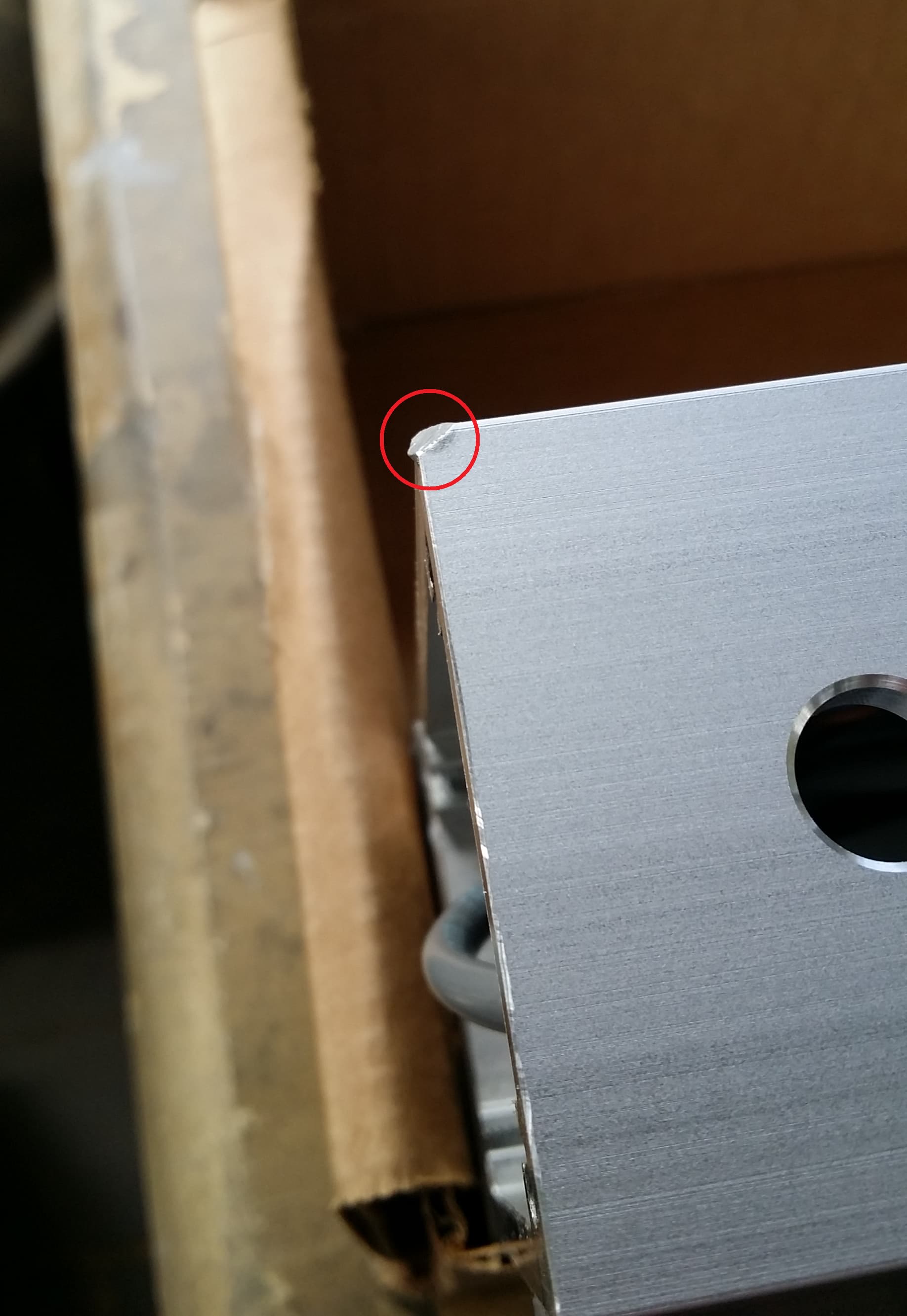
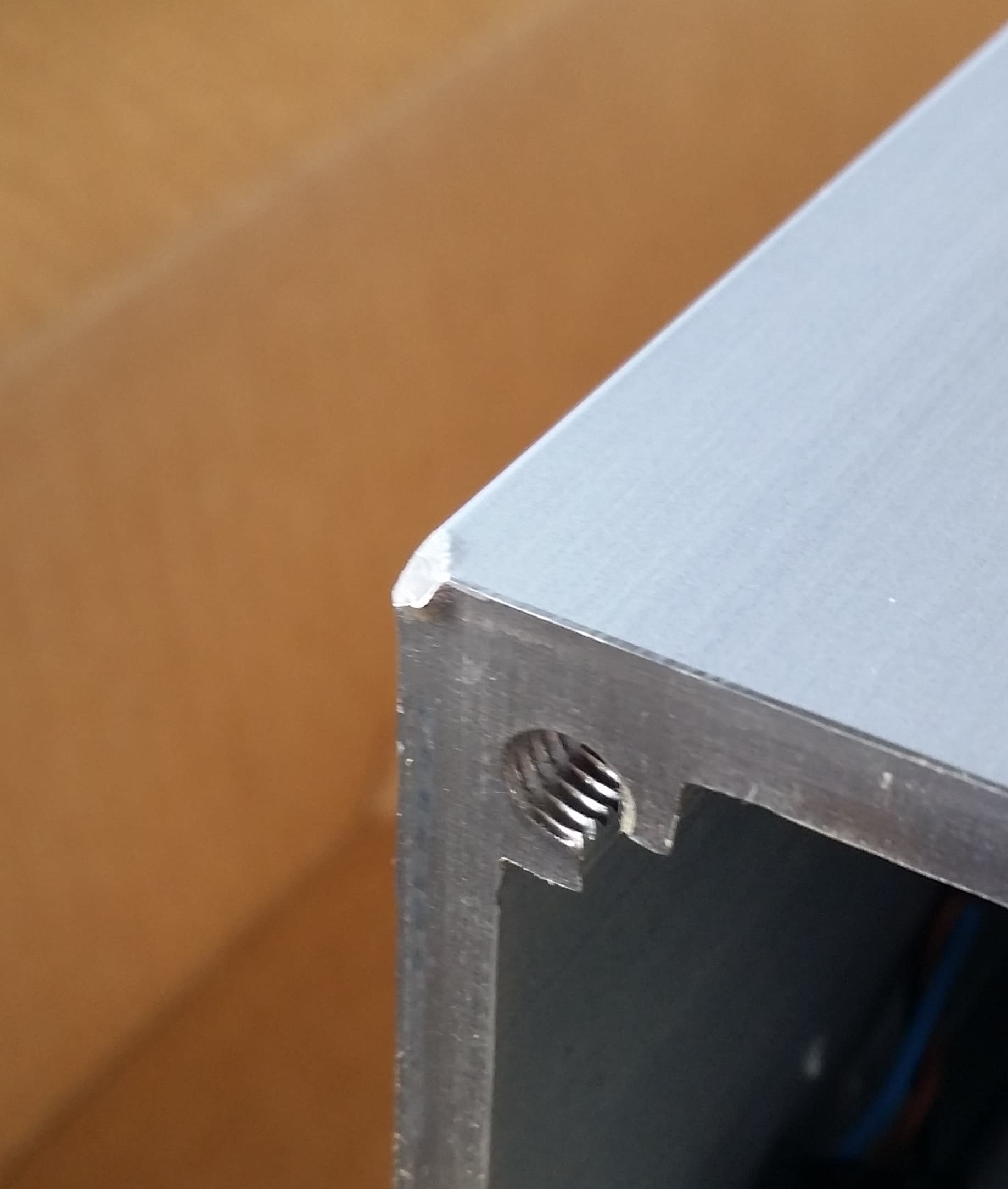
This clearly hit a hard surface, likely a concrete floor in a shop (seen it a number of times) when it was dropped. This is how it came right out of the undamaged box. I don’t imagine Carbide is shipping brand new parts like this, it likely was the result of whoever sent the machine back that they were assembled into.

This isn’t what I paid thousands of dollars for.

As far as I understand, the ends of these rails aren’t super critical to machine squareness, only the endplates sit against them. I imagine that the endplates are assumed to be flush with the rail, however. This isn’t going to result in an endplate being flush.

Granted, I can fix it myself with some time spent filing it flat again, but I paid for a brand new machine that didn’t require repairing damaged parts. If I was going to receive used (let alone damaged) parts, I should’ve been offered some kind of compensation because I didn’t pay for a used machine (or a machine that has used parts).

Being that I tore down my old machine and already started putting this machine together in its place a week ago, there has been a lot of unanticipated downtime just from the wrong parts being shipped with the machine in the first place - where I’m without a running machine.

As far as first impressions go, this experience leaves quite a bit to be desired, if I’m being honest. I’m hoping that this is the only problem, and the machine goes together without issues, and runs without issues.

Thanks for your time.
Please check in at support@carbide3d.com and we will work this out with you.

1 Like

We do not ship used parts. When we receive anything back, it is generally scrapped or used for replacement parts.

If you reach out to support, they’d be happy to send you a new rail if they haven’t done so already.

3 Likes

Sorry to hear about your troubles, I’ve never heard of C3D shipping “used” or returned parts before? I have received machines that had product on them specifically due to being QC tested however.

Over the years I’ve had numerous wood working machines delivered via all the current carriers as well as lift gate service. Don’t think that just because the box/packing material doesn’t “look” like it wasn’t damaged/dropped etc. during shipping that it wasn’t.
You would be wrong.

2 Likes

Update: Carbide3D reached out within minutes of my post, and Brandon over there called me on the phone. That alone speaks volumes about their commitment to making their customers happy.

I was told that they don’t re-sell or ship used parts to customers, but they do build and test some machines for QA purposes. It did occur to me that the Y-rails may have just been near where some MDF cutting or testing was happening, resulting in some dust ingress, and the rails weren’t actually assembled into a machine that was run (let alone by an end-user).

The rail definitely was dropped onto a hard surface, or was struck by something hard at some point in time before it was shipped. Brandon offered to ship me new Y-rails but the situation is that I needed to get the machine up and running ASAP as we’re already behind per the Y-rail mix-up with my original machine order. I was able to file down the mushroomed spots around the dinged corner and have the endplate sit flush, as intended.

I really appreciate that they reached out and wanted to make it right. I explained to Brandon that I was fixing the rail and preferred not to wait for more shipping time. If there wasn’t the time issue I likely would’ve taken him up on it. Then I received an email later that day about a shipment of endmills that was en route. Superb!

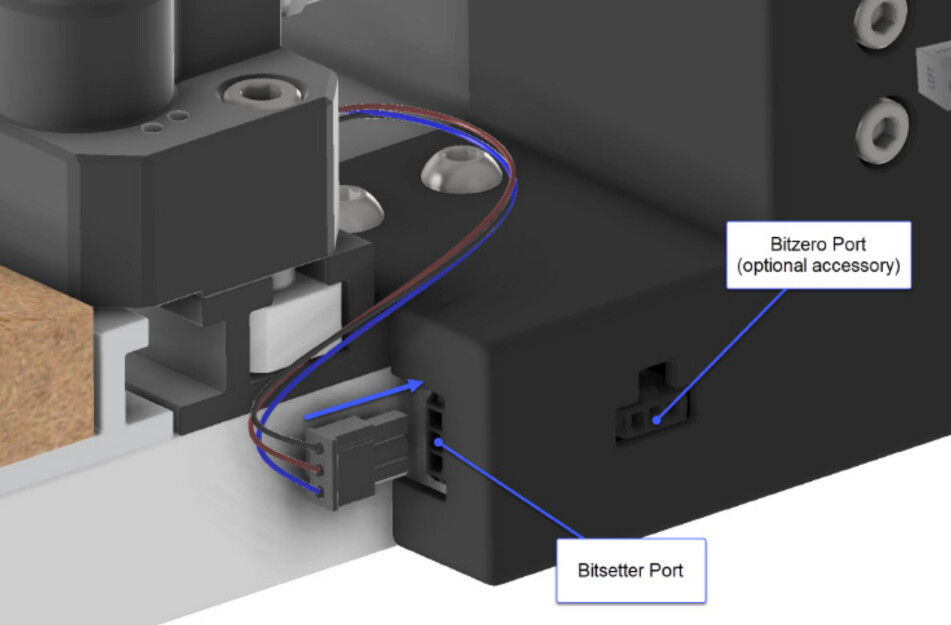
The machine is almost up and running - just some cables that are left to connect and software to install. What I still need to get figured out is how I can use my touch probe - whether I should wire it to the BitZero pins or the BitSetter pins on the PCB. I will likely be running Candle/grblControl specifically for this purpose, rather than Carbide’s software, and will need to flip the probing pin to always-on for my probe to work (i.e. connection is broken when probe makes contact). I am curious how this will interfere with the BitSetter as that appears to be the opposite, and I might just have to continue operating how I did with my previous GRBL based machine and manually zero tools - or manually flip the probe pin all the time. Hopefully I can handle figuring all of that out tomorrow.

At any rate, the machine feels solid and I’m anxious to do a circle/square/diamond test out of some woods and plastics. I’m looking forward to cutting many-a-thing on it over the coming year.

Cheers!

1 Like

The BitSetter and BitZero probe connections are shown in the assembly manual:

pg. 54, Figure 6-3:

For on/off, that’s outside of the normal scope of support, but see:

Thanks for the reply, Will. My machine is just a Shapeoko Pro, and the assembly manual doesn’t mention anything about what to connect up to for an external touch probe. There’s pinouts on the PCB for the BitSetter and for the BitZero, and I’m just not clear which one functions as the vanilla GRBL probe pins (or do they both?) as would be the case on an Arduino running GRBL. I’m really just assuming that one or the other will work with programs designed to drive conventional GRBL machines that support probing.

I think it would add tremendous value for Carbide to include some kind of external touch probe support because finding the Z height of a material, or the center of a hole or workpiece, or heightmapping something are very common in the machining world. I’d wager that Carbide uses something like a Renishaw touch probe to machine parts for their Shapeoko machines :wink:

I’ll keep looking around online and inquiring at my usual haunts to find out what the situation is.

My apologies, for connecting probes to the SO Pro, this is covered in:

https://carbide3d.com/hub/courses/running-shapeoko/bitzero/

Probing to the center of a hole “just works” if the material is conductive, just put the BitZero in connection with the stock, then position a probing pin in the hole, the probe for X and Y sequentially.

Correct on the Renishaw, it’s mentioned at:

https://carbide3d.com/blog/how-to-buy-a-haas/

and maybe at:

That said, probing for a surface or corner is covered well by the BitZero, and one can probe to the edge of a conductive material by switching to a v1 BitZero, putting the probe body in connection w/ the material, then probing for X or Y.

Moreover, note that it is possible to enable the MDI and use probing commands directly — just one has to then do the math and adjust based on the diameter/length of the device used for probing.

1 Like

This topic was automatically closed 30 days after the last reply. New replies are no longer allowed.