First, this is NOT the lazy question it might seem like… I realize everything is about “it depends on what you want to do…” type issues. I’ve spent the 2 years while on a jobsite for my day job thinking and researching, and so I’m going to ask here as a final step just because this is where the most real-world-use experienced people are likely concentrated.
I will be (repeatedly, every day most days) making a part that’s similar to a 2" thick aluminum coin that’s maybe 4" across but with a detailed “face” (if it were a coin). edit: Similar to a small aluminum car wheel, for a better explanation. Just that I only will be milling on the face of it, and chamfering around the edge some, maybe like a hockey puck shaped part.
I know that any Taig CNC mill will do this for all that I need, and as far as the accuracy the HDM shows numbers that work just fine.
My question is this: if I will be milling these parts over and over, is the HDM likely to have issues or would it work just fine for repeated semi-production work? I won’t push it for high production, I just want to know if it runs 16 hours a day doing this if it doesn’t sound like too much work?
I want to learn and use one machine, one software, one everything if possible, and it’s easier to obsess and upgrade one machine than two… and the HDM has a larger bed for other projects. Even though the bed is smaller than some other Shapeoko machines, it’s a zillion times larger than a Taig mill, and if I were to count on one company for support and upgrades, the HDM seems like it’d be far more fun and easy with this forum.
Anyone have any input in using an HDM daily for constant (but light and slow) aluminum milling? I know a lot of people do this for wood, but is aluminum pushing it to the point where I might eventually have issues? Even if I’m open to any type of upgrades from the start?
Thanks in advance for any input based on experience.
As we have pointed out on support, the Taig pretty much requires that one learn to be a machinist, while the Carbide 3D machine should avoid that, and even be easier to set up than others (in the HDM announcement there were comments about the arduousness of setting up a Datron…).
The HDM or even an SO5 Pro (or Pro or 4) would do well for these parts, with the price tradeoff being material removal rate vs. time vs. surface finish and so forth.
I’ve done some quite nice and quite small parts in aluminum and brass on my Carbide 3D machines, and have no concerns about repeating them.
That said, if you are considering an HDM and your parts are small enough to fit, have you considered a Nomad 4?
We’ve run HDM machines in production before, and it’s no problem. They’re built with the same components that go into industrial CNC machines, just scaled down for the size of the machine.
In terms of aluminum being a difficult material that might cause problems, it’s not. It’s harder than wood, but still not something that puts massive stress on any components.
If you want to email us any photos of what you’d like to make, we can see if we can provide more specific feedback.
This helps a lot. if you’re not hesitant to do run aluminum, that confirms what I was thinking… and I really want to keep it all under one machine. Thanks so much!
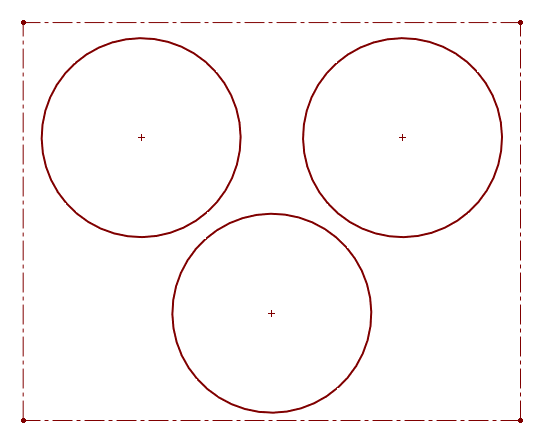
[Jeremy Clarkson voice]It’s been said that there is a guy who has an N4 in his apartment living room…[/Jeremy Clarkson voice] And it indeed has the perfect working envelope. Depending on the fixturing, you could possibly fit three of the Φ4" disks on the table…