The next consideration is how much the probing pins will tilt when pushed at the bottom — that will determine how much clearance will need to be added at the top, so again, we continue drawing in the profile:
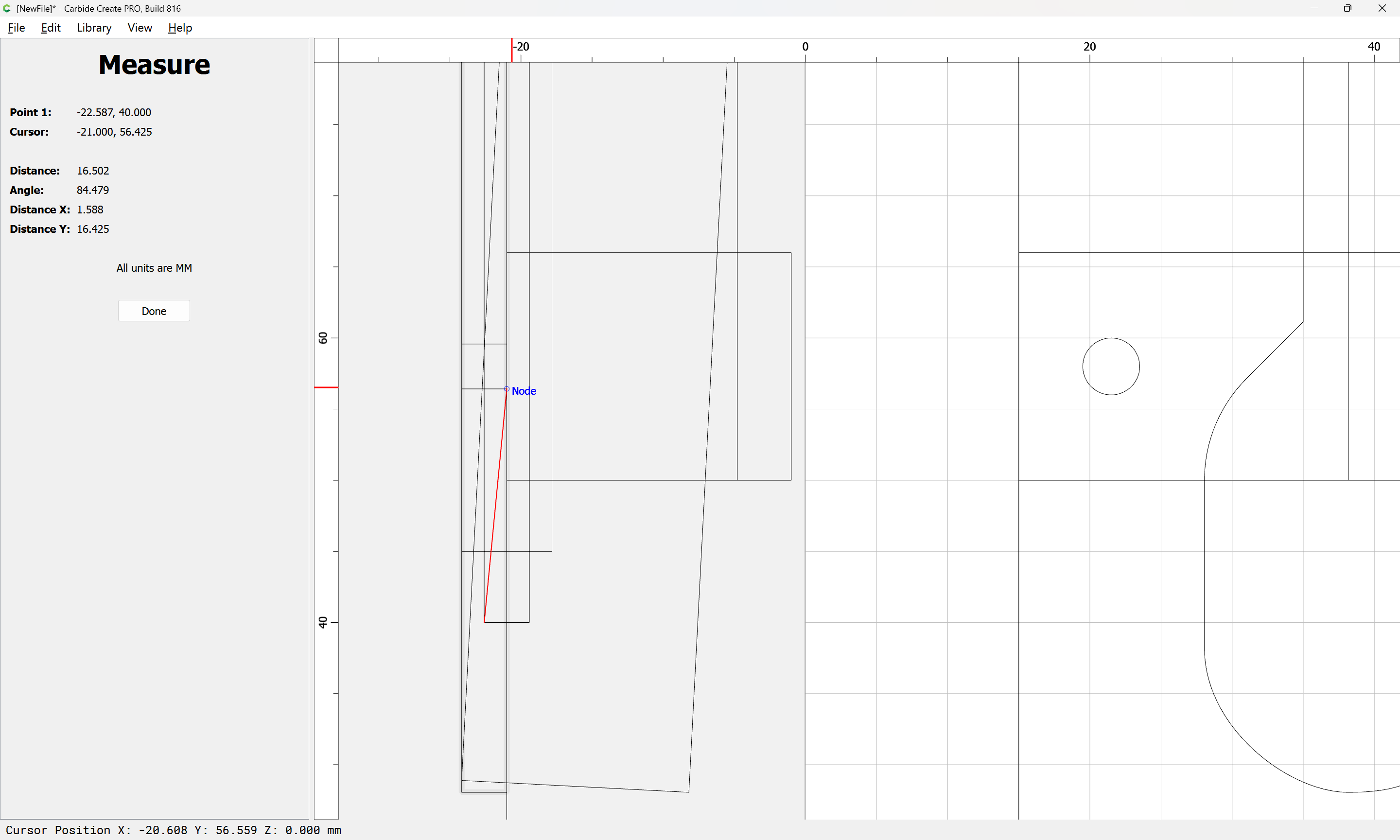
and measuring
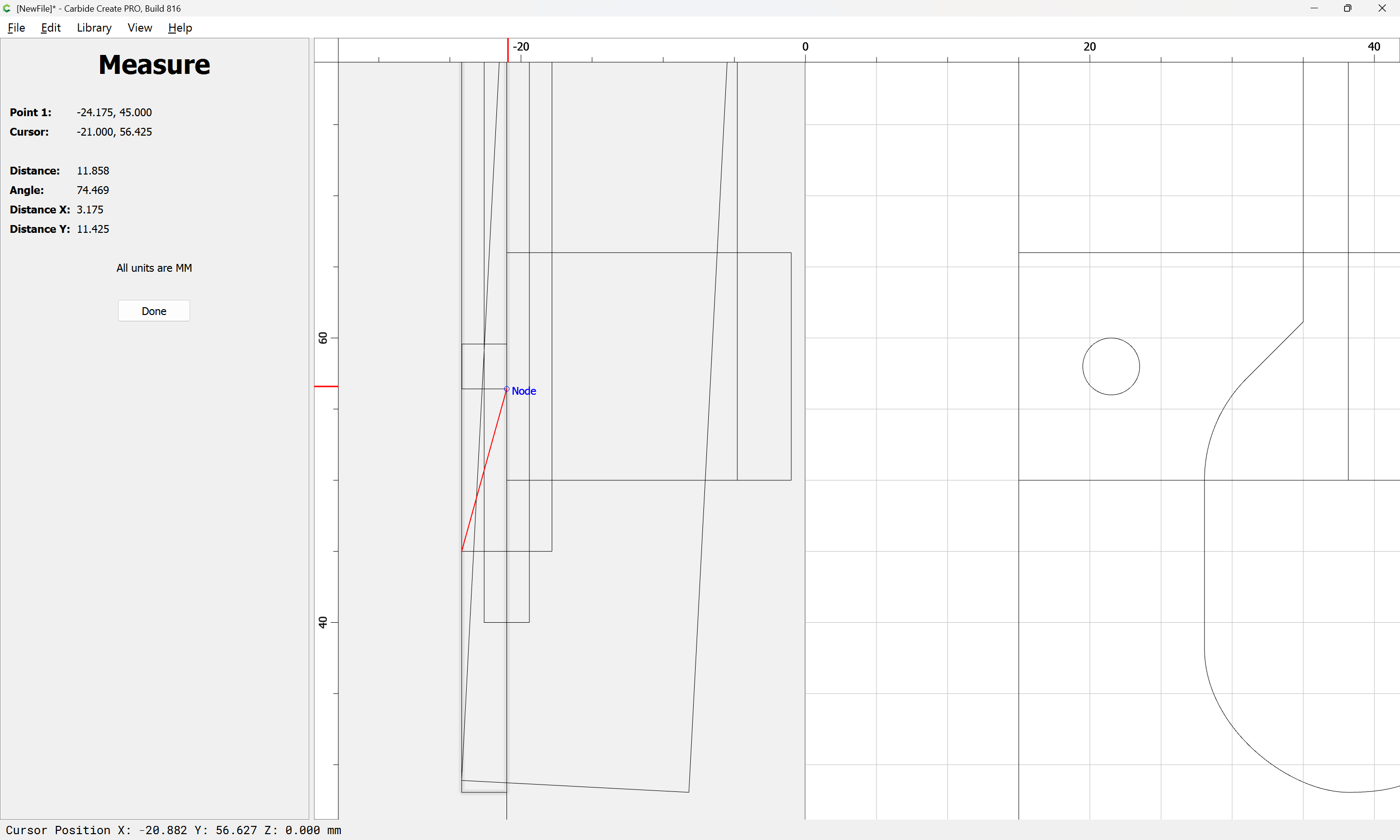
and if we then duplicate the outlines of the tools and rotate them to match, it will be possible to arrive at the conclusion that a reasonable compromise would be half the diameter of the tool, so the notches are converted into rectangles with rounded ends:
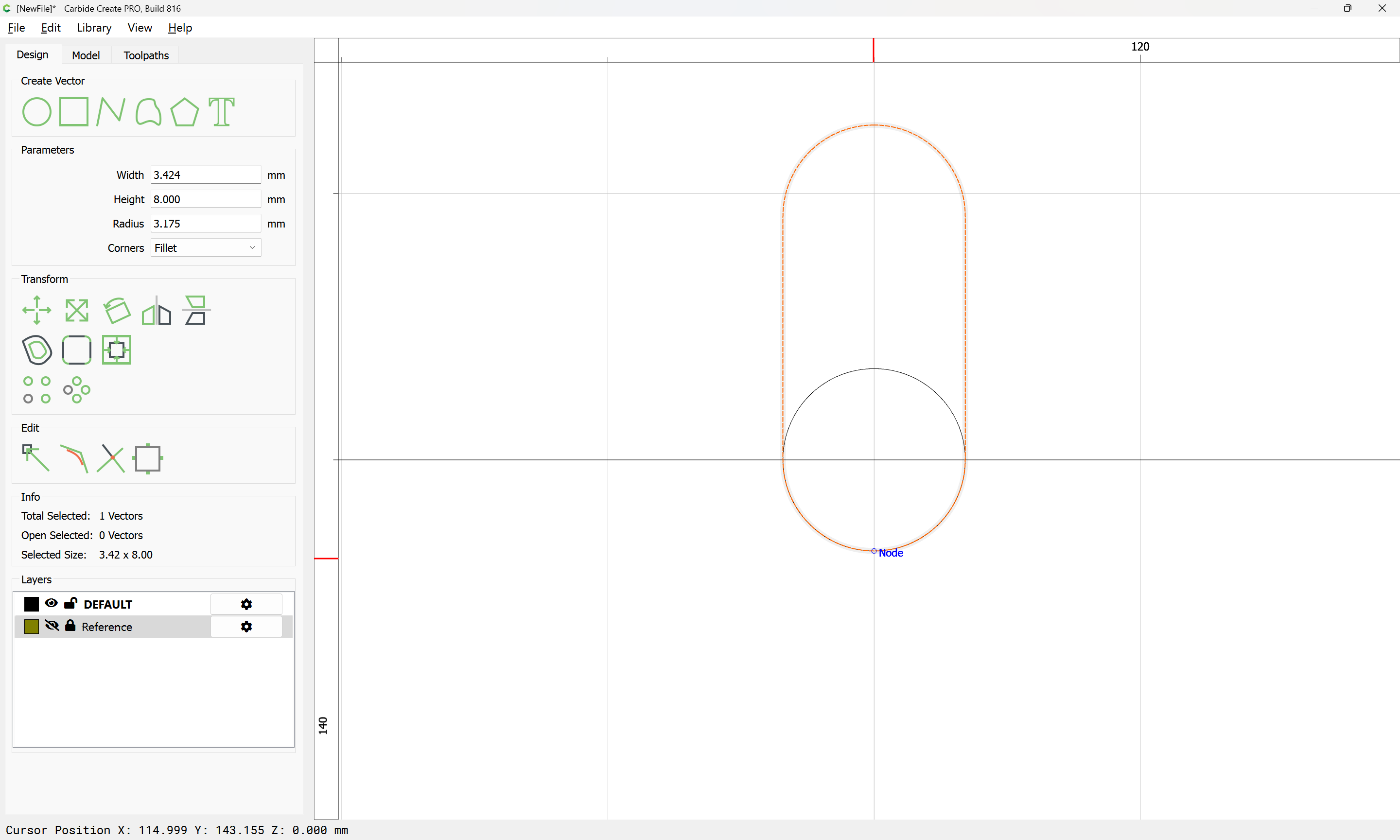
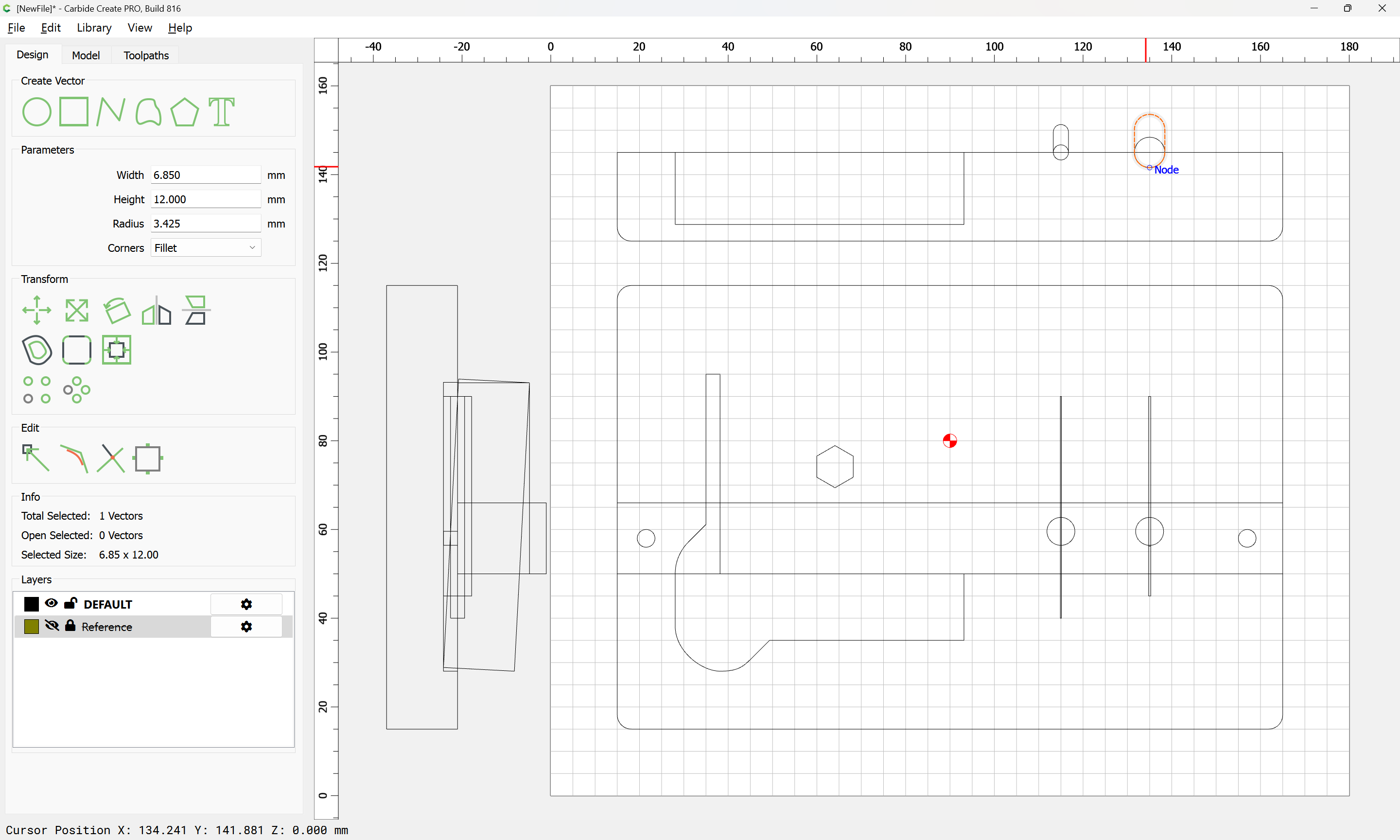
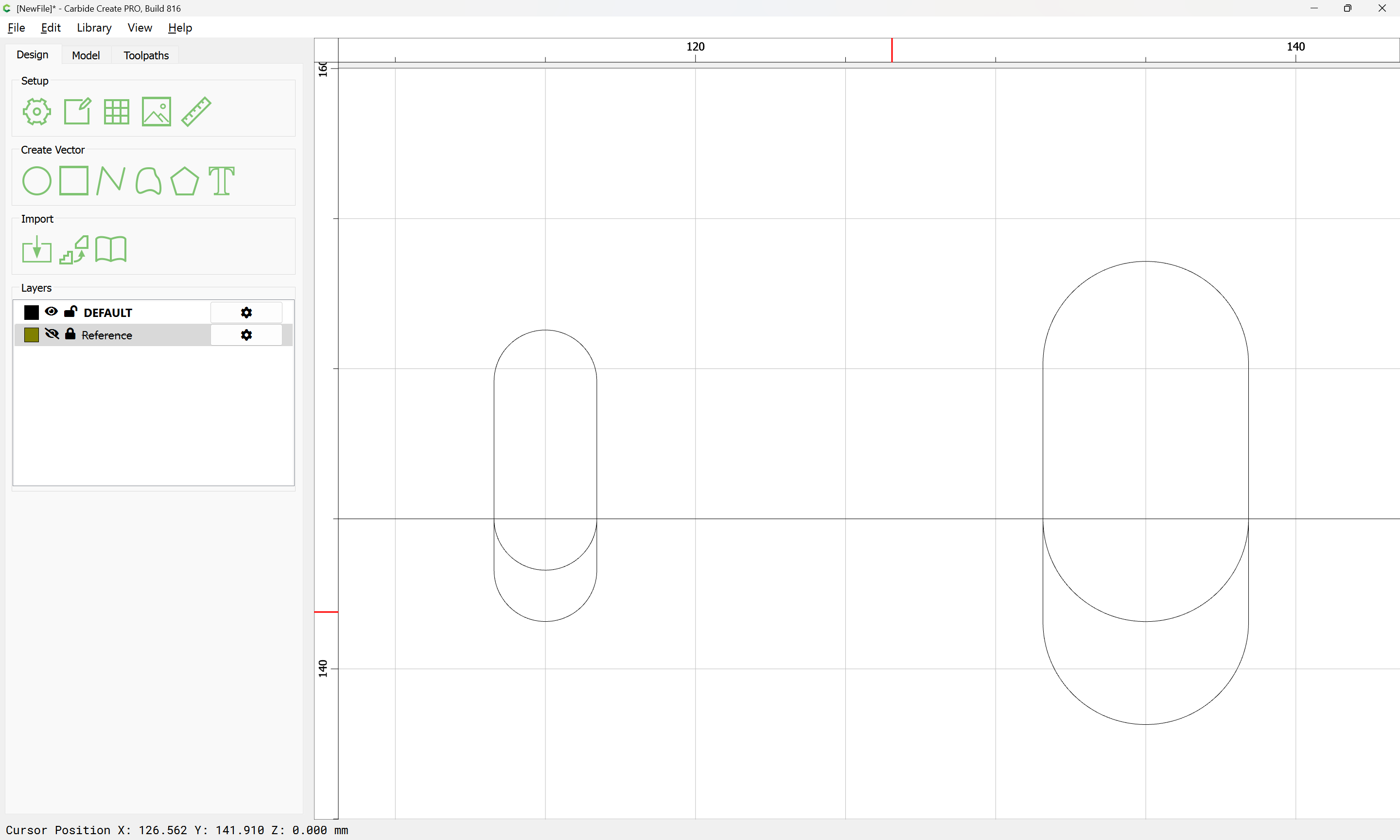
which when the profile is duplicated may be notched out using Trim Vectors, but first the probe body relief is notched out — note that this should be done twice as well, with the second notch being shallower so as to admit the probe, but still hold it in place, which measurement may be arrived at by:
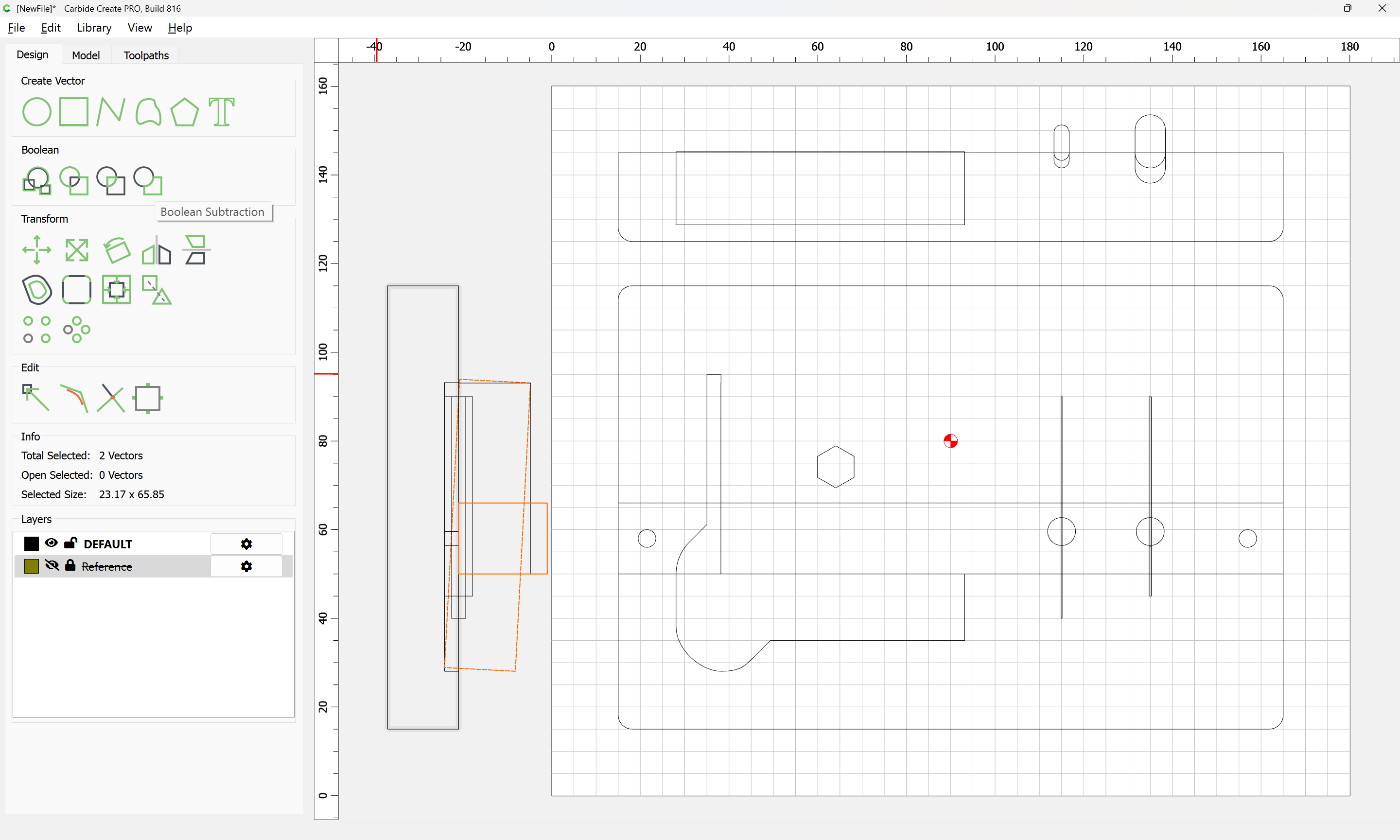
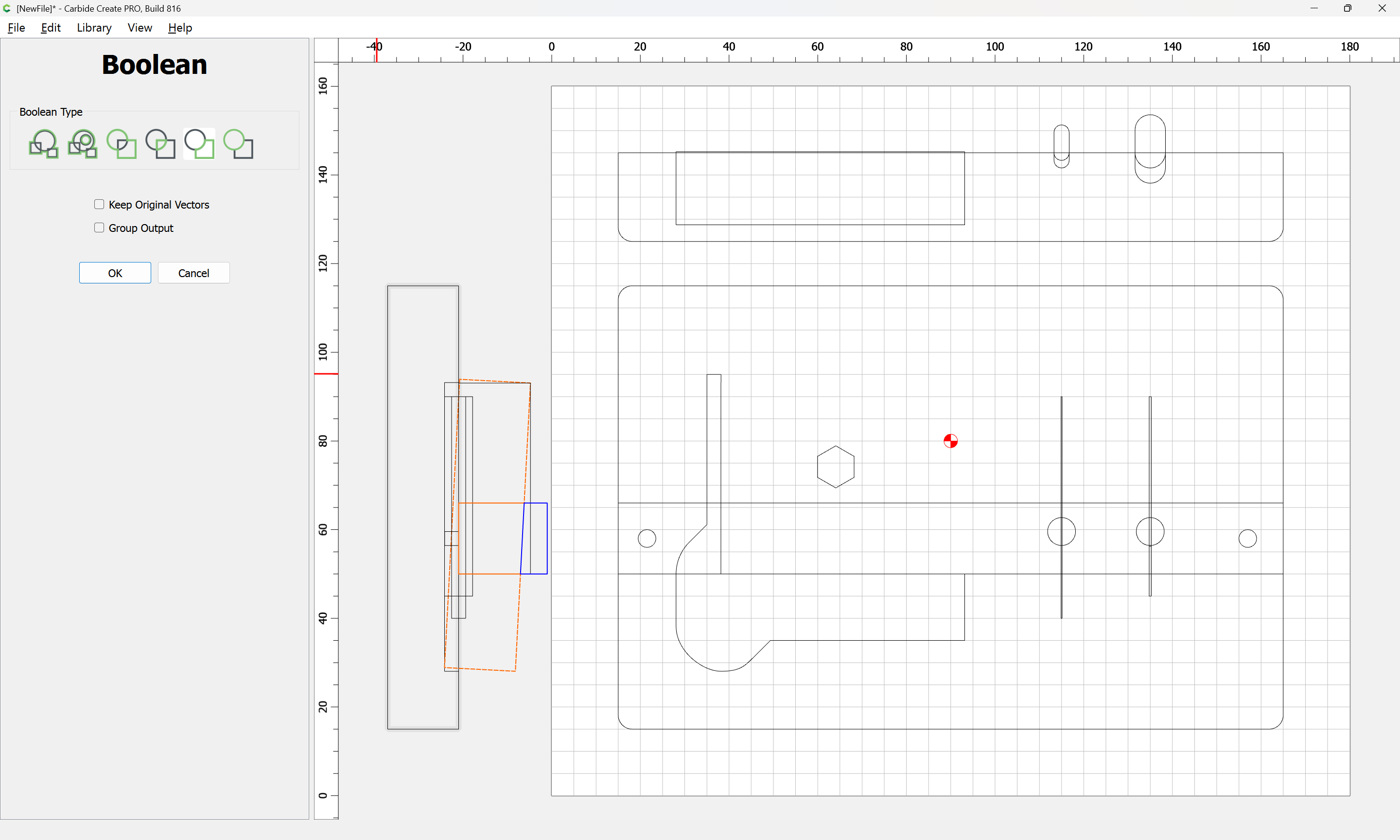
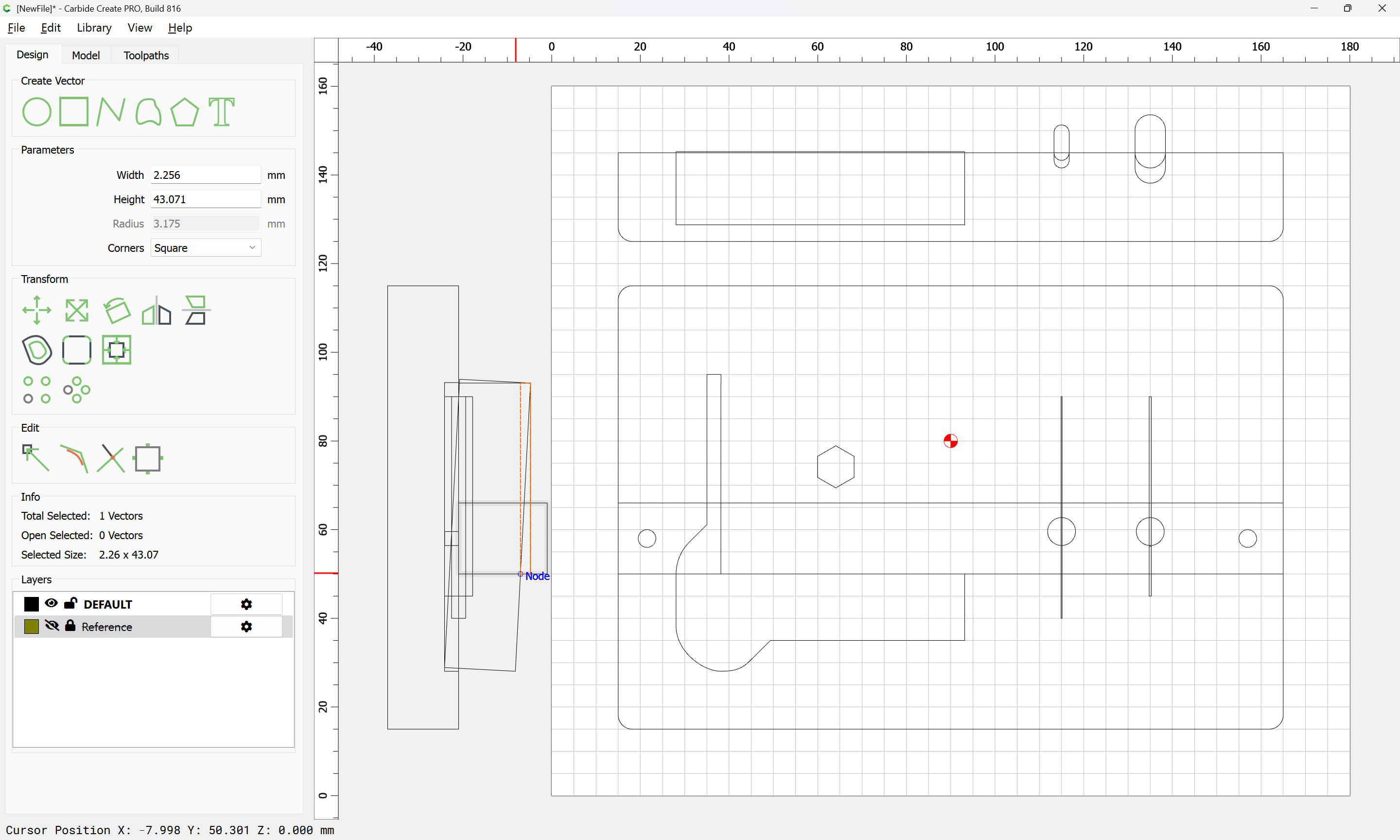
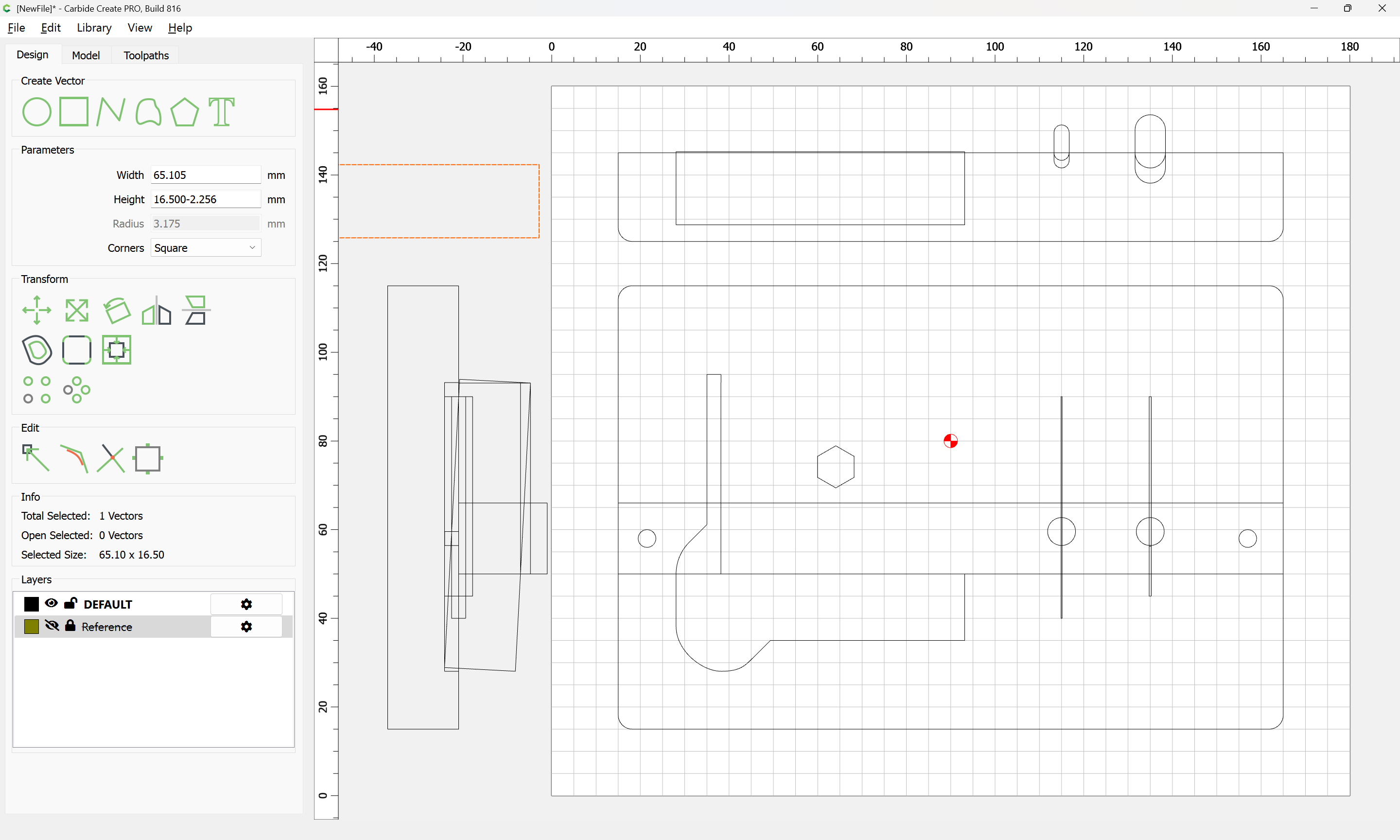
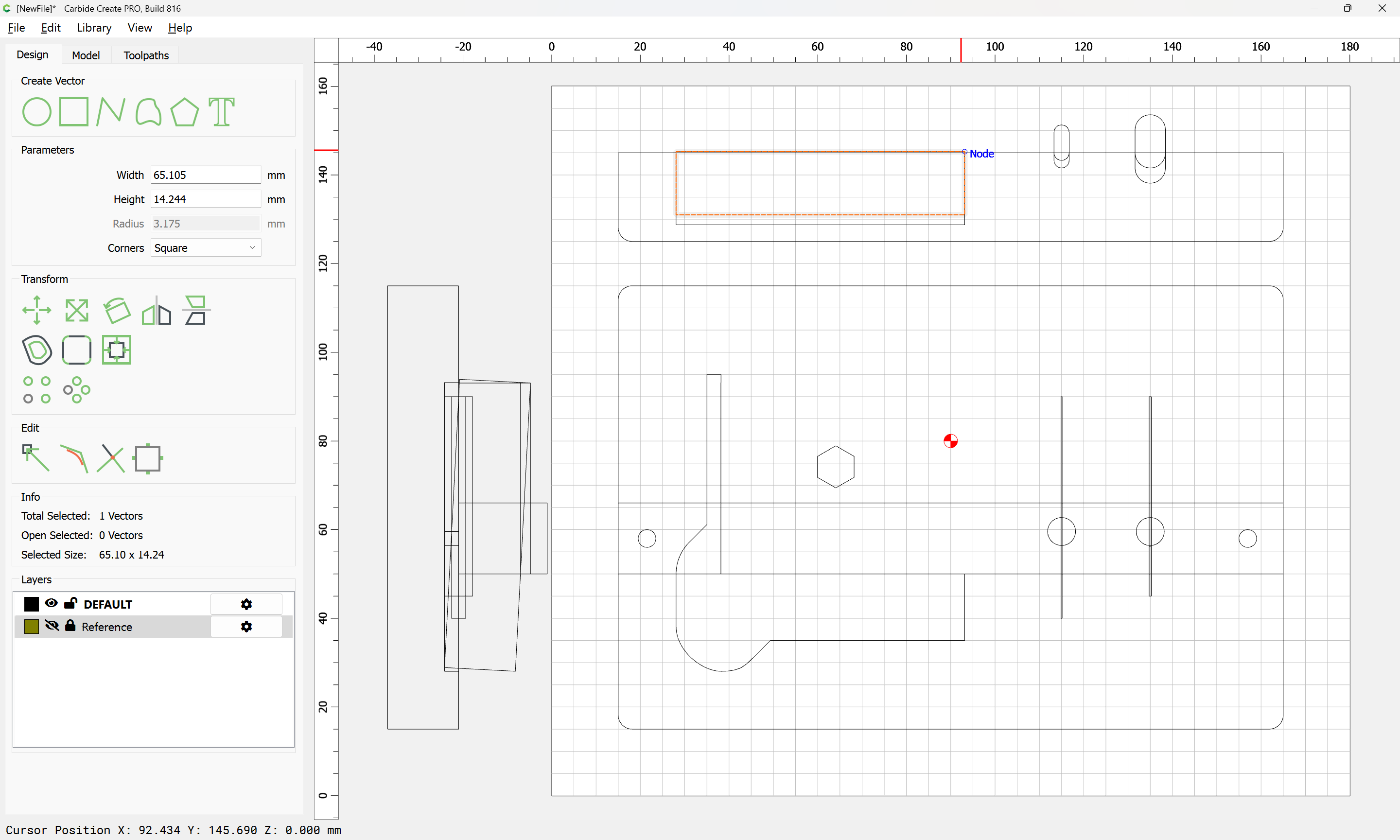
Duplicating the outline:
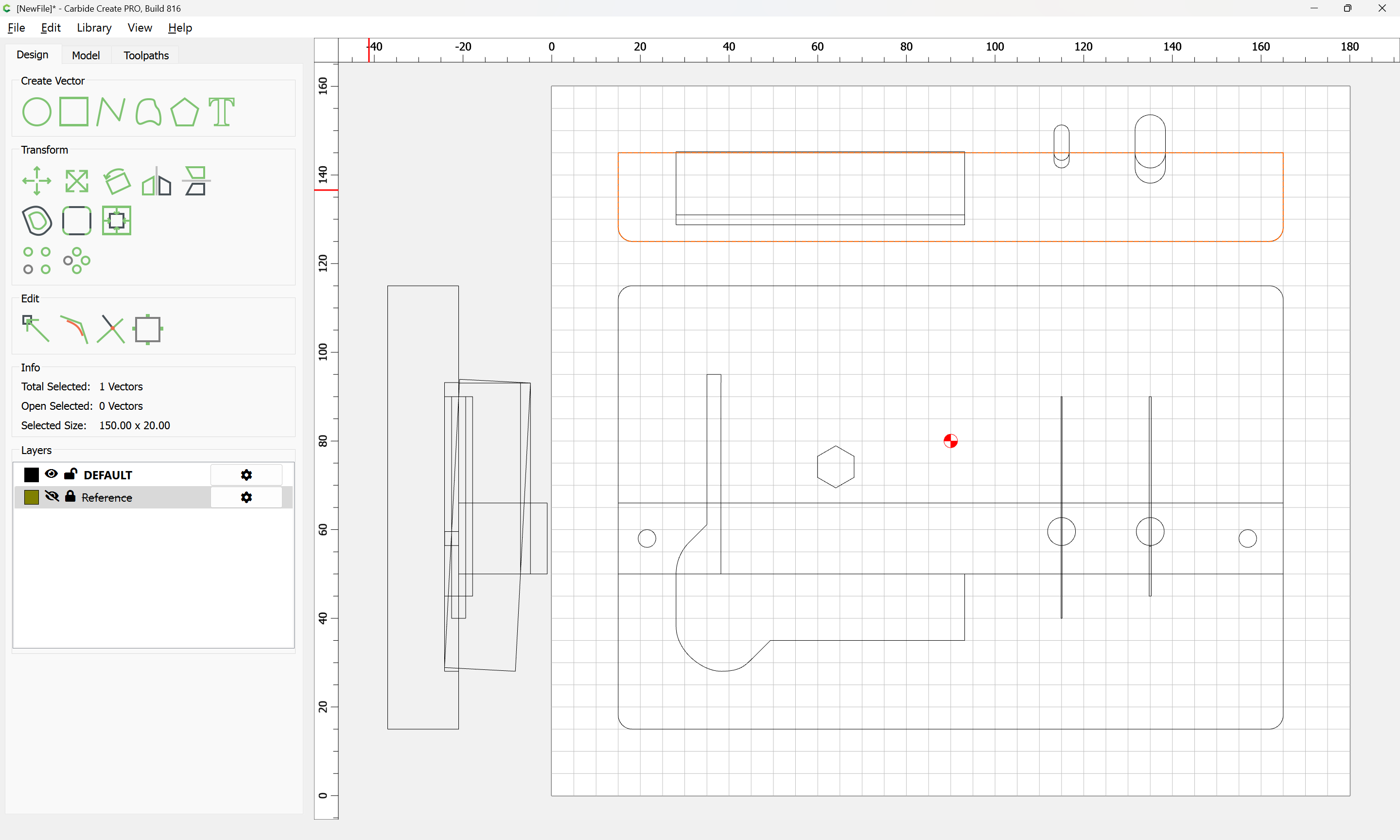
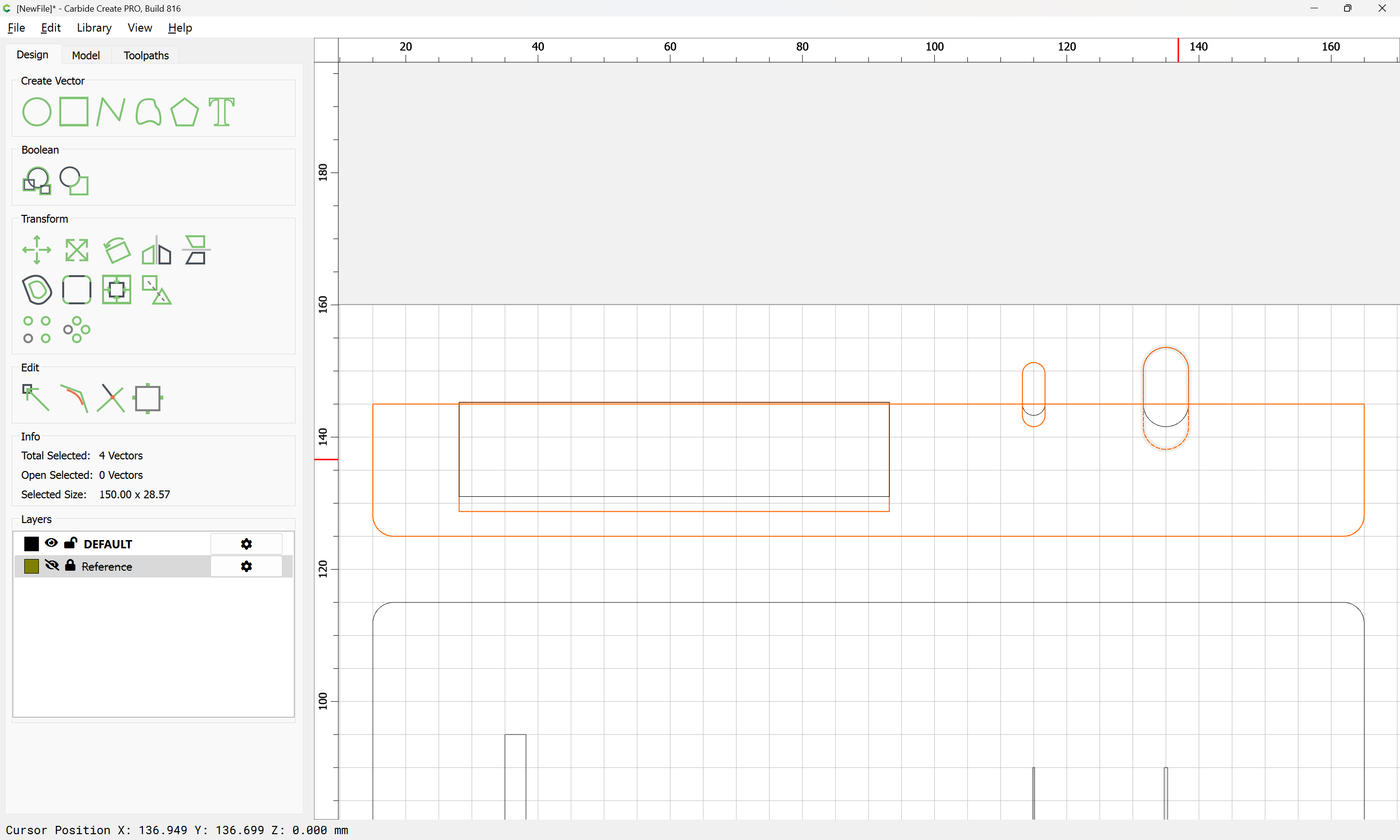
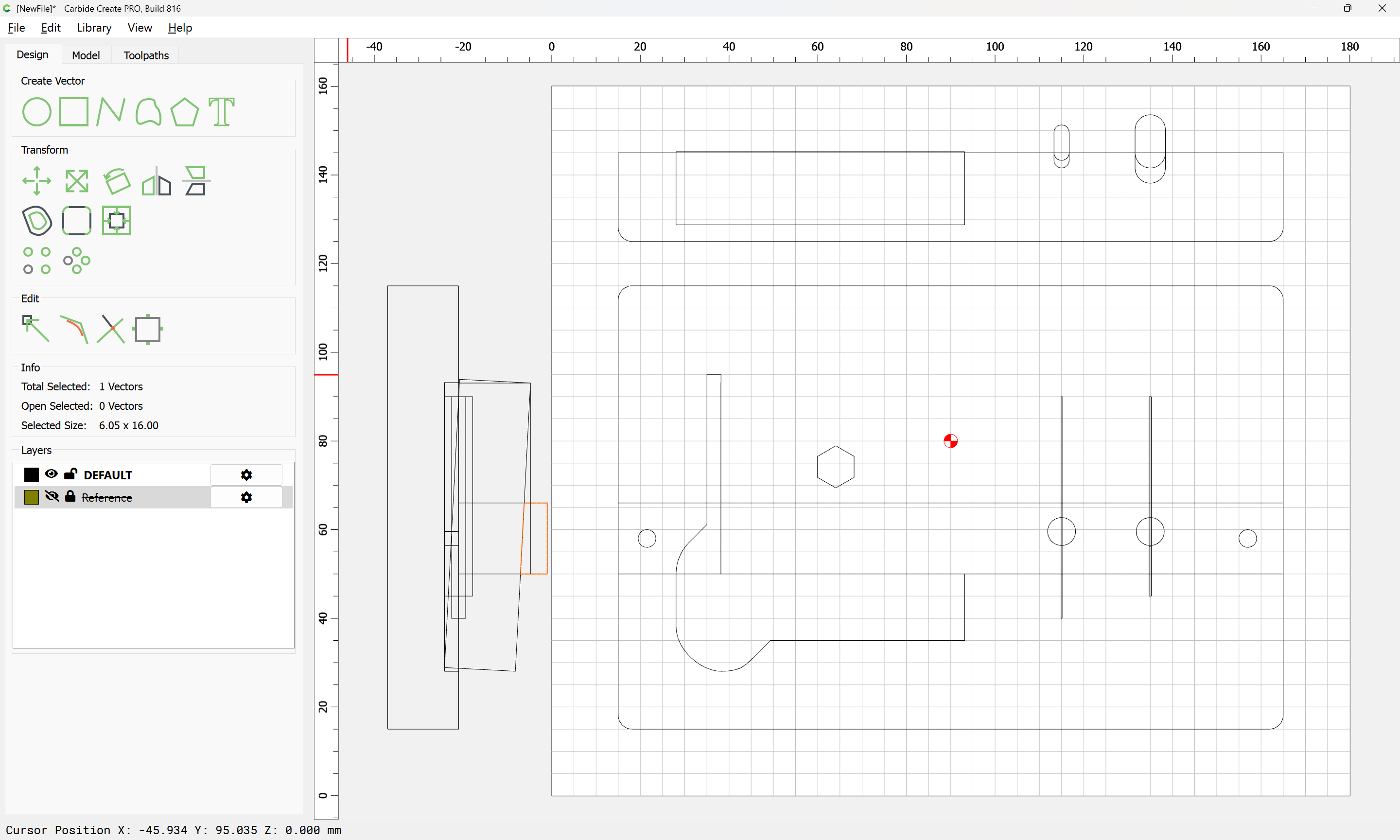
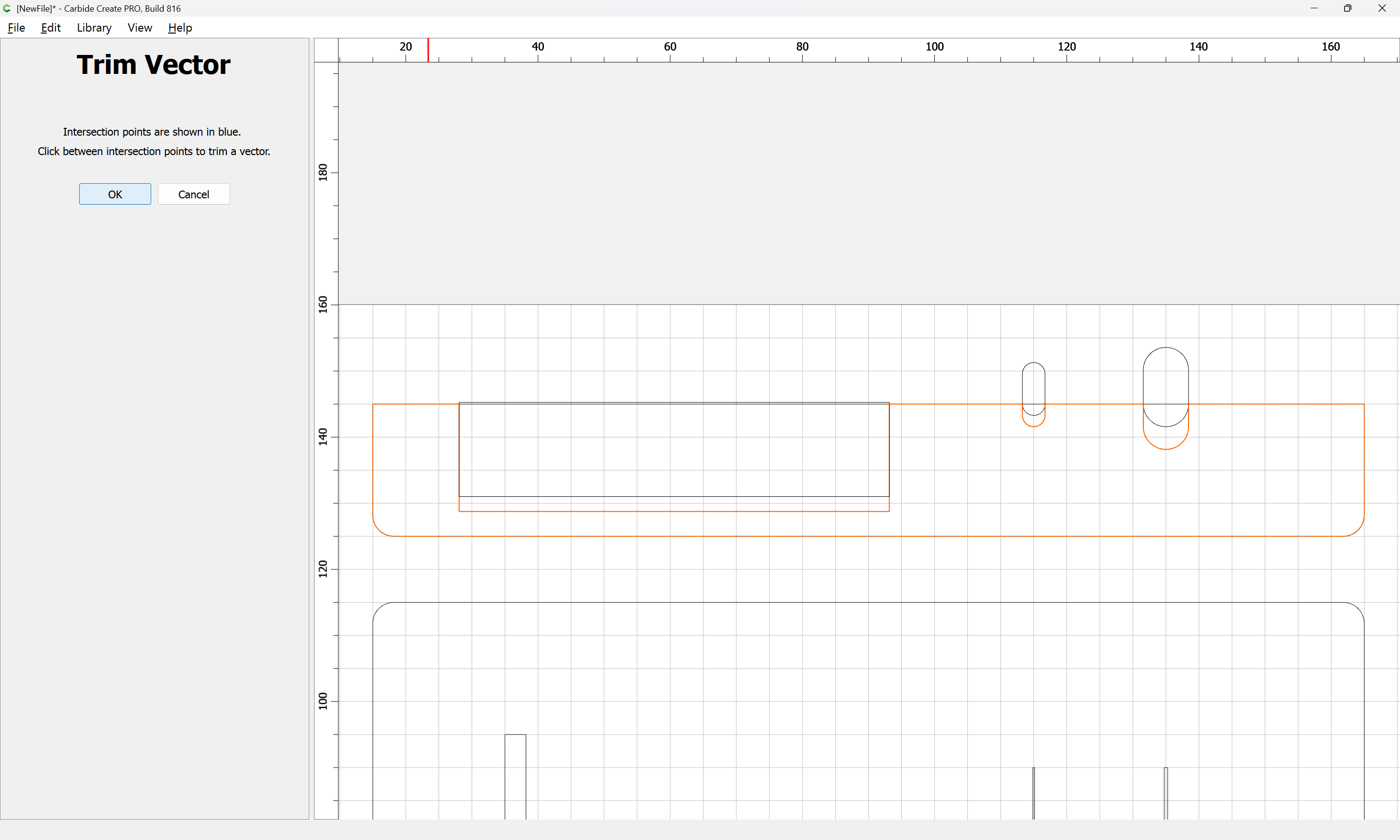
we then use Trim Vectors to remove what is not wanted:
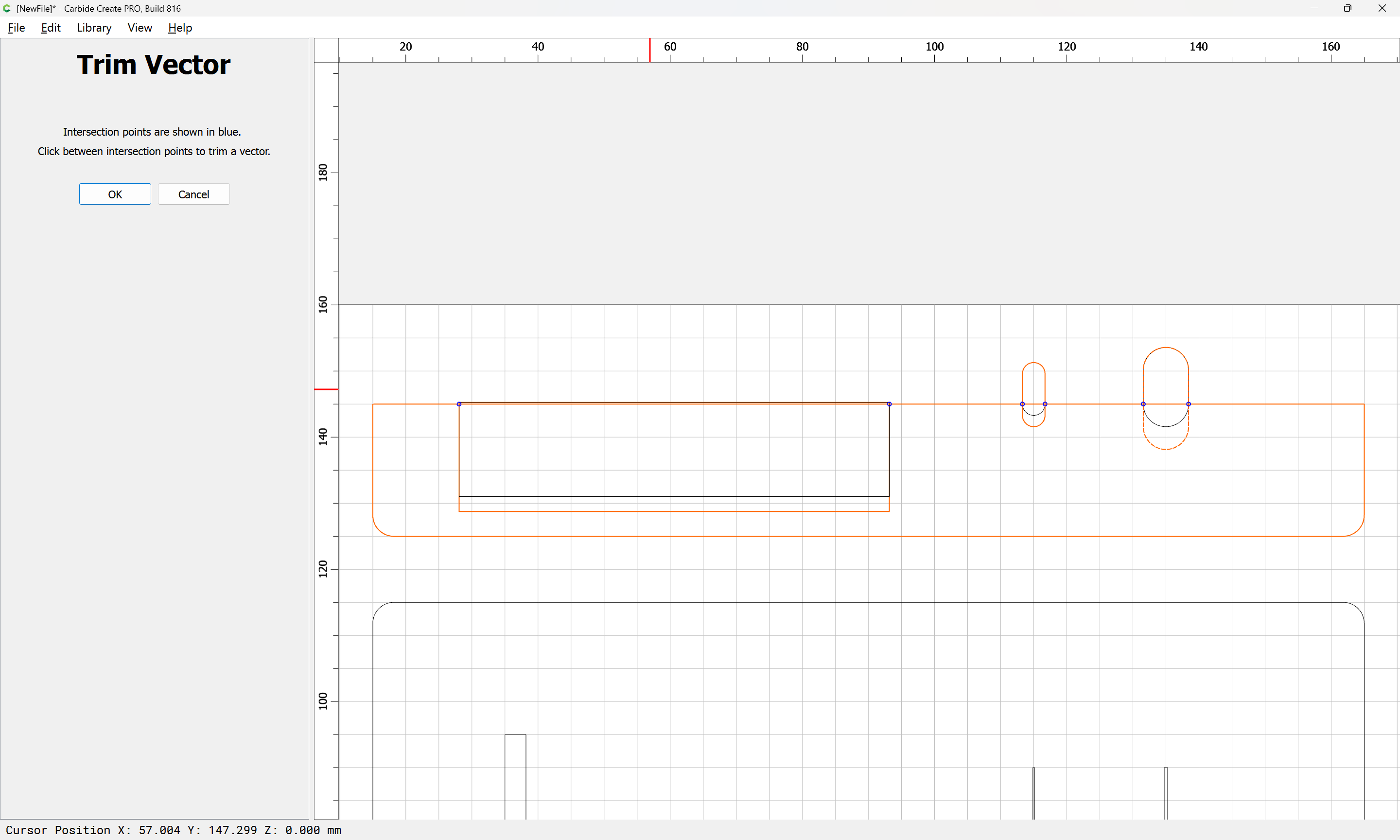
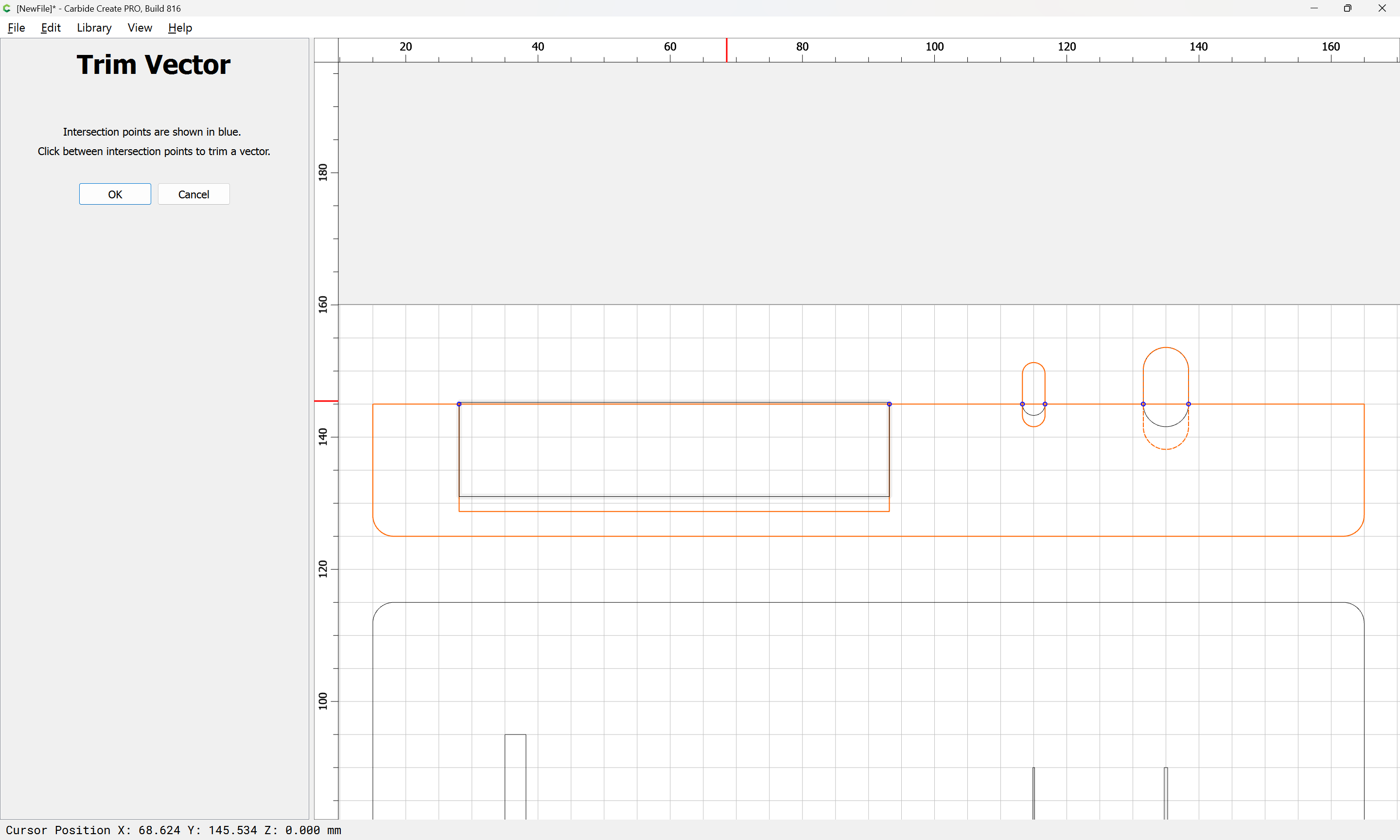
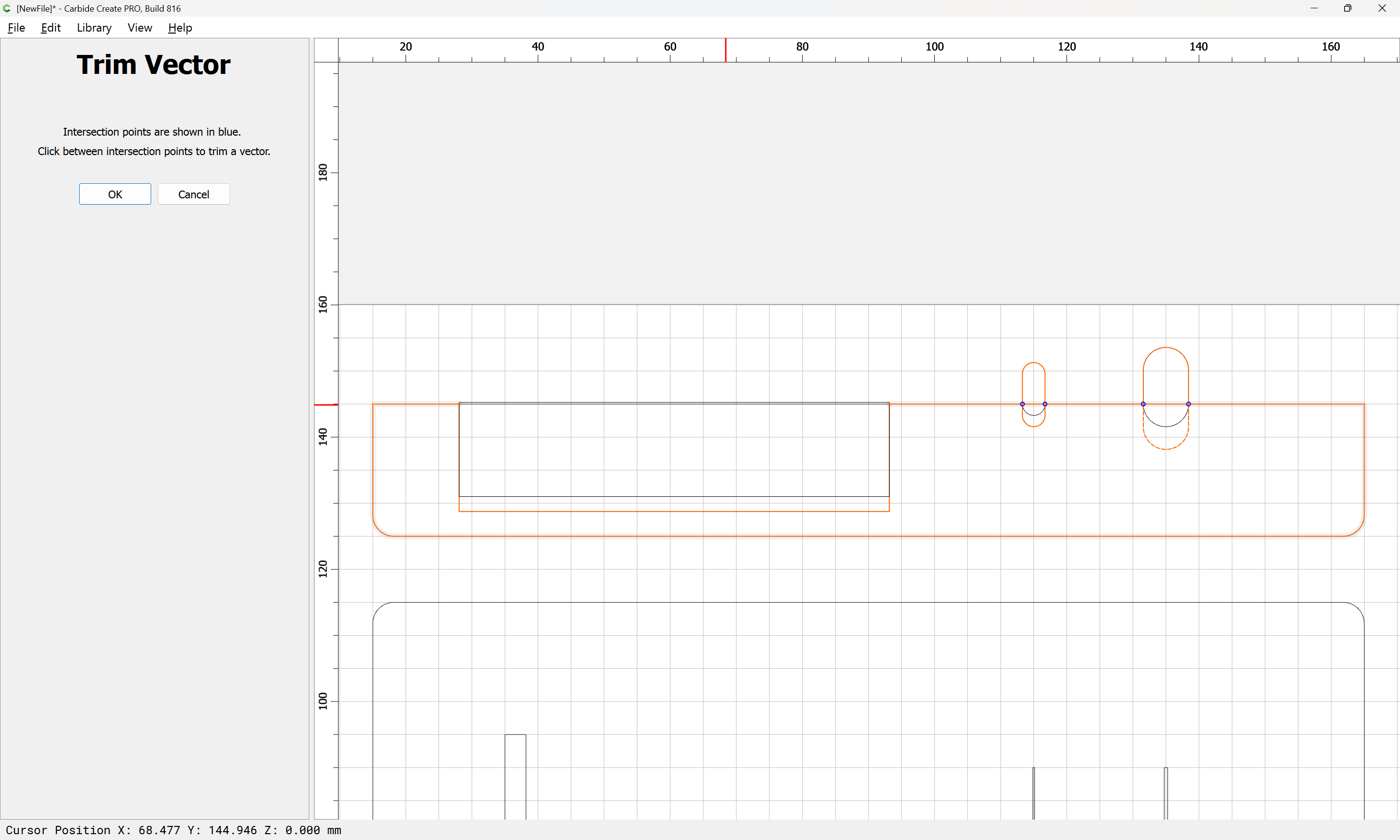
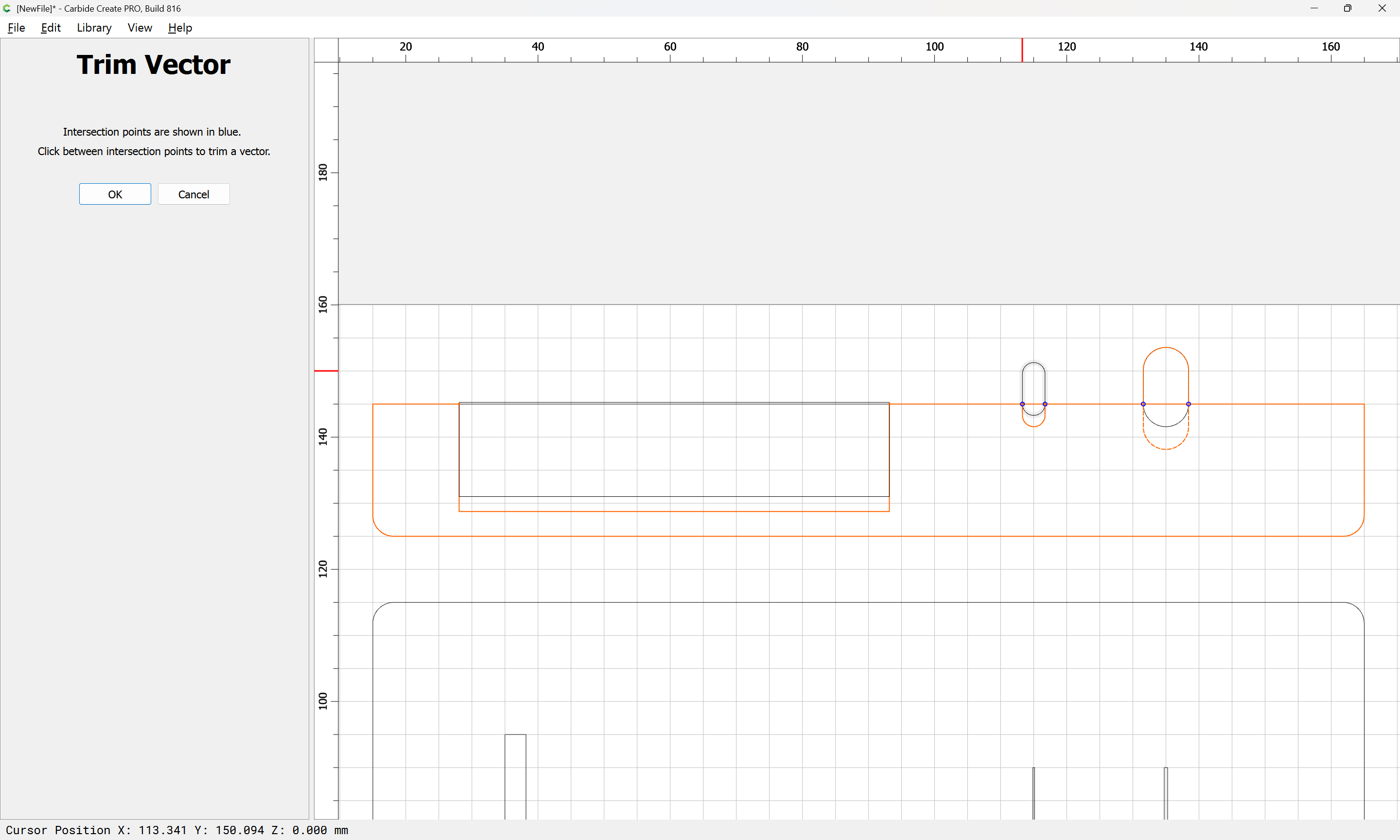
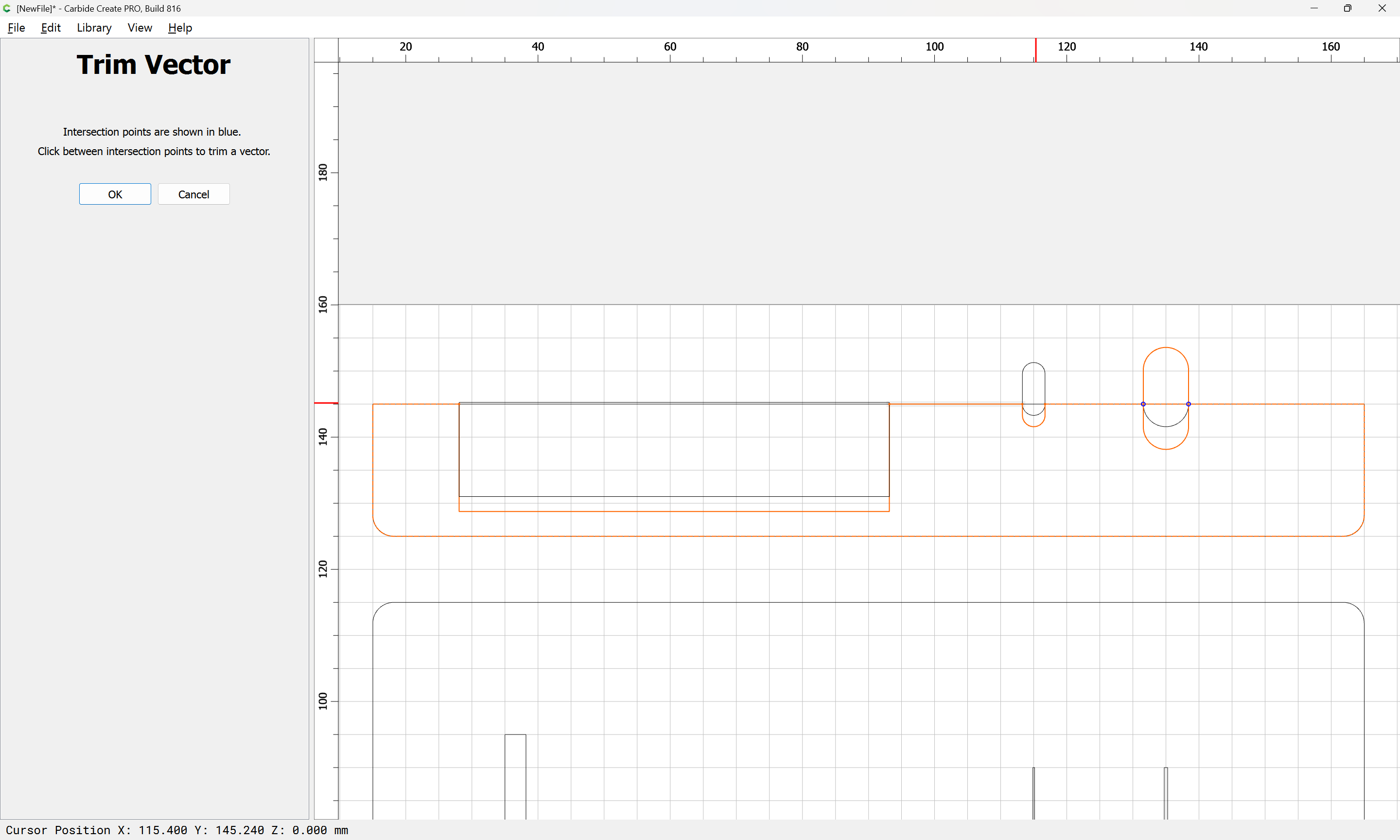
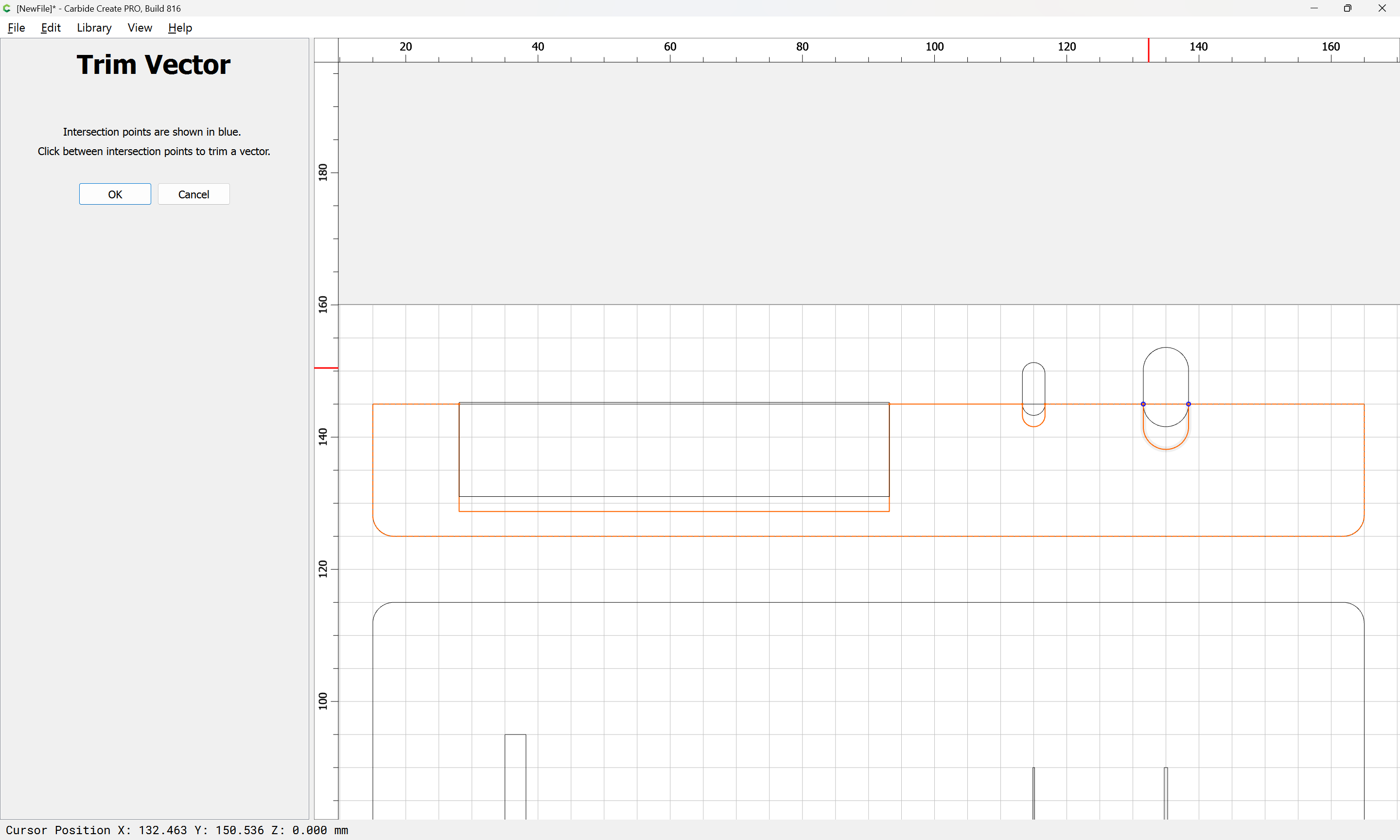
arriving at:
Ok
OK
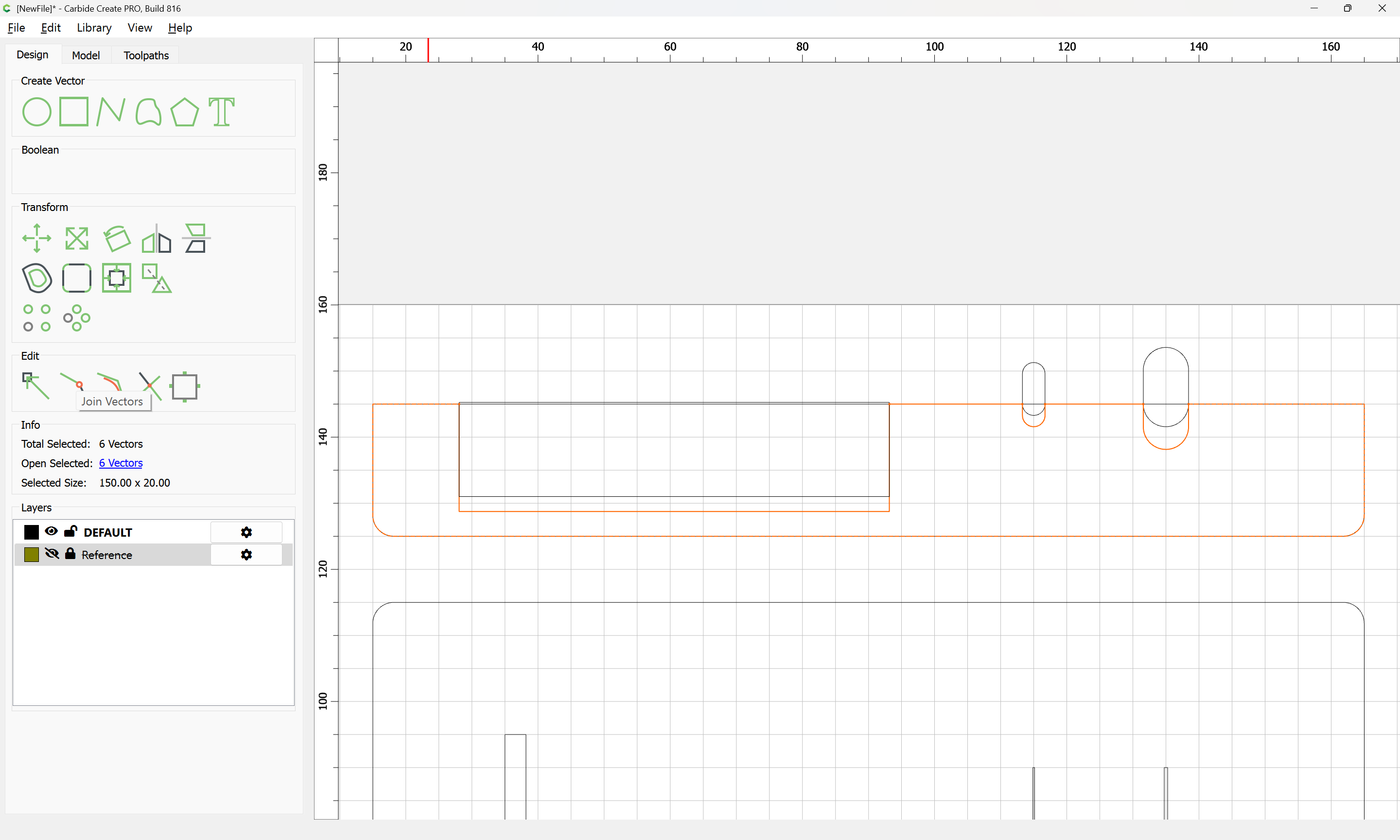
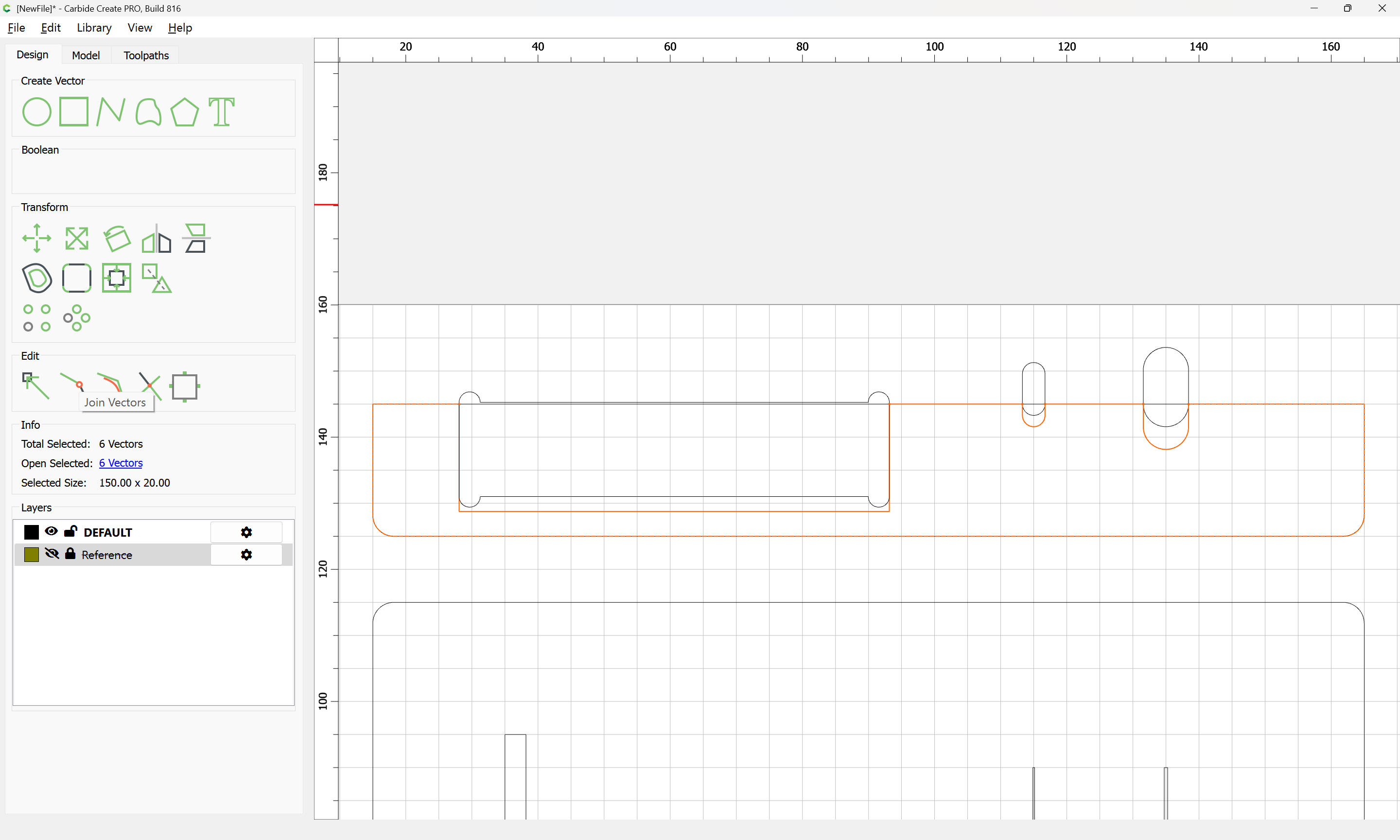
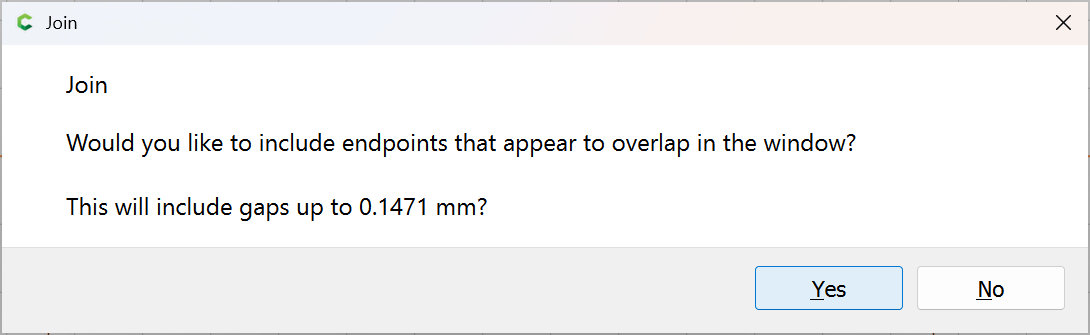
Which are then joined together:
Yes
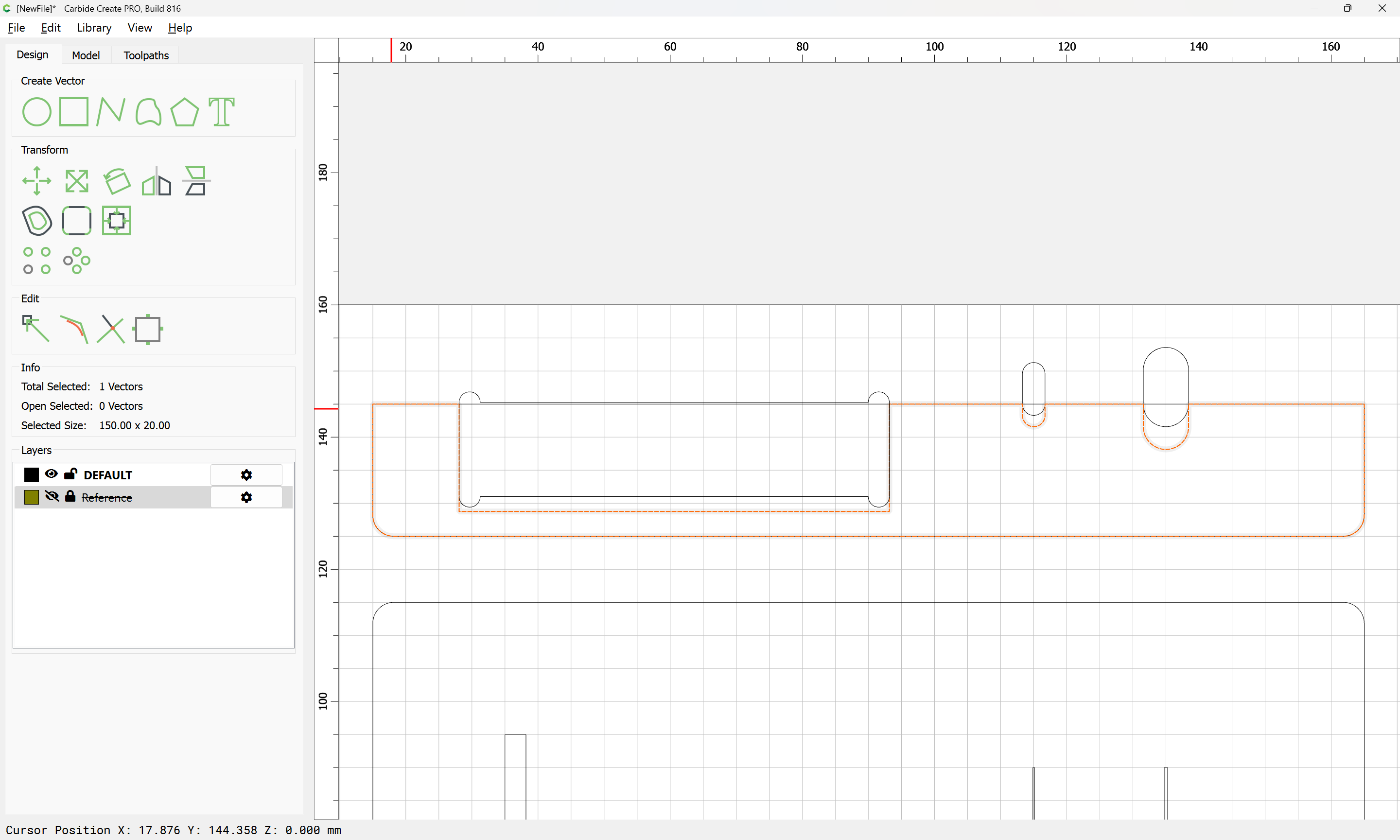
This being hidden at the bottom suggests an improvement, relieving the corners with a “Tee”:
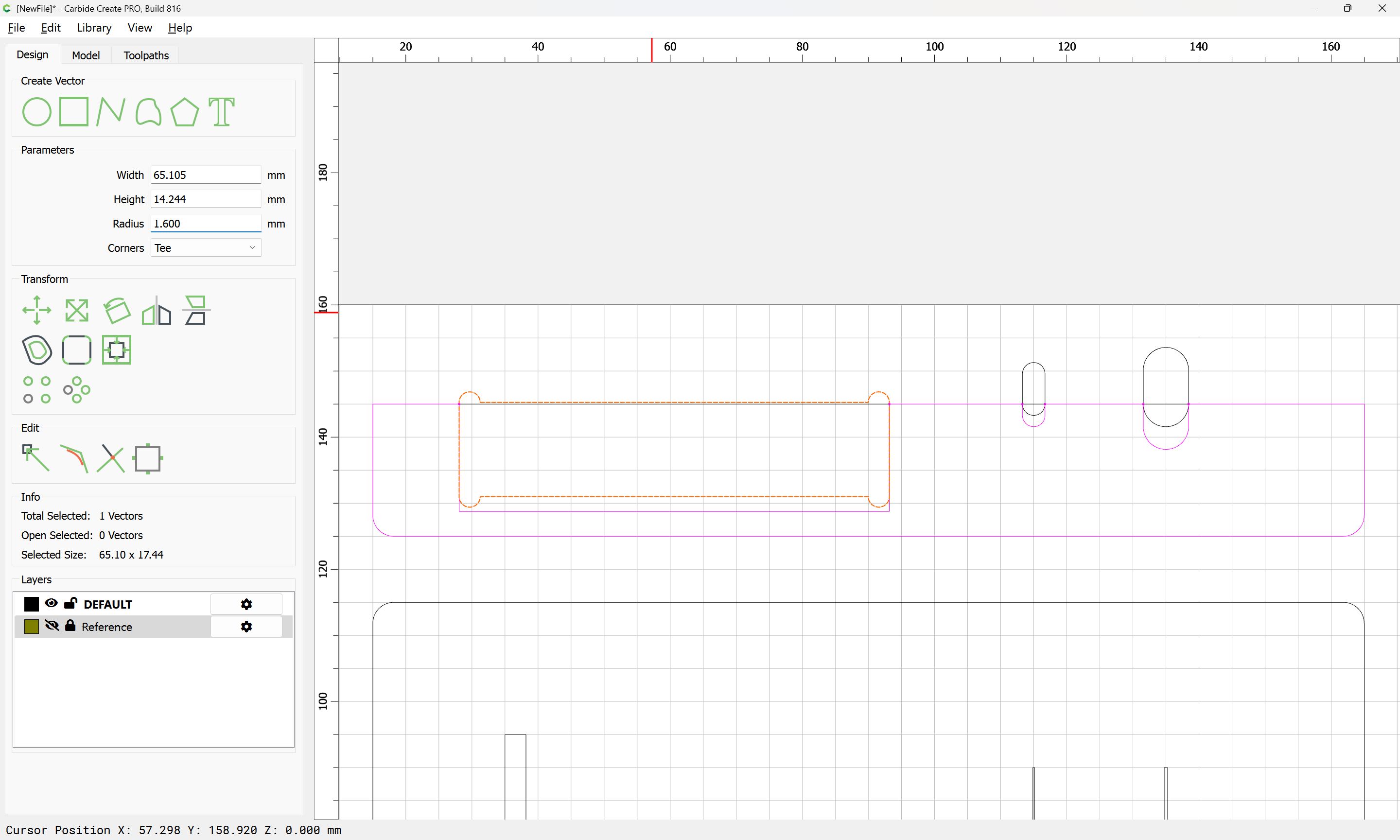
Repeat for the lower portion:
r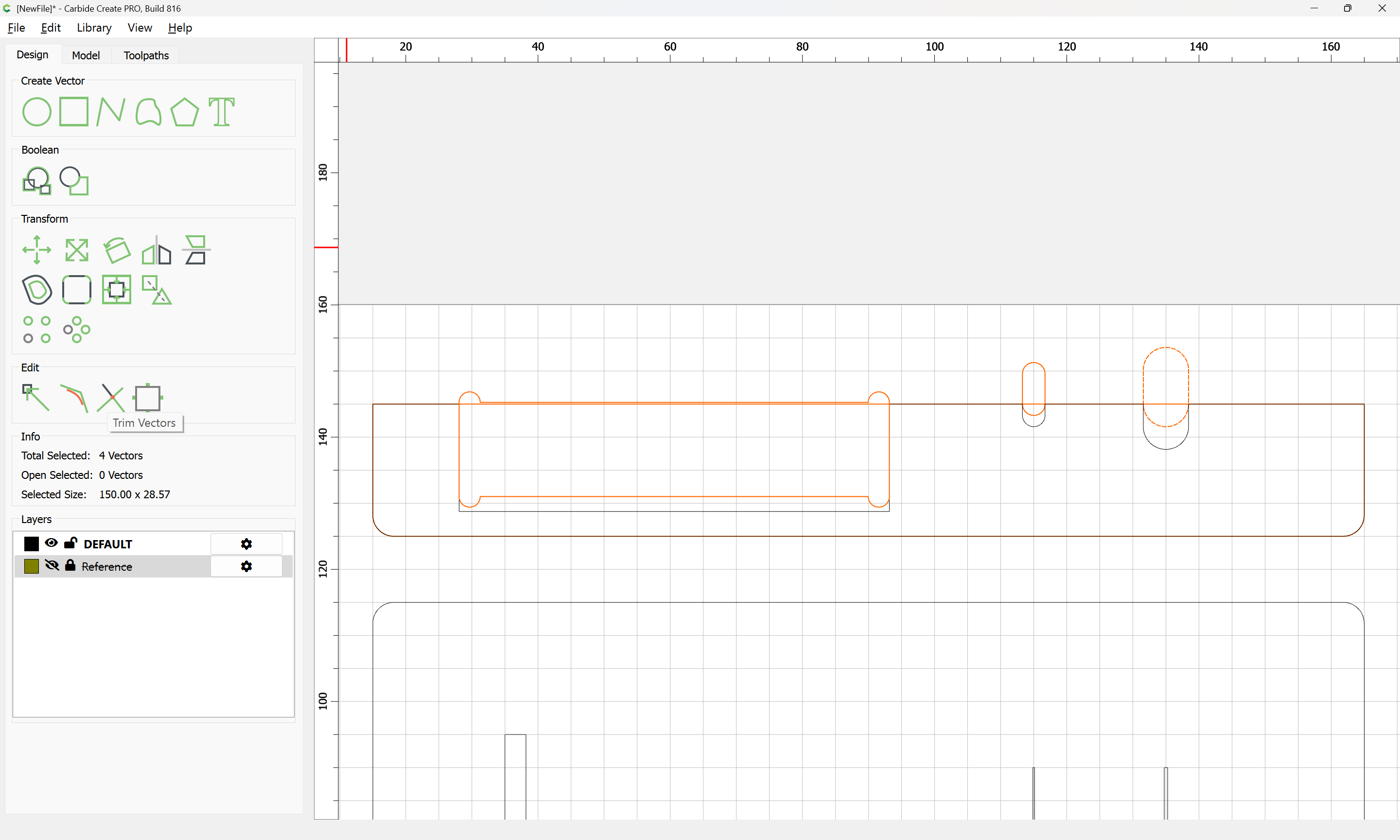
arriving at:
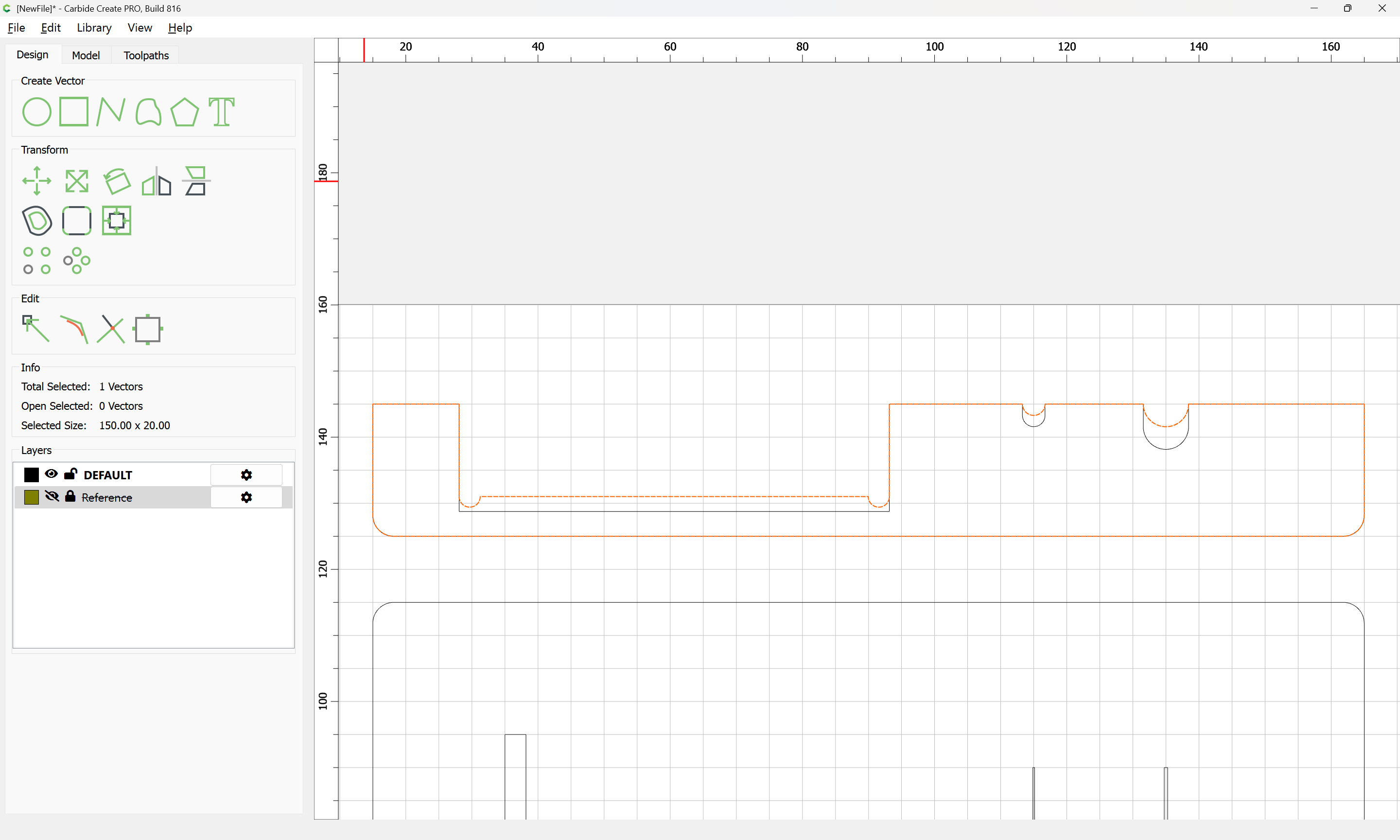
Though arguably, a third, intermediate version is wanted:
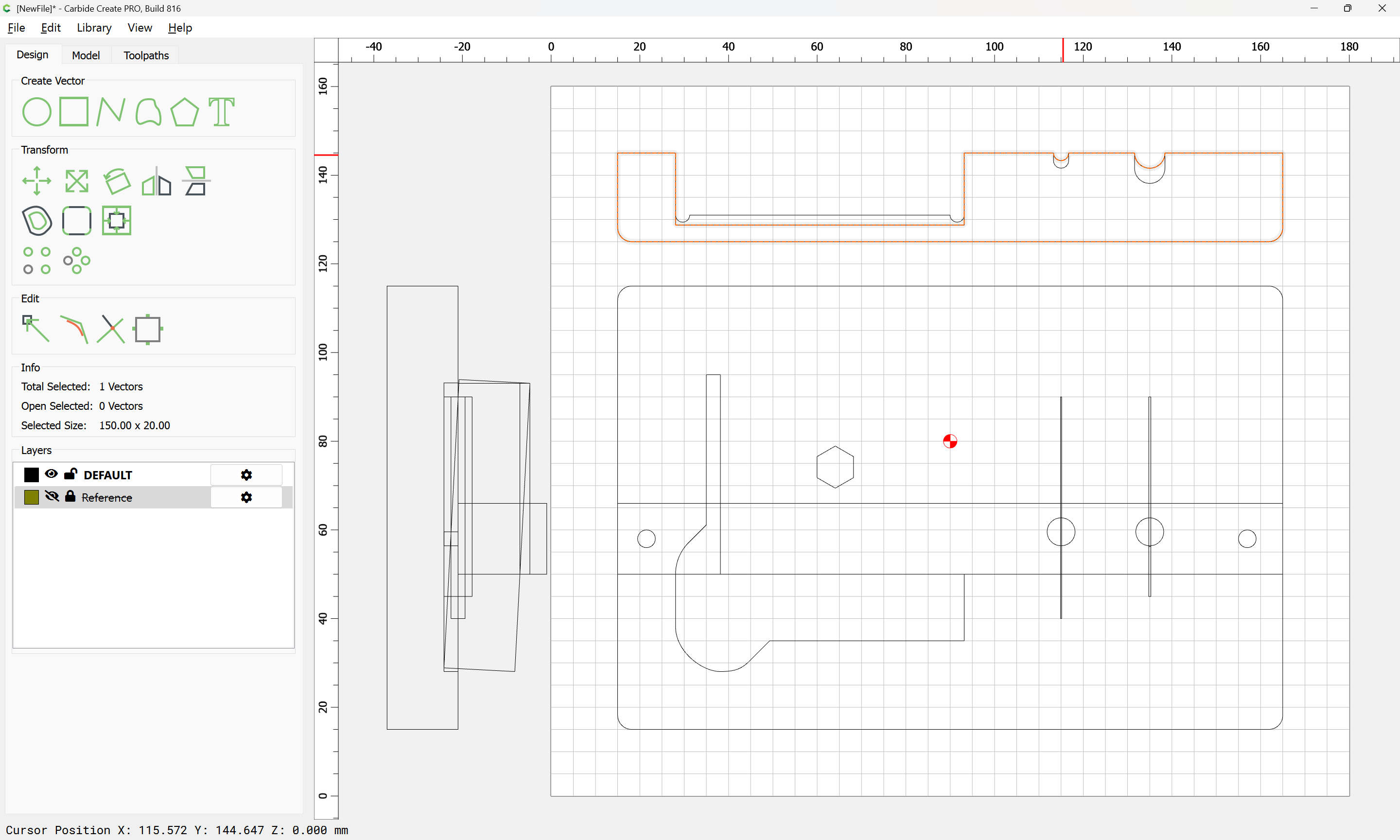
so toolpaths are assigned to appropriate depths along with an offset version:

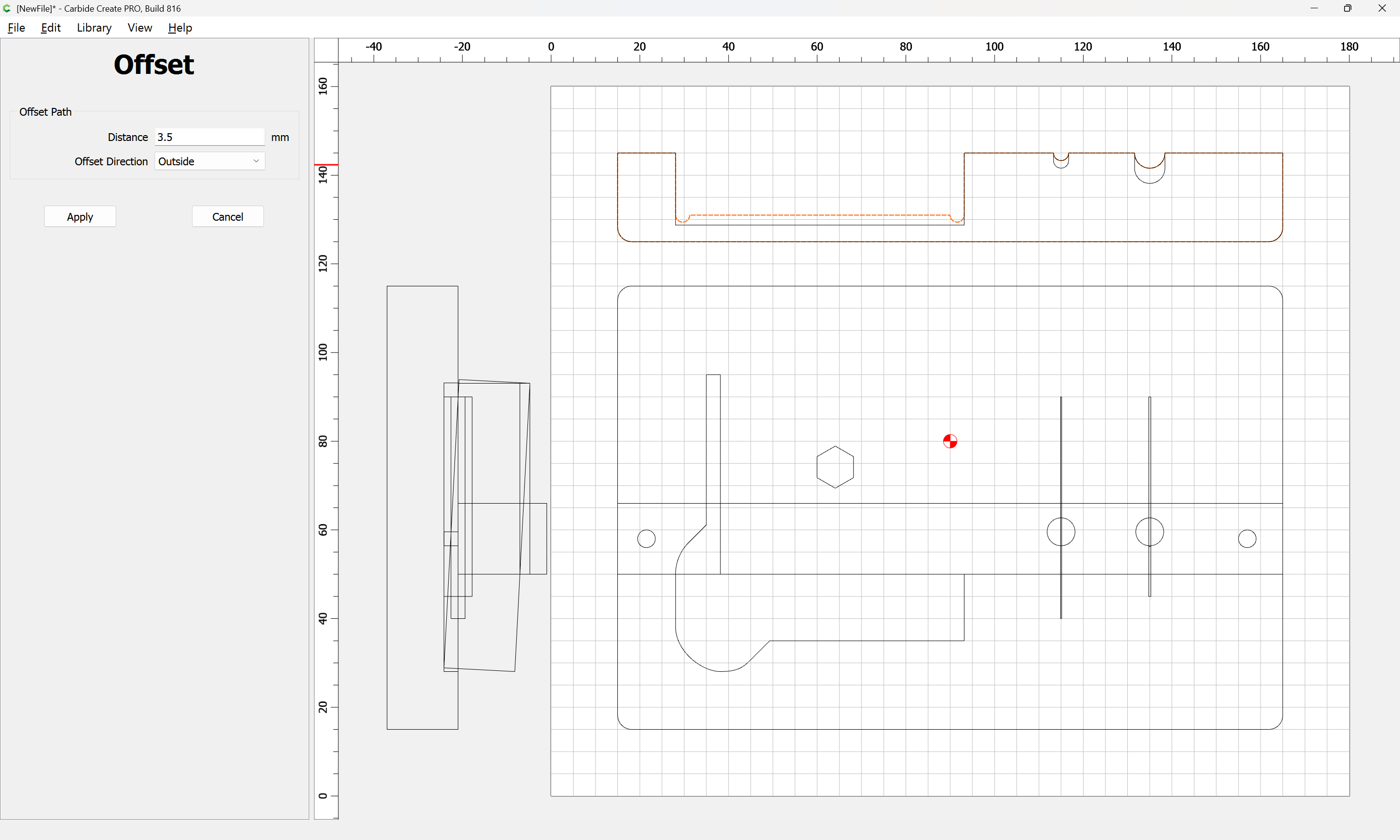
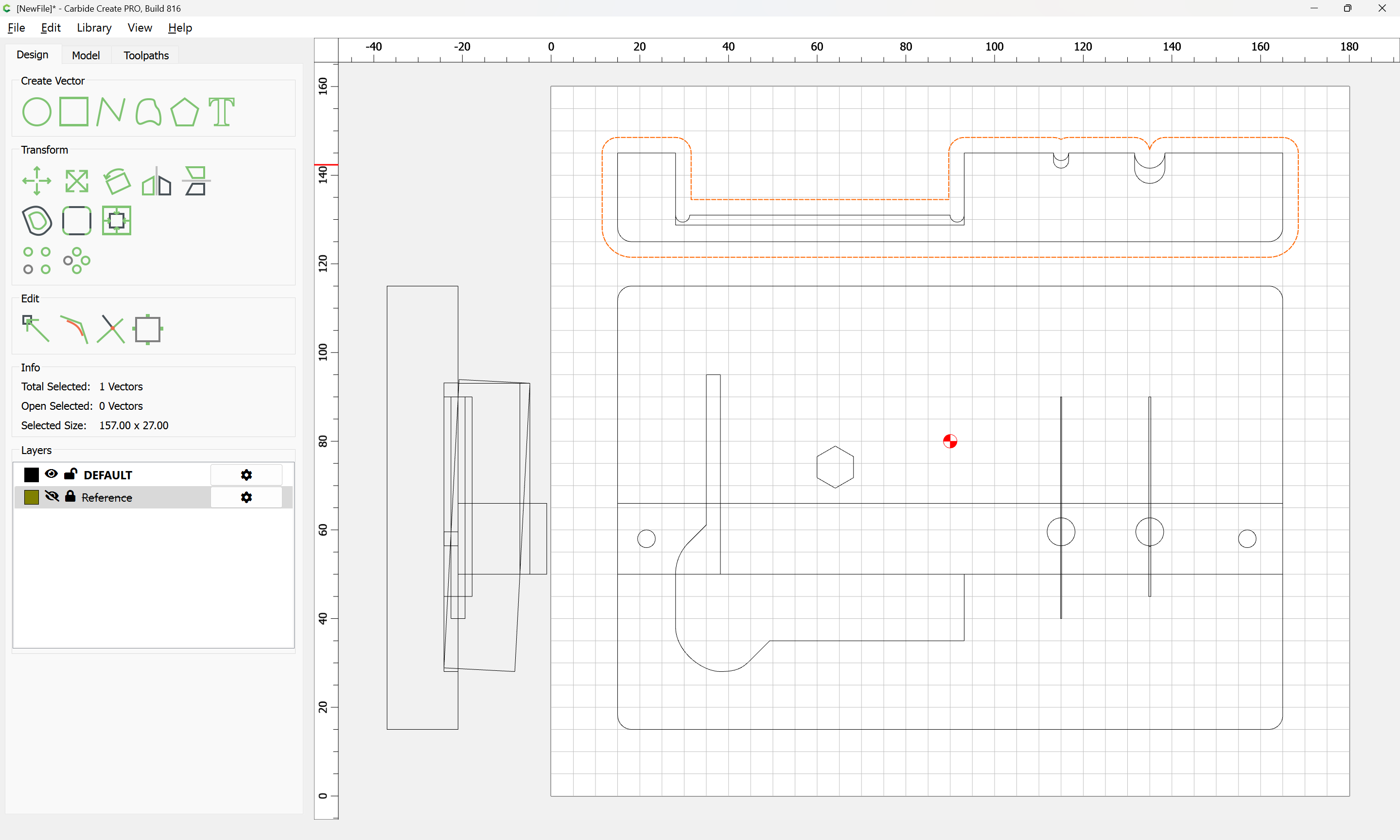
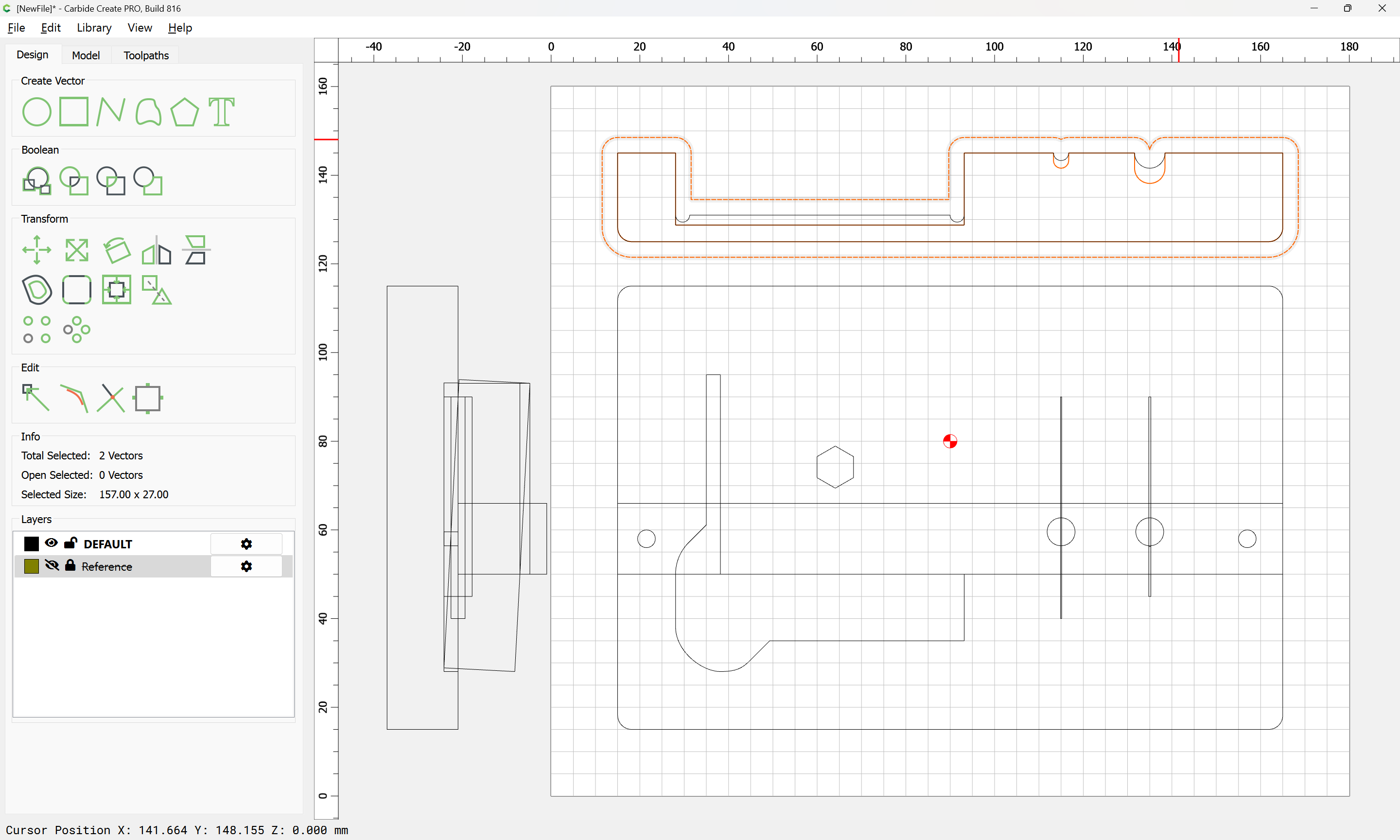
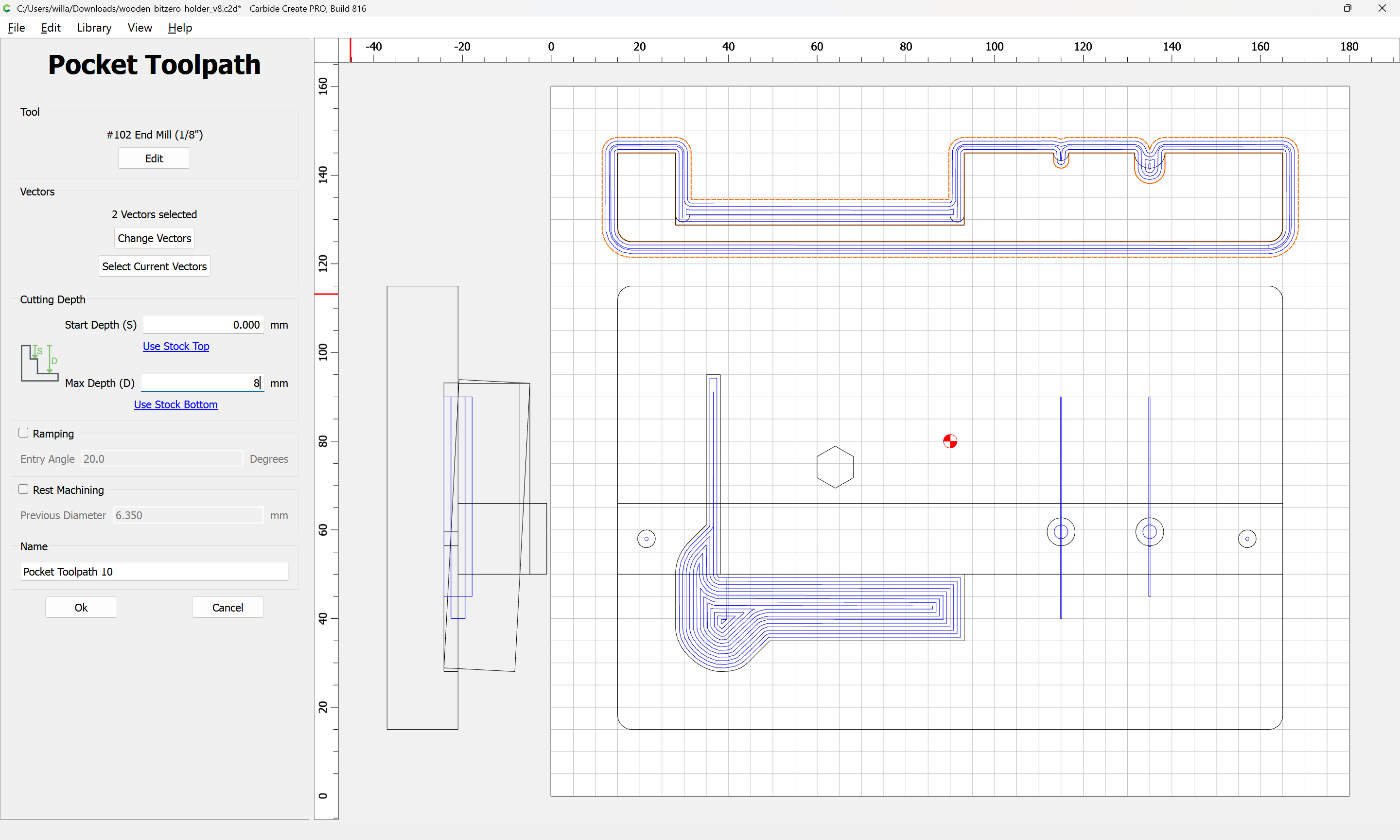
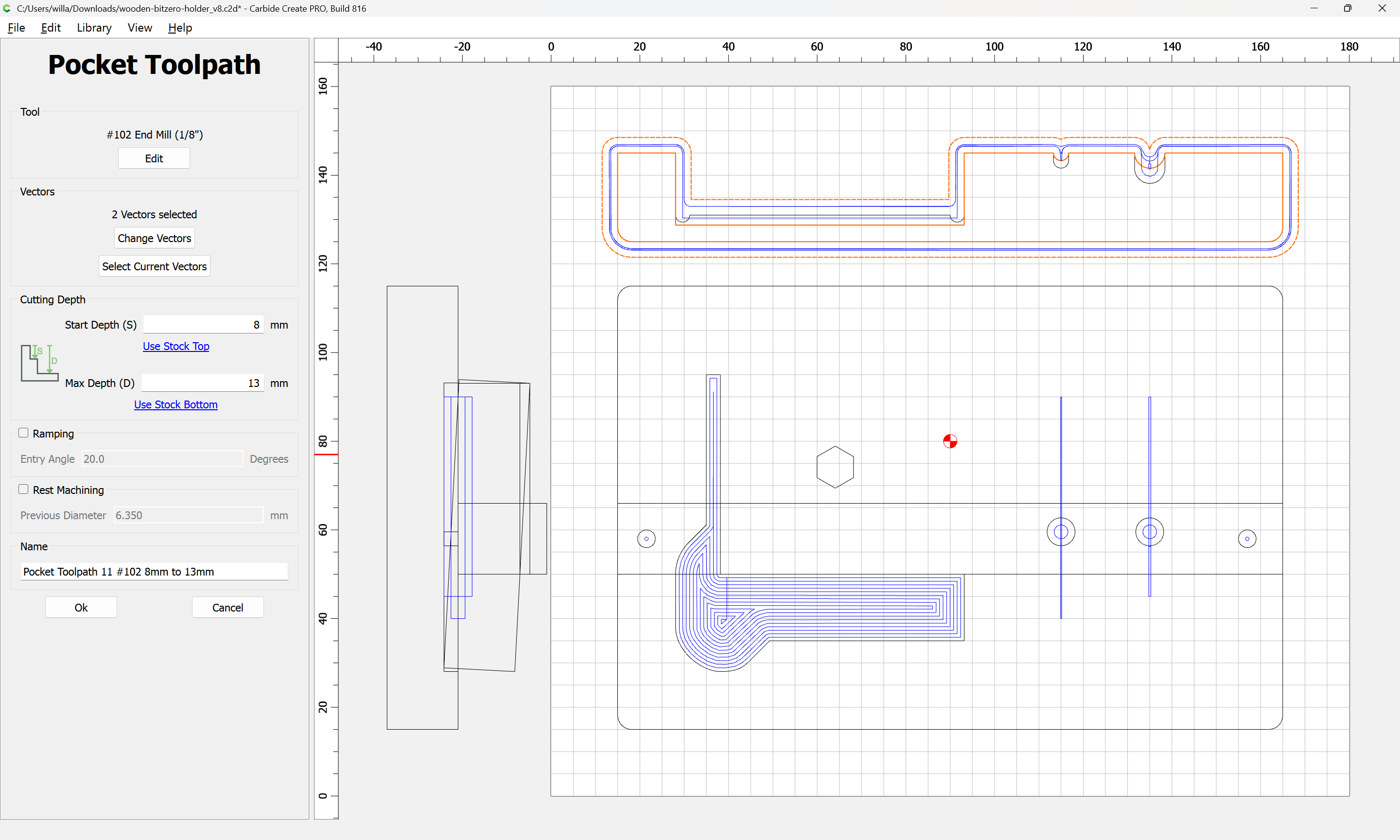
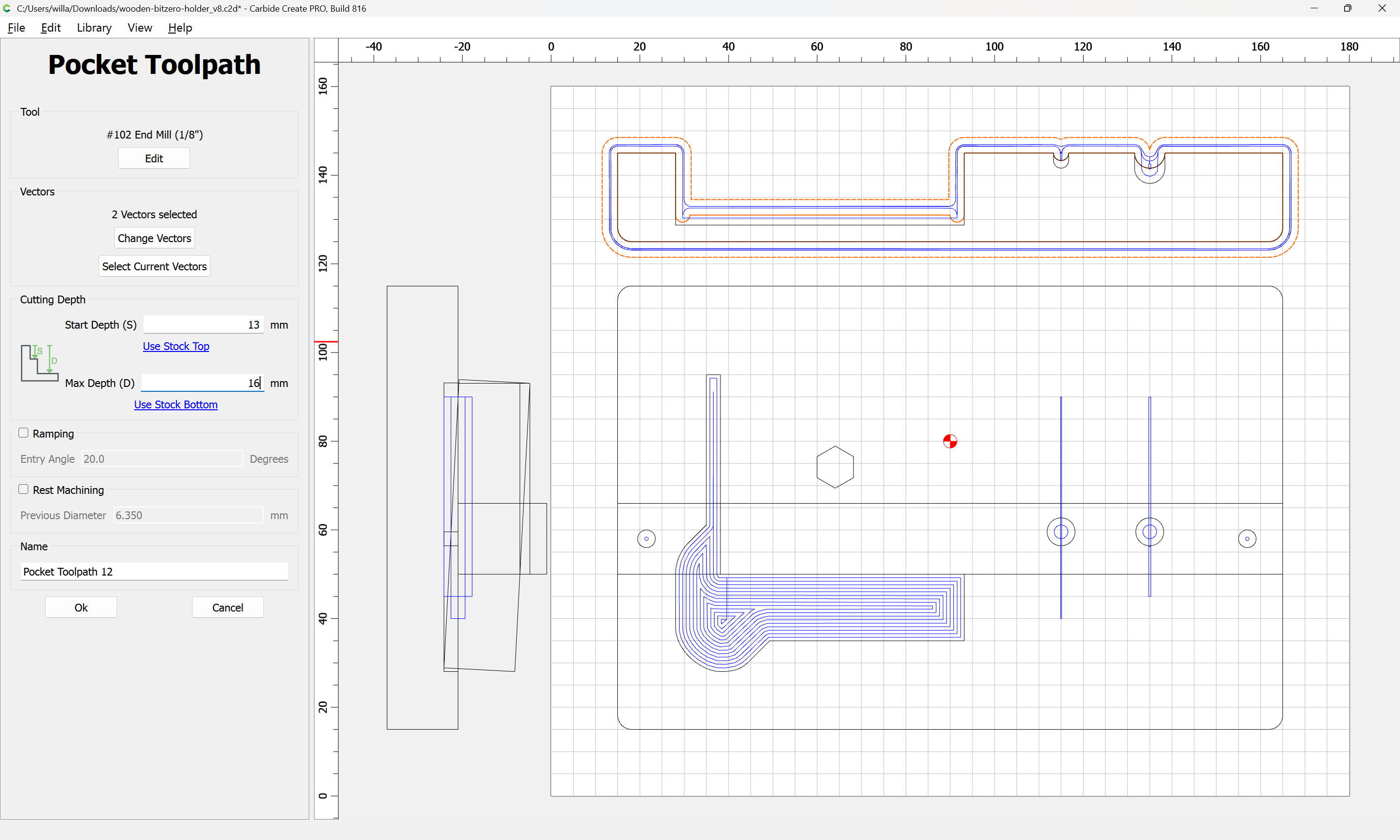
Note, as profiles were discussed previously:
one can get a profile view at need by adjusting the Stock Dimensions:
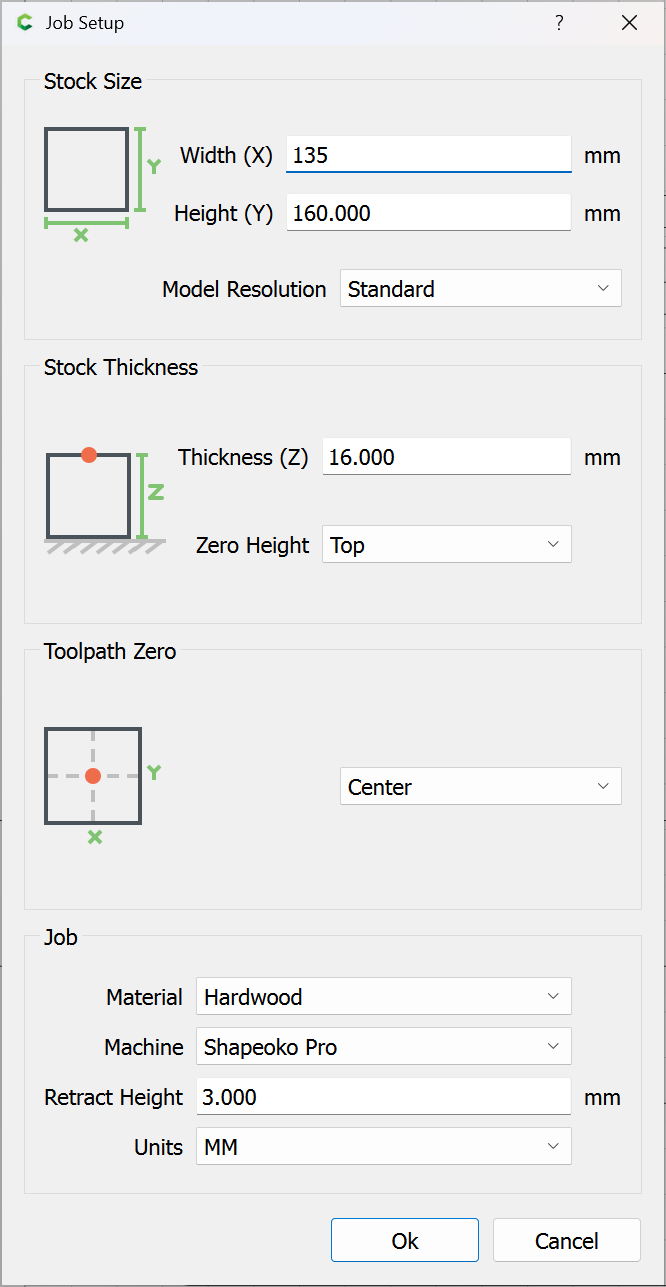
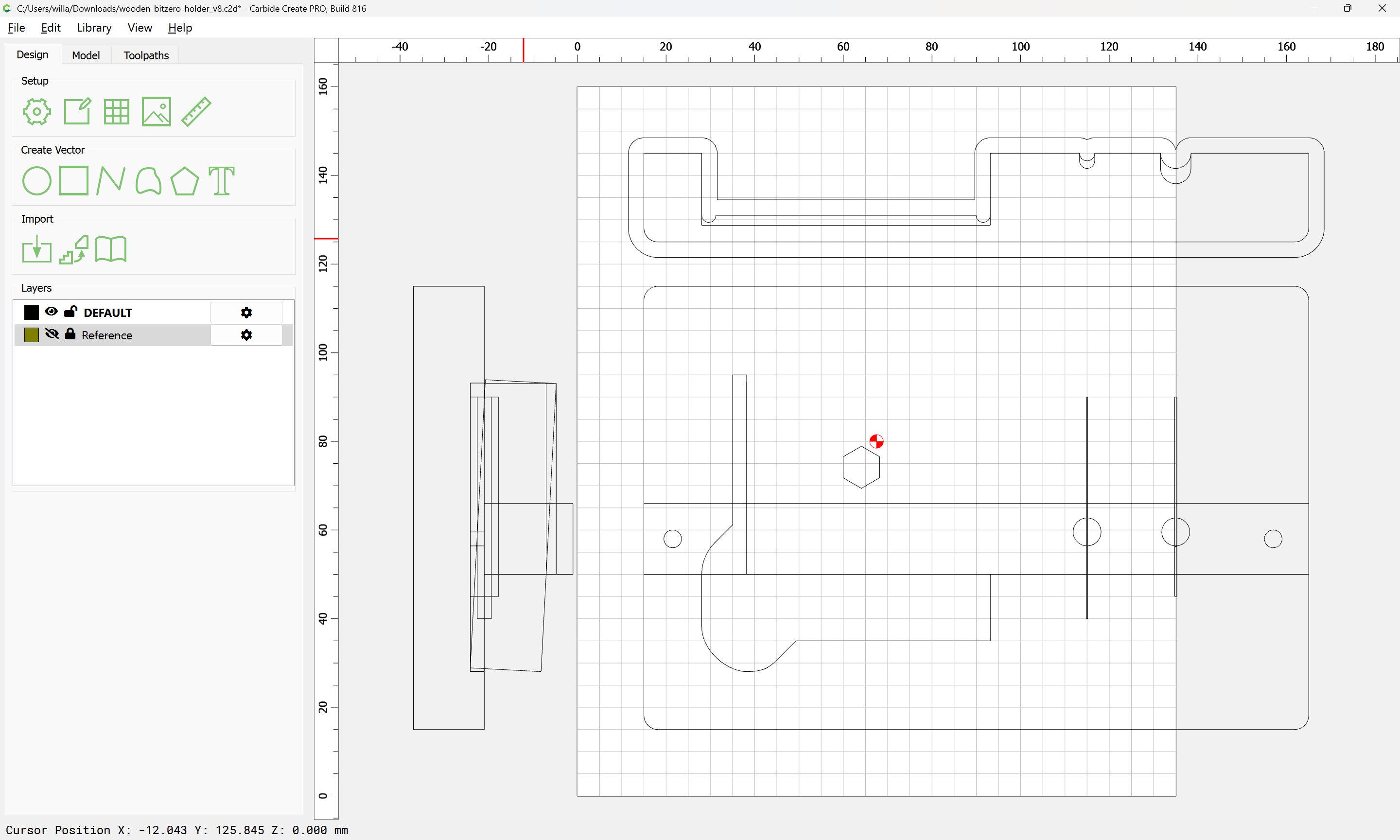
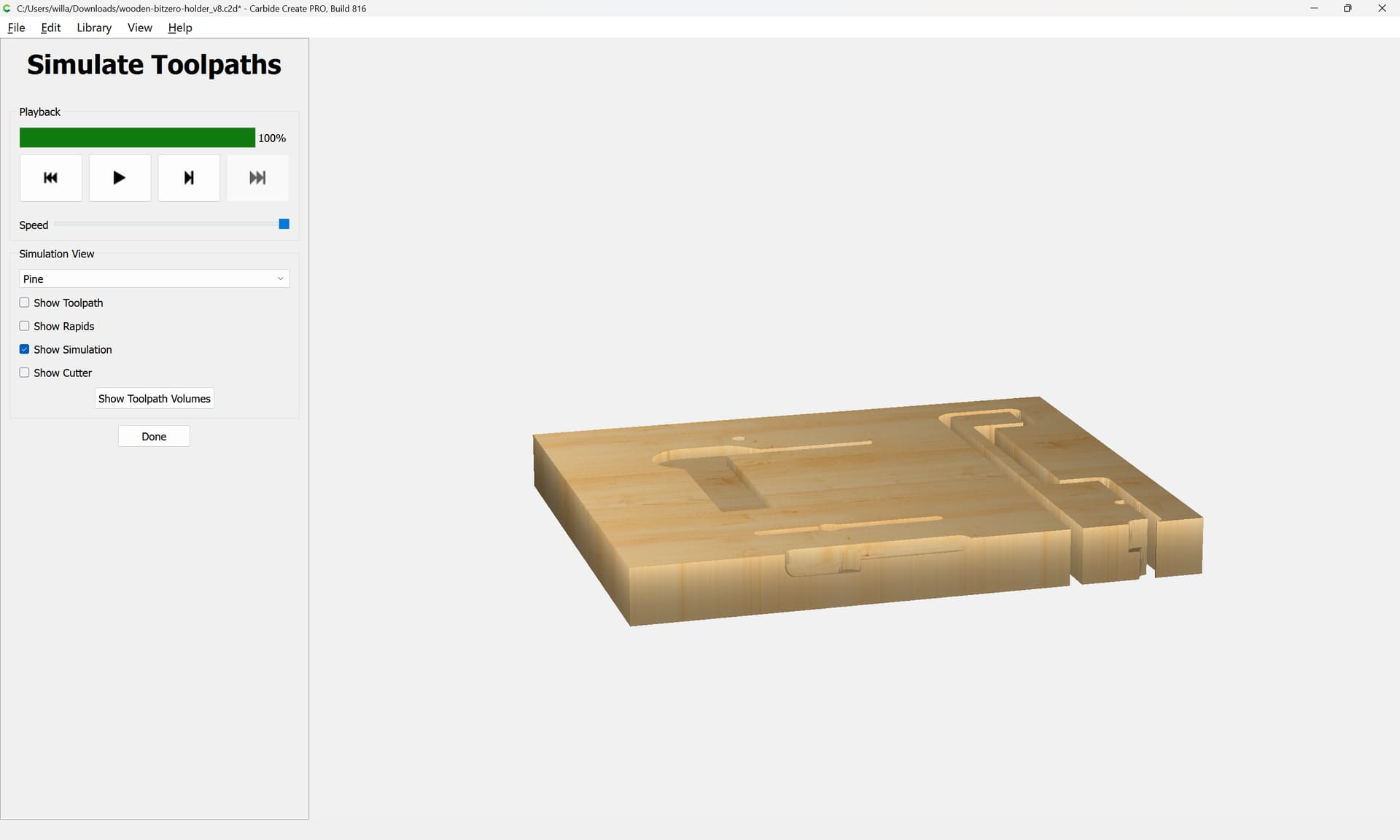
Repeating this for the base/back:
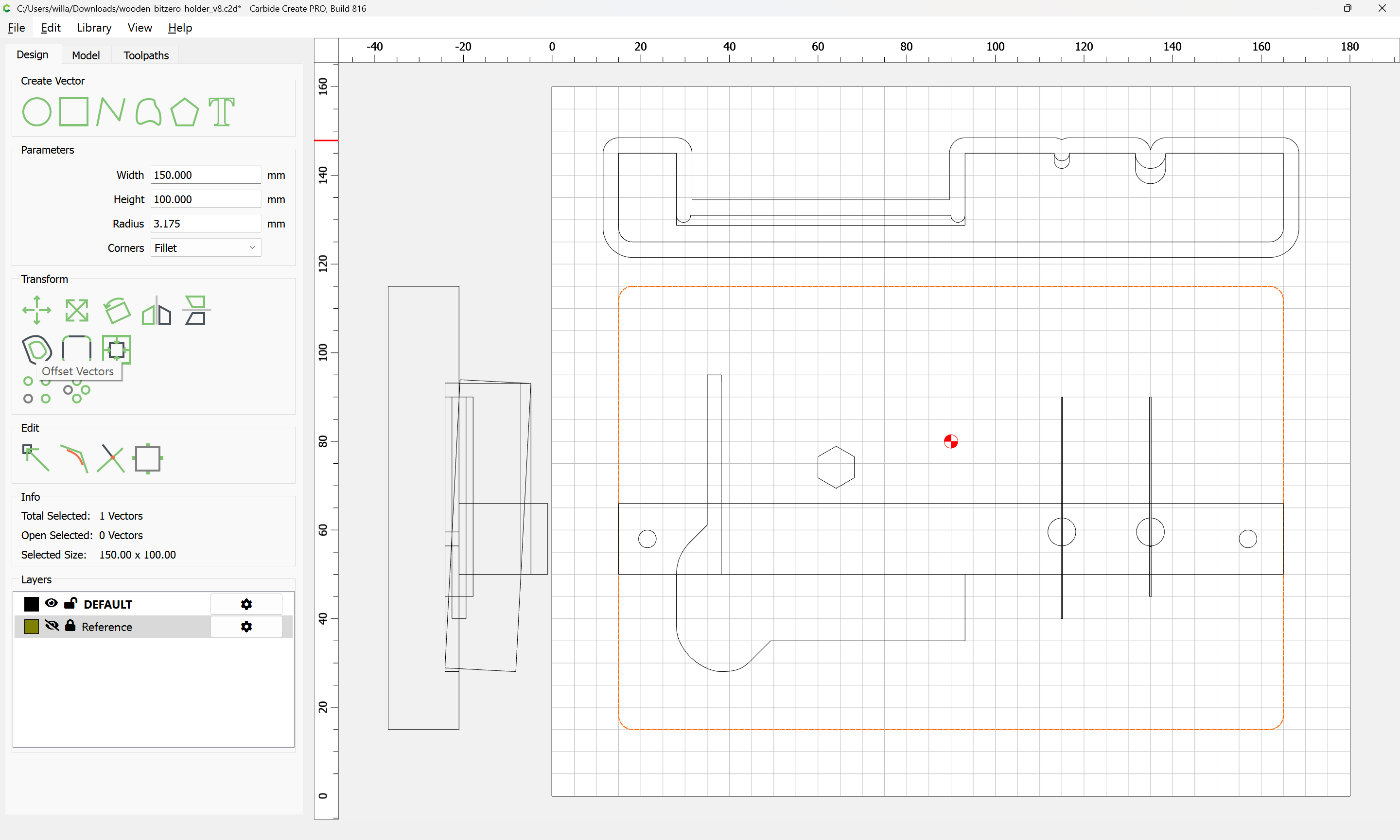
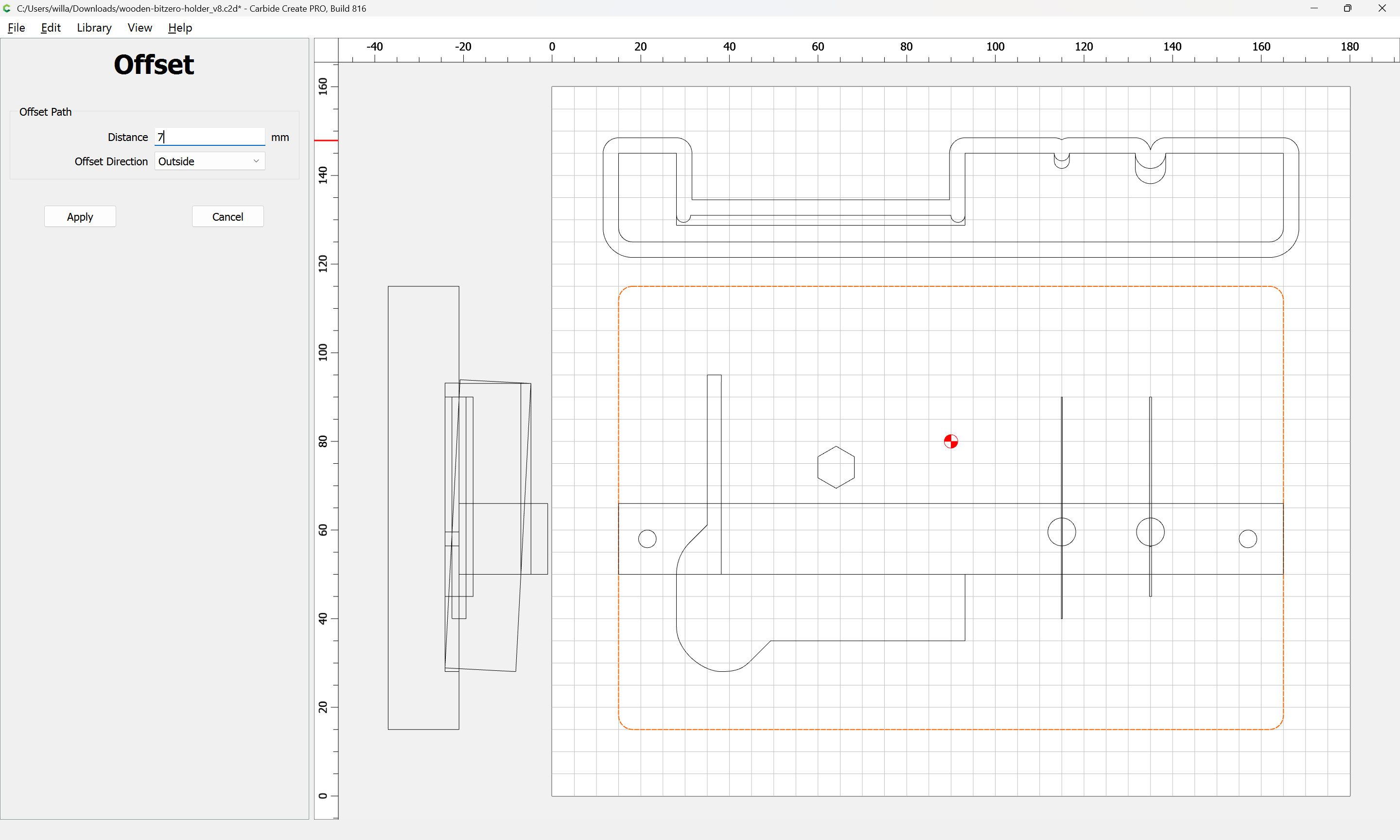
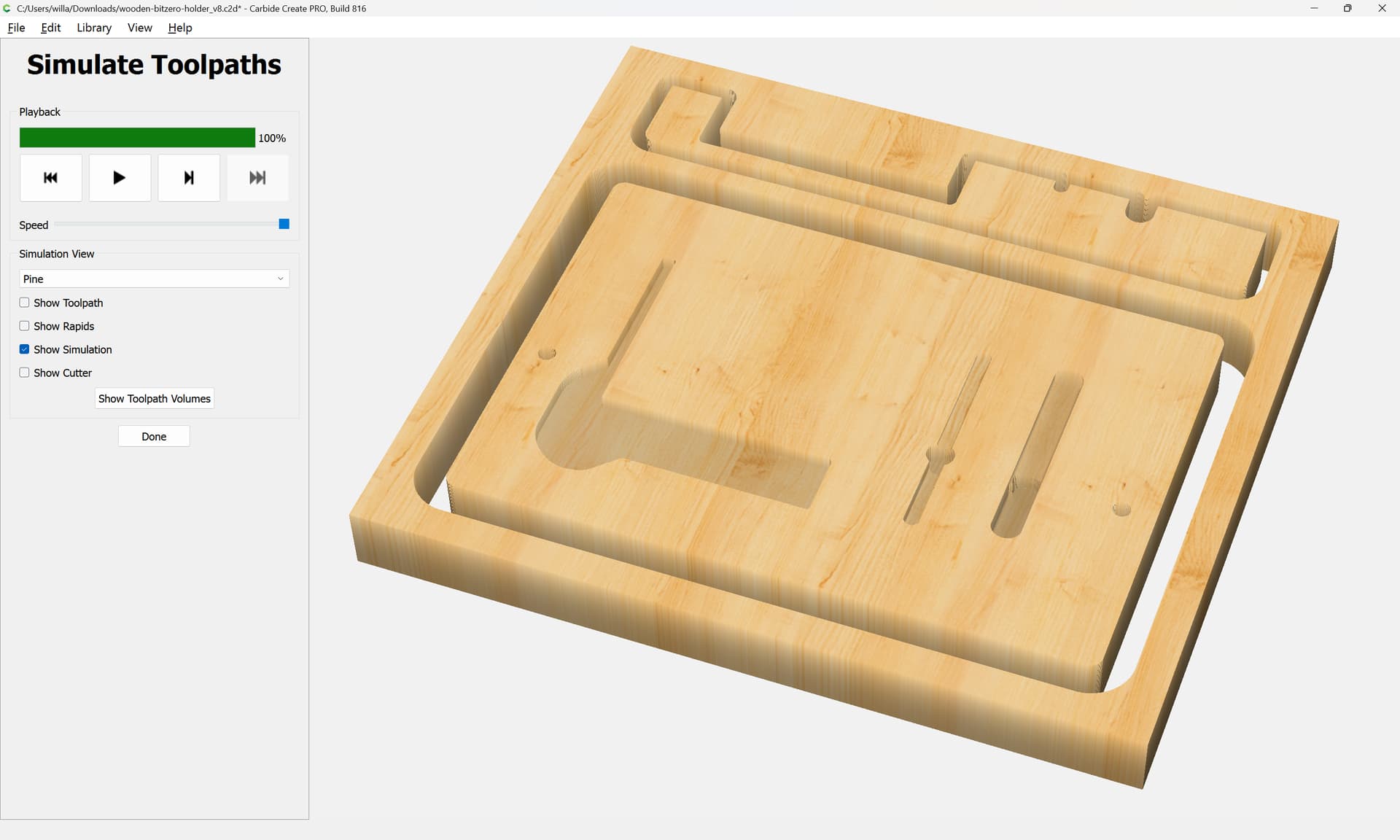
organizing the toolpaths and cutting is left as an exercise for the reader — it is recommended that one experiment a bit in some scrap first.
Attached as a v8 file:
wooden-bitzero-holder_v8.c2d (120 KB)