I am hoping to get a SP5.1 2x4 with 65mm VFD but first need to make a space for it, and seeing if I can build a small workshop in my backyard that will work. I’m limited to 120sq ft (exterior) so interior will be a bit smaller. I’ll also want space for a drill press, workbench, etc. A few questions for those who have done this before:
How big a space should I allot for the CNC itself, assuming I build an enclosure around it, ideally also housing the dust collection system.
I am thinking of trying to exhaust the dust collection externally through a vent - any reason to not do this? Thinking particularly if I add on a laser at some point, but either way. Does anyone use a ceiling air cleaner for dust that escapes the enclosure (or for other power tools) or is that overkill?
For electrical, I think I’ll ideally want separate circuits for the spindle (not GFCI), controller and computer, dust collection (shopvac +/- exhaust fan), lights, and outlets for other power tools like drill press. Anything else I should consider?
If anyone has suggestions on what they’ve found most functional as layouts for a confined space including workbench, storage, and the CNC enclosure, i.e. more square (10x11, or 11x11 5-corner) or long (8x13 or 9x12) would love to hear your thoughts.
Venting externally will also bring in the corresponding amount of external air. Whatever conditioning will have to be re-done on the intake air - heating, cooling and/or dehumidifying, depending on your location.
I have an overhead air cleaner. It is mostly used for finishing work (sanding). I don’t bother when using the CNC.
i have no doubt at all that my electrical supply is not recommended. However, I am running a S3 controller, 65mm spindle and computer on 1 (one) circuit.
Air compressor? I use mine all the time for cleaning off both projects and the CNC.
This will depend on whether or no you are doing tiling (if so, you’ll want 8’ of space in front or back and at least 6’ on the opposite side) and whether or no the machine can be moved (if it can’t you’ll want space to walk around it for maintenance) — if in an enclosure, you’ll need to include a hinged top or access panels to allow access to the area of each motor/homing switch.
A vent is a good idea, if in conditioned space, get one of the fancy heat/cool recovery units. I have been eyeing a ceiling mounted air cleaner for my basement workspace, to remove the need to leave my Festool CT Midi running for 20 or 30 minutes after making a cut and to reduce how much workshop dust the filter for the heat pump sees.
That sounds workable. One thing to add — I would design in a dedicated space for charging batteries with a dedicated outlet/power strip, and it would be a stone/concrete box (with good air circulation) and would have a fire blanket and fire extinguisher nearby and nothing which would be injured by fire close to it.
I’ve tried a fair number of layouts and the one consistent thing I’ve found which works/helps in a small space is quality casters (for the ability to rearrange at need) and to lock machines in place in some way so that when being used, they won’t move. The one new thing which I’ve been considering is that the 5.1 w/ leg kit is so sturdy, I’ve been considering (ab)using it by using it as a hand-tool workbench (It reminds me of a steel workbench my father had in Indianapolis — always wondered where the stuff came from and sad it had to be left behind (the movers wouldn’t move it) and I’ve never seen that slot/hole pattern since and it’s high/wide/deep enough that I was able to fit a student drawing desk underneath (idea is I’ll pull that out for light paper-crafting). L-shaped is advocated for as a workbench shape on Blondihacks’ YouTube channel.
The things which I most want in my shop/home/workspace:
a good quality bandsaw for re-sawing stock
a traditional hand-tool workbench (but see above)
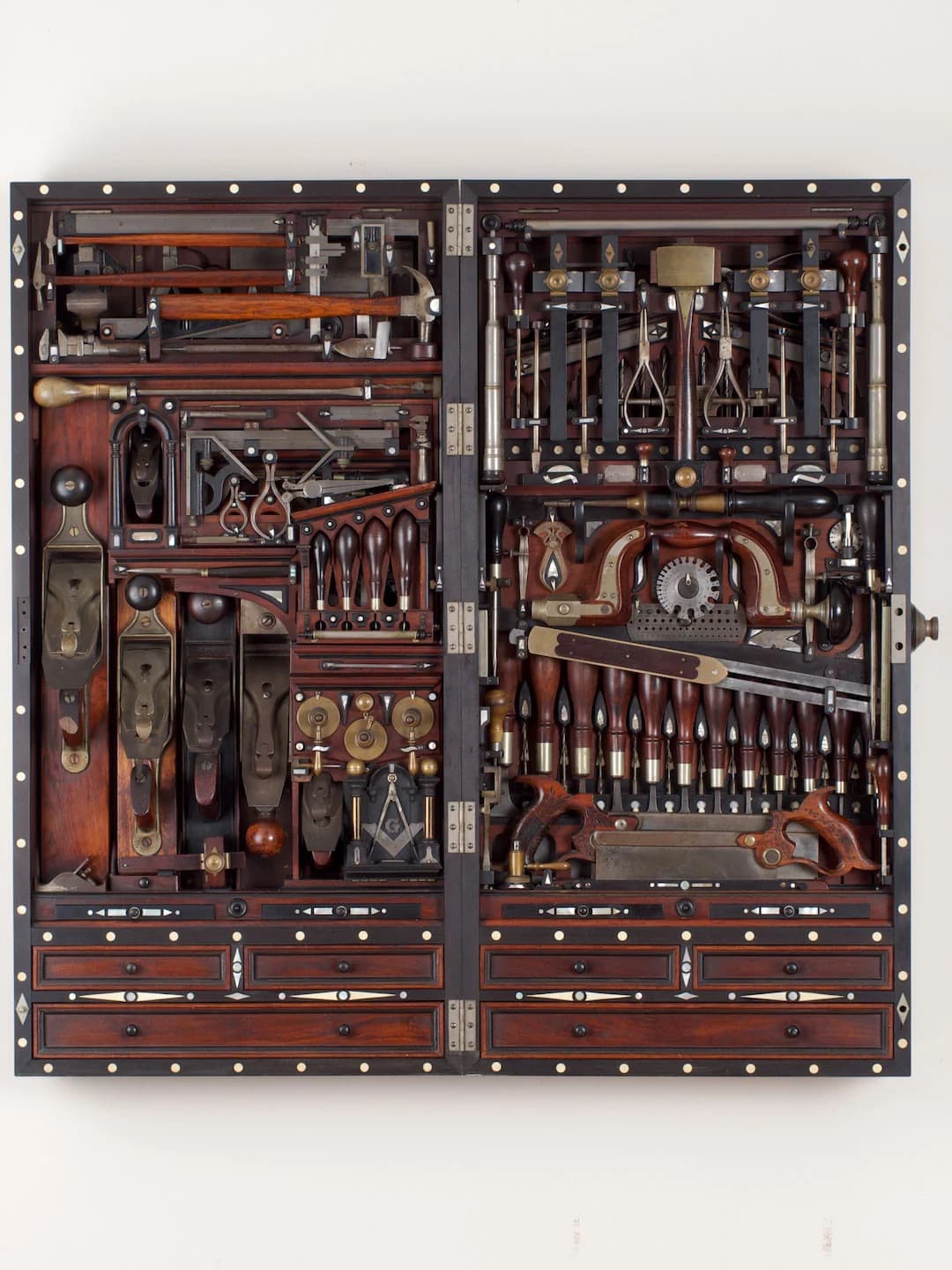
a dedicated wall-mounted cabinet specifically for hand-tools — still negotiating w/ the finance committee to make a replica of the Studley Tool Cabinet and hang it in the living room:
(I would however caution that anyone consider their tolerance for typos/pedestrian typesetting before buying/reading that book — AFAICT they still haven’t sold out the first printing and still haven’t corrected any of the typos I’ve pointed out, nor even the duplicated photo of the pair of flat pliers/missing photo of the pair of jewelry pliers)
The electrical will likely require a sub panel. I would recommend hiring an electrician to add the sub panel. From the sub panel you can do that part if you feel up to it. If not get the electrician to do the interior wiring. You need to map out where you want outlets and what wattage and voltage. In my shop I have some GFCI outlets but I also have some non-GFCI outlets. Some tools like VFD and variable speed lathes and other tools will trip a GFCI. Personally I like 20 AMP 120vac outlets. That way I can use the same outlet for more than one tool. On GFCI you can have a breaker for the entire circuit but that usually requires taking up 2 spaces in your breaker box. I put the first outlet in a GFCI circuit with a GFCI outlet. That saves space in the breaker box but still protects your outlets. You will need to check your local codes but indoor living spaces require Arc Fault (AFCI) and may also require that in your shop. Likely not but be sure to check. They do make AFCI/GFCI breakers and they take 2 spaces in your breaker box. I am not aware of AFCI outlets like the GFCI outlets. For 20 AMP circuits 12 gauge wire is required. Depending on local code you may need to run that in the wall or in conduit. Workshops/Garages are different from residential electrical requirements. Suggest you put your lighting circuits on at least 2 different circuits. If something goes wrong and pops a breaker you dont want to be standing in the dark with machinery running. With 2 circuits it is unlikely that both would pop their breaker at the same time. If the main power goes out it is advisable to have a standby light so you can find your way out in the dark. A shop full of machines and other obstacles can be very hard to navigate in the dark.
As @WillAdams mentioned if you want to tile you need to design your enclosure to have a back door and a cart the machine sits on with wheels. Personally I have used tiling a handful of times but I have room behind my machine so I dont need to move it to tile.
Are you going to get a site built and premade shed from a contractor or are you going to stick build it yourself? Having a premade or site built building is easy but you pay for that convenience. A stick built building needs a good foundation. So if you build it yourself make sure you layout the supports so it is level and stable. Insulate your building and cover the interior walls with plywood and/or sheetrock. That makes things easier to hang things and keeps the shop warmer in the winter and cooler in the summer. Several of my friends have those heat pumps in their shops and it makes it bearable to be in your shop. Right now it is 100 degrees F today in my shop today. In the winter I use propane heater but that is expensive. They do make window units that heat and cool so consider that for price and ease of install. I have a portable air conditioner and heater for when my lights go off. That just requires I run the exhaust hose out of a window. If you do install a heat pump make sure you have enough capacity in your sub panel and breaker box to handle the load.
From the above there are a lot of things to consider for building a backyard shop. As far as layout you can get the specifications of the SO5 from C3D and add about a foot around in both directions for cables and your table to move for cleaning.
In a shop with limited space you have to go up if you cannot go out. So that means shelving or cabinets along the walls. You could put shelves up high to store seldom used things and/or wood. Cabinets are better for me than shelves for tools because it helps keep dust off the tools.
I live in SF so temp swings aren’t that large, although there will be humidity much of the time, so I may include the external vent option and need to consider where the room intake will be (I guess I can always crack a window). I’ll definitely look into those recovery units.
It seems like for the enclosure I’ll need to weigh the advantages of sound reduction vs. the extra space and awkwardness if I want to tile (not currently planning on it but do want to keep the option open). Probably worth it, and will need to include a pass through option or maybe a way to just remove the whole top part if/when I want to tile. I’ll plan on 6’x4’ for the 5x3 footprint of the CNC.
Re: wheels, I have also read it’s important to keep vibrations and movement down to a minimum. Worth investing in those casters that retract so the table is usually on solid feet?
I’ll definitely plan to use the wall space for storage, and possibly ceiling. This is an argument for a flat vs. gable roof so I have higher walls against my 10’ max allowed roofline.
Current plan is working with a contractor or at least separate people for foundation, framing, and electrical and going with a kit like the ones sold by Summerwood.
We bought a new house that includes a much larger shop so we have been moving for the last week.
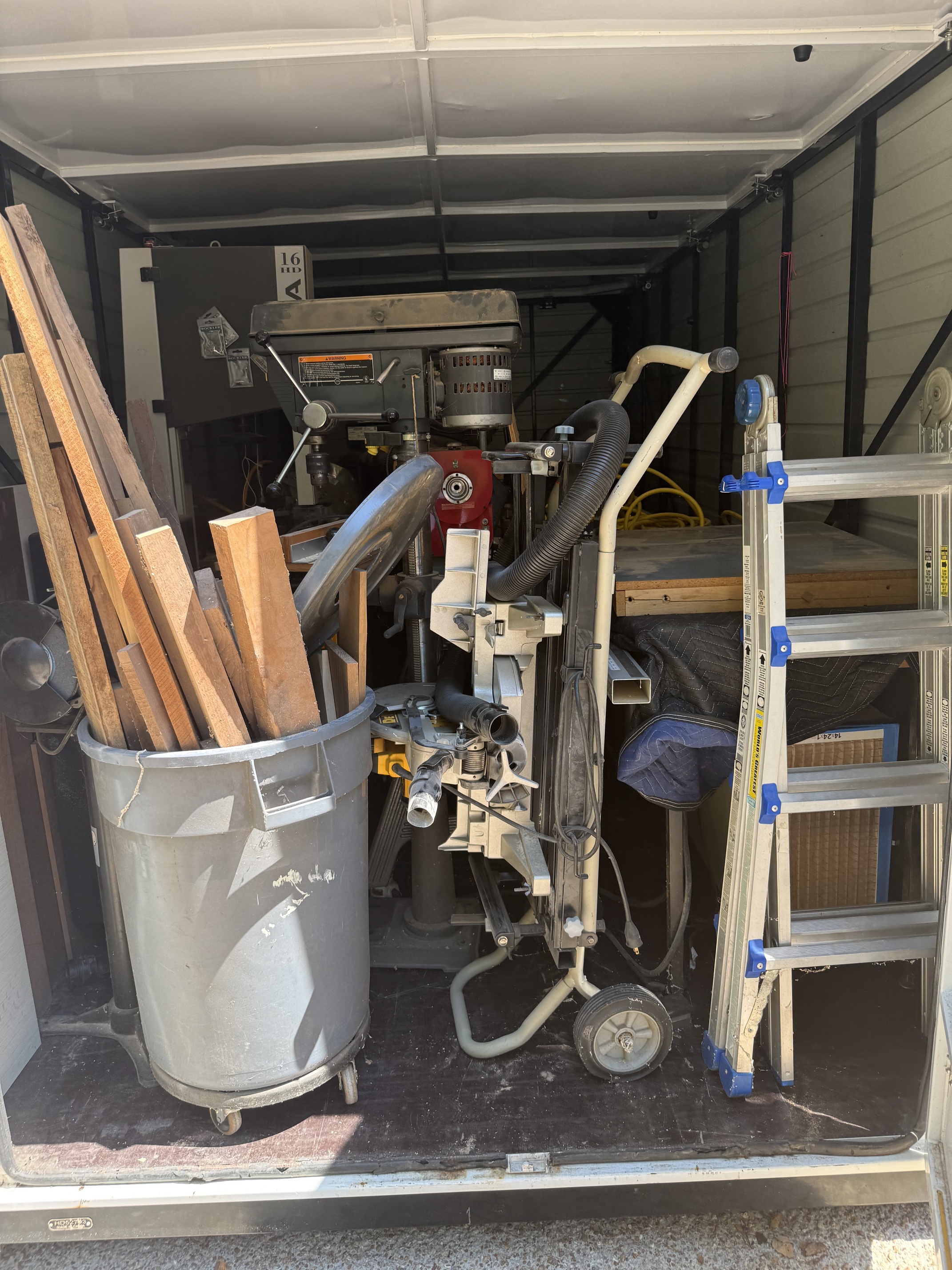
I had a POD like thing delivered for my shop equipment and paid the movers to help me load it. Our driveway is a lot of aggregate pebbles so I figure those fancy retractable casters linked above would have issues with the driveway. I couldn’t get the guy to place the container any closer so I had this “brilliant” idea to lay down tracks with old deck boards to roll it on. It was about 25’ from the garage to the container and then a 10” rise give or take.
We started and the movers (3 of them) decided it was too slow so they and I picked up my 5.1 Pro 4x4 with VFD, vac, coolant, etc… and carried it into the container. They were some pretty big boys.
Hopefully I can get the container closer to the new shop.
For those of you thinking about moving here are some thoughts:
Don’t.
if you have to, don’t do it in August in south East Georgia. It’s been a miserably hot week.
a 16 foot container doesn’t go as far as you think it will with a 4x4 machine, lathe, Laguna bandsaw, Delta cabinet saw, drill press,
Air compressor, router table, 2 miter saws etc.
They got all the heavy stuff in there but I have a ton of other small stuff and a work table I will have to transport.
The new house is only 4 miles away so I can make a lot of trips.
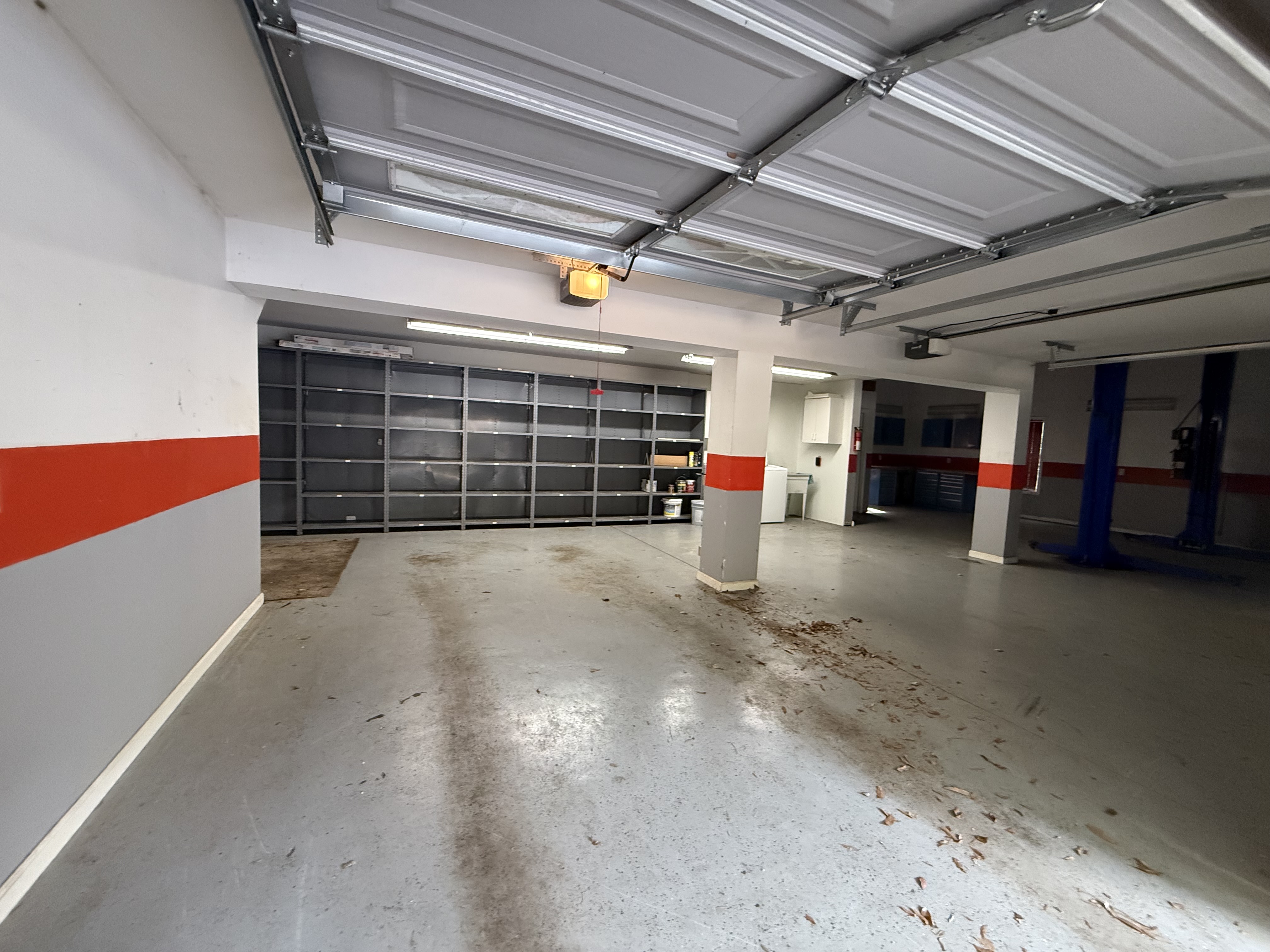
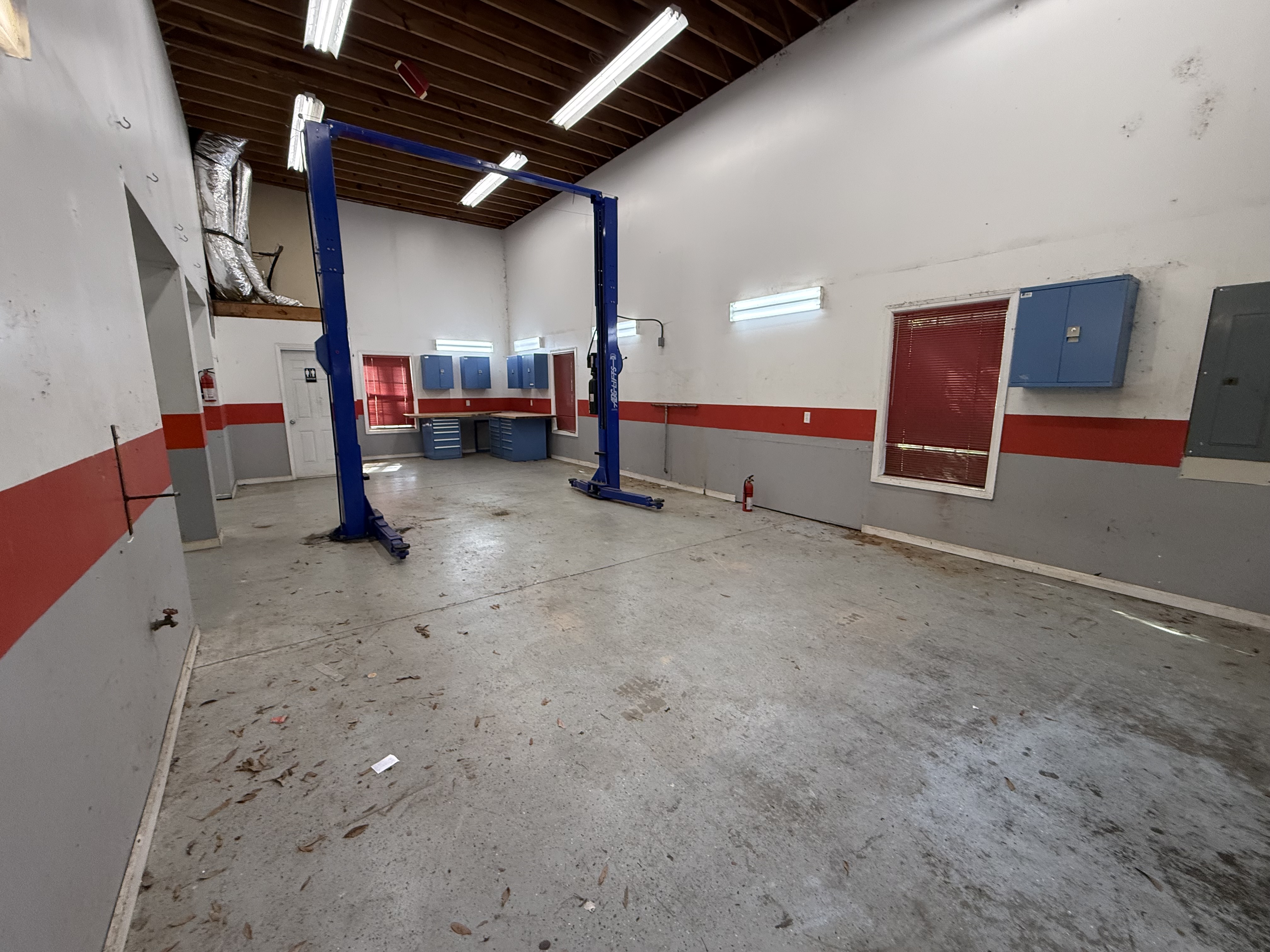
Now I have the problem of figuring out the best layout as well. The shop is 2 low bays that are about 25’ deep and then a high bay that is 18’wide and 40’ deep. It has a car lift in it now which I don’t want and will be selling.