I, and some others here, use Affinity Designer for all, or most, of my SVG creation. I also use it for some depth maps. Today Affinity announces something big, they have been working in secret for quite some time to combine Designer, Photo and Publisher into one app. I’ve yet to get too far under the hood but the initial claim is that this app is free unless you want AI driven aspects.
EDIT_2: Have confirmed the app is indeed FREE! I surmise Canva is relying on big interest in AI driven aspects. But I suspect the free version will satisfy 99.9% of CNC user needs.
He really undersold FULL SCRIPTING CAPABILITY!!!(coming soon)
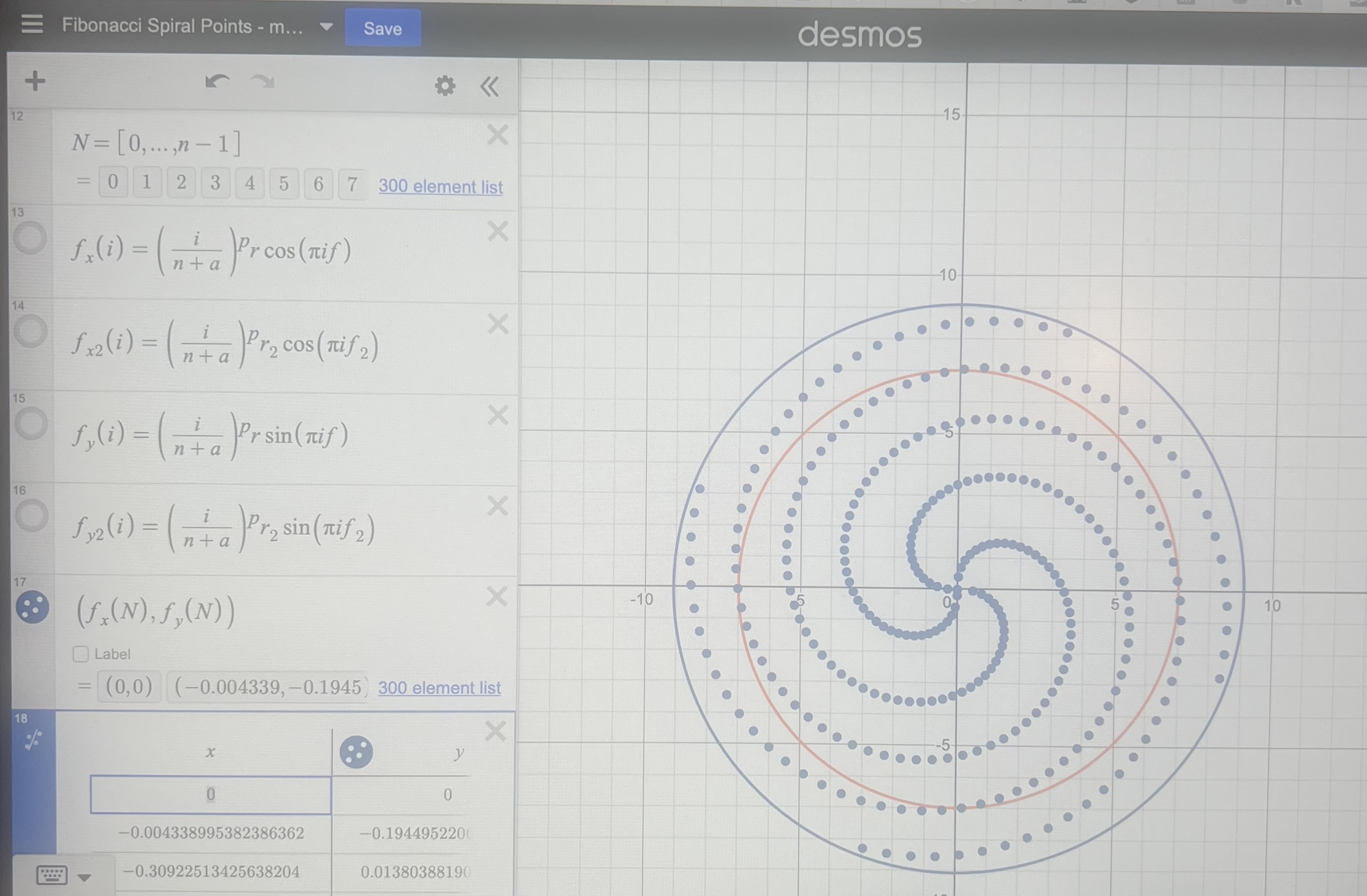
Maybe I can finally creature arbitrary equation driven svgs in Affinity.
And if that scripting applies to the pixel editing tools, programmatically driven height maps would be so nice to use in such a polished application.
A man can dream
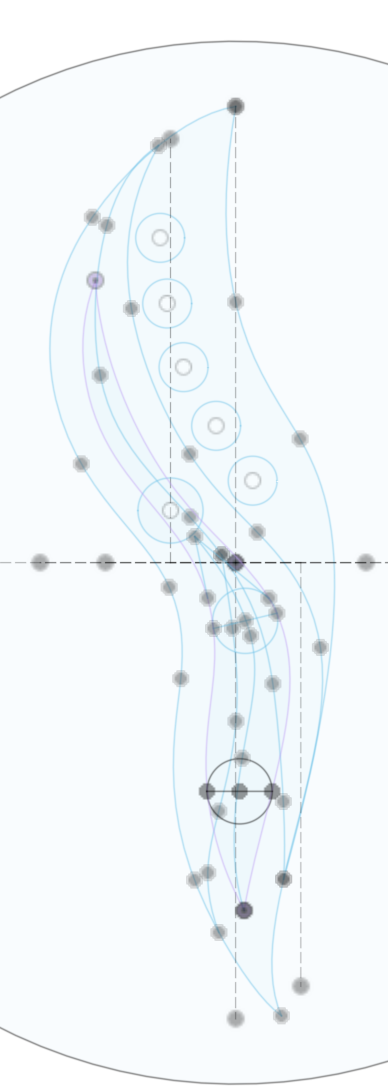
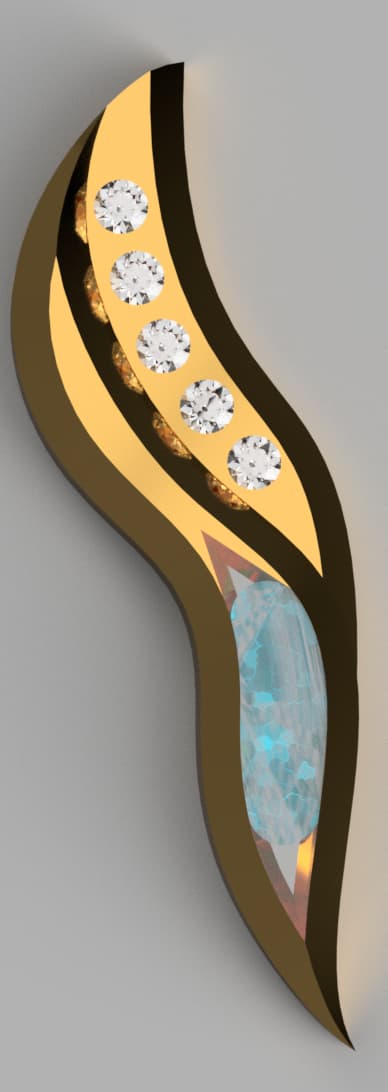
V-carve those spirals into a brass coin and drop a gem in the middle. Eh, could be cool. (I’m a bit of a one trick pony, don’t judge me )
__
I’ve been meaning to learn Rhino Grasshopper as it seemed like the best option for what I’ll call parametric svgs so far. Haven’t found the time or ~$1000 to pay for the license quite yet.
My experience with OpenSCAD has been, let’s say, mixed.
When it works for what you want, incredible.
When you want to make a round over though, generate a thousand boxes, do a Boolean, and pray it doesn’t crash.
Maybe the Python component materially improves the experience though.
One of the things I might attempt is to program a gradient inside a shape whose density would be a function of the distance from the edges. With adjustable proportionality, this could roughly mimic a 3D shape.
On the other hand it appears this new iteration of Affinity offers a gradient mesh. Iv’e only seen it in a demo but it appears you can construct a mesh with movable points and assign color values to each point. The demo showed a character’s face with realistic lighted highlights. I can see this being used to create pretty good depth maps for 3D work.
I have the full suite of Affinity. I got the announcement about the new “Studio” version that is free. I am currently downloading it to see what it is all about. The company Canva bought Affinity (Serif) a while back. Canva is an online tool to create all kinds of content. Some of it is free but the “Pro” version is a subscription. I read the announcement about Affinity and it seems it will be free but to get full benefit I think you have to subscribe to Canva Pro. I will report back about what I get from the download. I have found Affinity Photo very useful for editing photos and Affinity Design for incorporating designs into other applications.
Edit: I downloaded the installer and installed to Windows 11. Went smoothly and opened the application. The interface is pretty much the same as the Affinity 2. I did not do a lot with the application but as I said earlier this is tied to Canva which has a subscription. So I figure you can do basic stuff but really advaced stuff you will need Canva Pro. TBD.
The only limitation in Affinity, what they’re calling the integrated app, is no access to AI features. Designer was a pretty good app, not “basic” at all in my opinion; all the Affinity Designer 2 features should still be extant in Affinity. There had been a few AI features recently introduced into Photo which may be lacking in Affinity, I’d never availed of them so nothing to be missed there.
It’ll be nice to have the 3 apps integrated but not a super big deal for those of us already using Affinity products. I hope they stick to the “forever free” and the promise to include new non-AI upgrades into the free version as promised in the video. I’m a never-subscription kinda guy, it was my initial inducement to bag Adobe and go with Affinity.
I posted this announcement for those without a decent vector app or budget. Plus, as stated in the demo, being free allows this to be a medium of exchange for sharing files.
I bought the Affinity Bundle a couple of years ago on some sort of perpetual license. I don’t know if that means it is good until the next major version or what. I will say these guys update their software at a pace that borders on annoying. It seems like every time I open the app there is a new version to install.
I am trying to use it more for editing but there is a learning curve for sure.
Let’s hope that free does not mean it will turn into a constant nag fest for canva upgrades.
I would prefer a way to do offline activation but free user can’t be a chooser.
I had bought all 3 Affinity applications. After downloading the new Affinity I opened each of the Affinity 2 apps and they all updated to 2.6.5. First I was on 2.6.3 and it updated to 2.6.4 and immediately did an update to 2.6.5.
So no matter what happens I have the Affinity 2 applications updated on my computer so no matter what Canva does the current features of Affinity 2 are ok with me. Canva.com has a lot of free stuff but they really want you to subscribe and pay them. We will see if the “Free” Affinity stays that way.
I just updated to 2.6.5 too, mine seemed to go directly from 2.63
I hope the new Affinity stays accessible, the 2.6.5 update doesn’t have the mesh gradient tool which is really cool. This one tool would replace 8 to 10 separate layers of fudging in making the depth map for my Clown Fish.
The image trace however is, to me, a bust. It works on line art which was initially vector but you are working from a photo. What I wanted is a way to convert a pixel selection boundary into a vector. There’s a workaround in that you can fill the selection with a solid color, trash the surroundings and trace the solid.
As much as I hate to say it…I think blender might be the ultimate solution
Though I’ll try plasticity and maybe even just buy rhino before I resort to blender
Beyond the nerd-desire to make everything text/code-based, rather than GUI-based, what’s the goal? (As a nerd myself, I understand that might be the goal in and of itself) I love Rhino, but once you sweep the curves in anything but Fusion/Solidworks/etc., they’re no longer parametric in the sense that the 3D object is not linked to the curve anymore.
I ask because we’re planning to elevate the 3D capabilities in Carbide Create Pro, and sweeps/revolves are part of that. We’re trying to take our time to think through all the possibilities before jumping into writing code.
For the example I provided it’s less about making it text/code based and more about being able to make and tweak ~perfect curves.
Given a set of tools, I could write functions or modifiers to account for these tools. Imagine describing a curve and having another curve generated automagically at the proper offset given the tip diameter of your v-bit.
That’s not terribly difficult to do with most scriptable applications, but an extension of this idea would be more difficult.
Imagine describing two curves, in 3d space calculating the tip offset, etc…using one curve as a guide. I guess this could be seen as mathematically describing a surface loft
It’s pretty niche but the end goal would be generation of geometry which is necessarily manufacturable given the codified set of tools.
No curves generated with tighter radius than your tooling and no grooves beyond your tools depth of cut. Things like that.
It would also be nice to codify commonly used geometries like settings for the stones and such.
This does sound more and more like a good fit for grasshopper as I’m describing it. That would also allow linking the 3d geometry as well.
Realistically, I figure this sort of thing does not fit into the vision of CC Pro but maybe some aspects are interesting to think about.
As a good and proper nerd, none of this is well thought out and it mostly lives as a list of half baked ideas in my head but I’d be happy to elaborate more if you’ve got any questions
I’ve been using Affinity Designer 2 for most of my designs and it’s worked great. The new version looks good, but until they release the iPad version I’m staying with v2. The new file native format isn’t compatible and I do a lot of work on my tablet.
Depth maps are easy to create in Blender, I get a headache trying to think of how I’d get expected results using gradients or hand painting them in Affinity. Would be too worried that the relative depths weren’t what I was expecting.

 )
)